

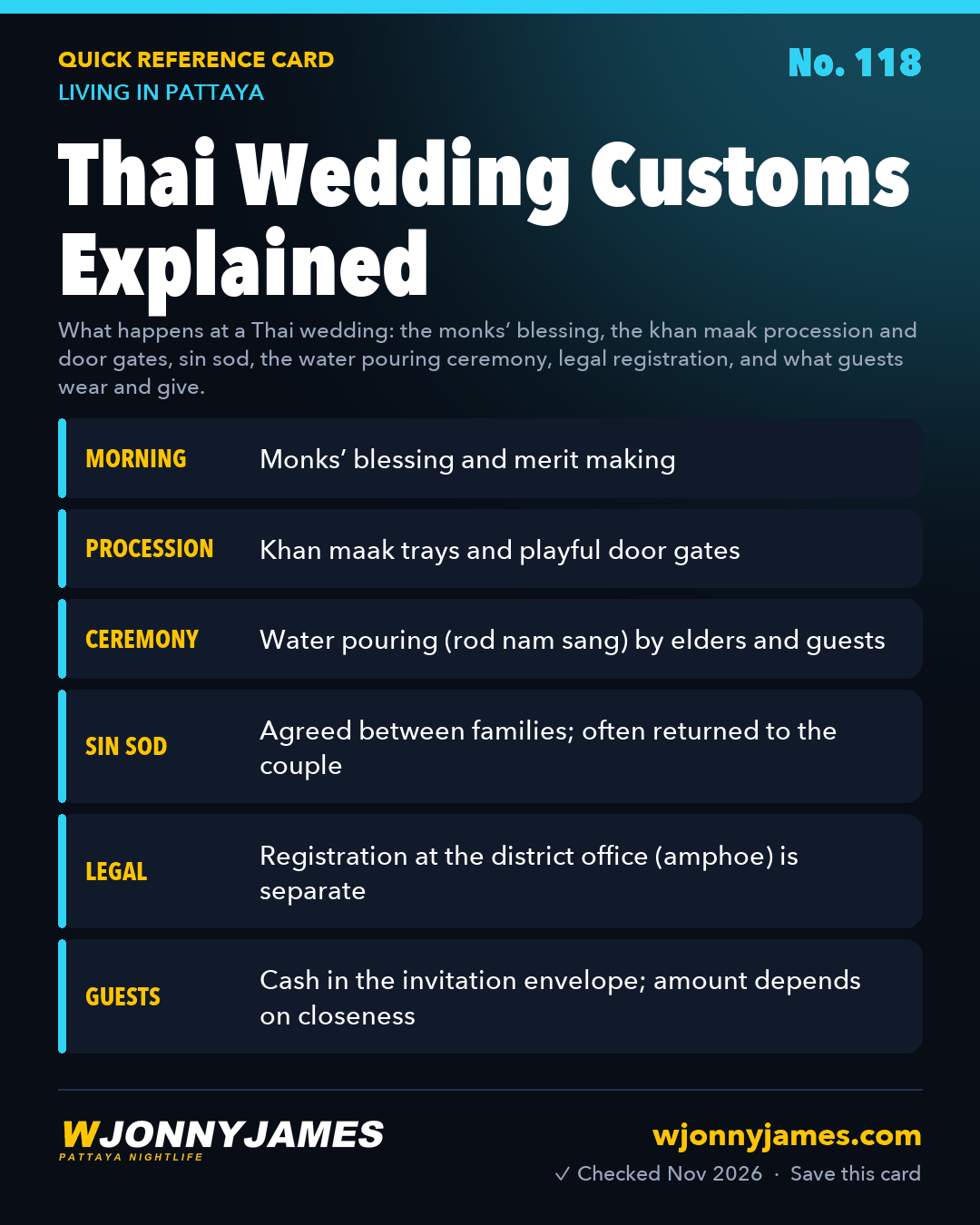
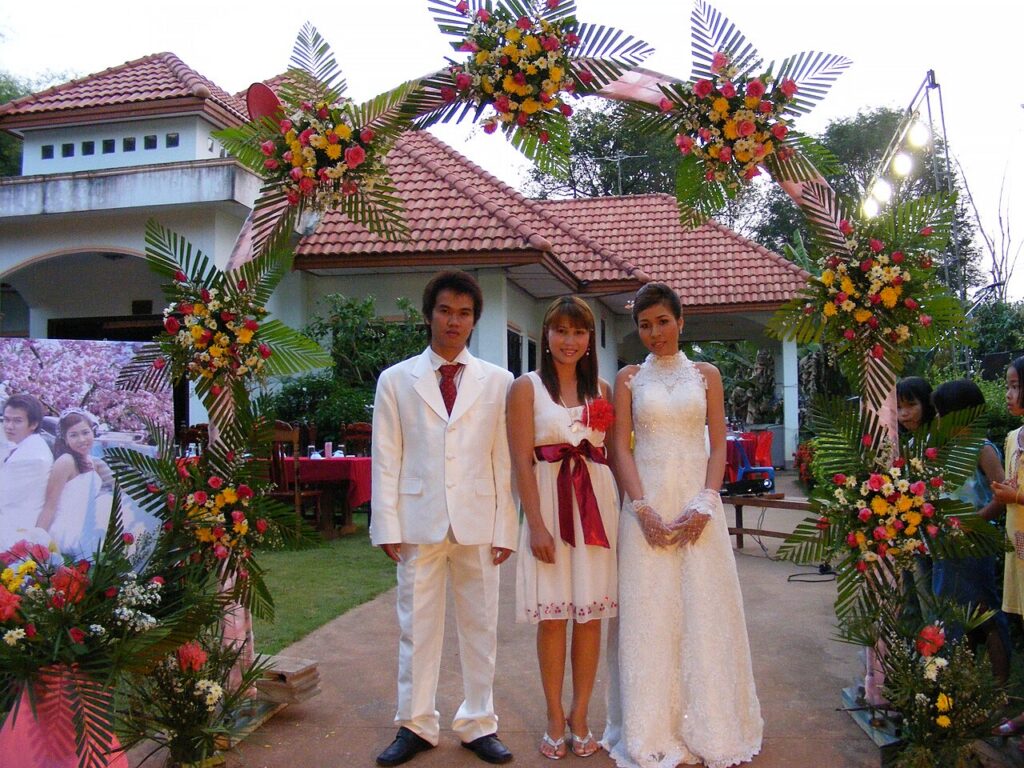
Quick answer: A traditional Thai wedding usually takes place in the morning, on a date often chosen with an astrologer. Monks chant blessings and receive food, the groom’s side arrives in a khan maak procession carrying trays of gifts, including the sin sod, and has to pass playful “gates” set up by the bride’s relatives. The couple then pays respect to their elders, and guests pour blessed water from a conch shell over their hands in the rod nam sang ceremony. None of this is the legal marriage: that is a separate registration at a district office (amphoe). Guests usually give cash in the invitation envelope.
At a glance
| Part | What happens |
|---|---|
| Date | Often chosen with an astrologer for an auspicious day and time |
| Monks’ blessing | Usually nine monks chant and receive food from the couple |
| Khan maak procession | The groom’s side carries trays of gifts to the bride’s home |
| Door gates | Relatives block the way until paid with small envelopes |
| Sin sod and rings | Sin sod shown and blessed, rings exchanged |
| Rod nam sang | Elders and guests pour blessed water over the couple’s hands |
| Reception | Dinner, toasts and photos, often in the evening |
| Registration | Signing at the district office makes it legal |
The morning ceremonies
Customs differ by region and family; this is the common central Thai pattern.
- Merit making. Monks, traditionally nine because the number is considered lucky, chant blessings and bless water, and the couple offers them food. Guests sit lower than the monks. See temple customs.
- Khan maak procession. The groom’s family and friends walk to the bride’s home carrying trays of auspicious items, such as the sin sod, the engagement ring, betel nuts, grains, flowers, incense and candles.
- The gates. The bride’s relatives hold a chain or belt across the path as a “silver gate” and then a “gold gate”. The groom’s side pays small cash envelopes to pass. It is a game, and the toll goes up at each gate.
- Sin sod and engagement. Elders on the groom’s side formally ask for the marriage. The sin sod is shown to the bride’s family and blessed with grains and flowers, and the couple exchanges rings.
- Respect to elders. The couple bows to parents and older relatives, who give blessings and sometimes money.
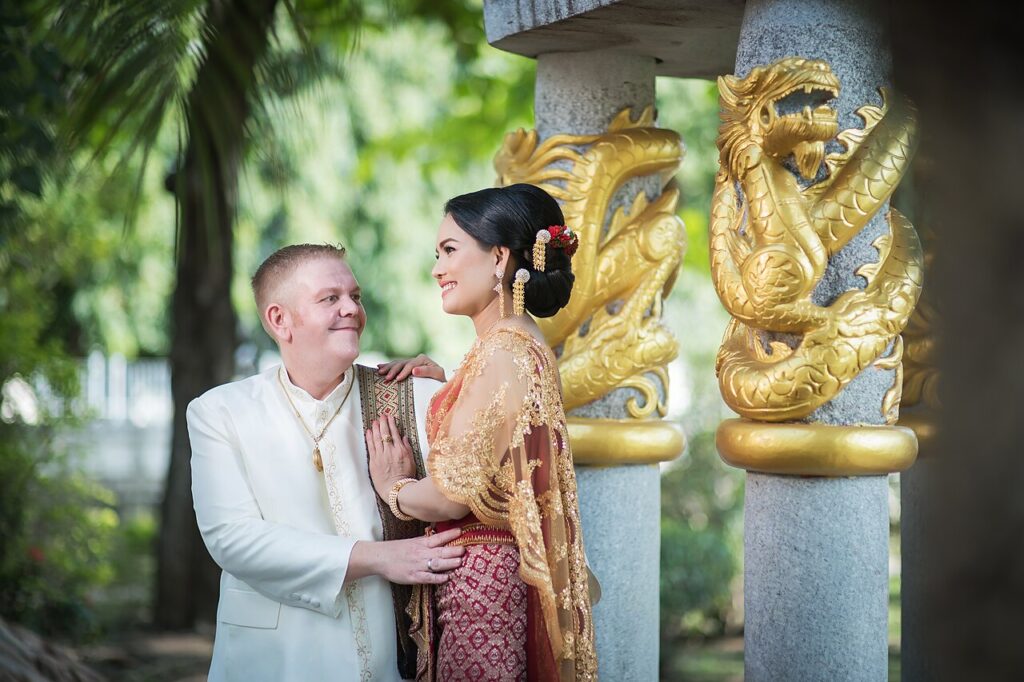
- Rod nam sang. The couple kneels with hands together, wearing joined white head garlands. Elders go first, then guests, pouring a little blessed water from a conch shell over their hands and saying a short wish for their future.
In the north and northeast, a baisri su khwan blessing led by a respected elder or Brahmin often takes the place of the monks, and white cotton threads are tied around the couple’s wrists for luck. Muslim weddings in the south follow a nikah ceremony led by an imam.
Sin sod
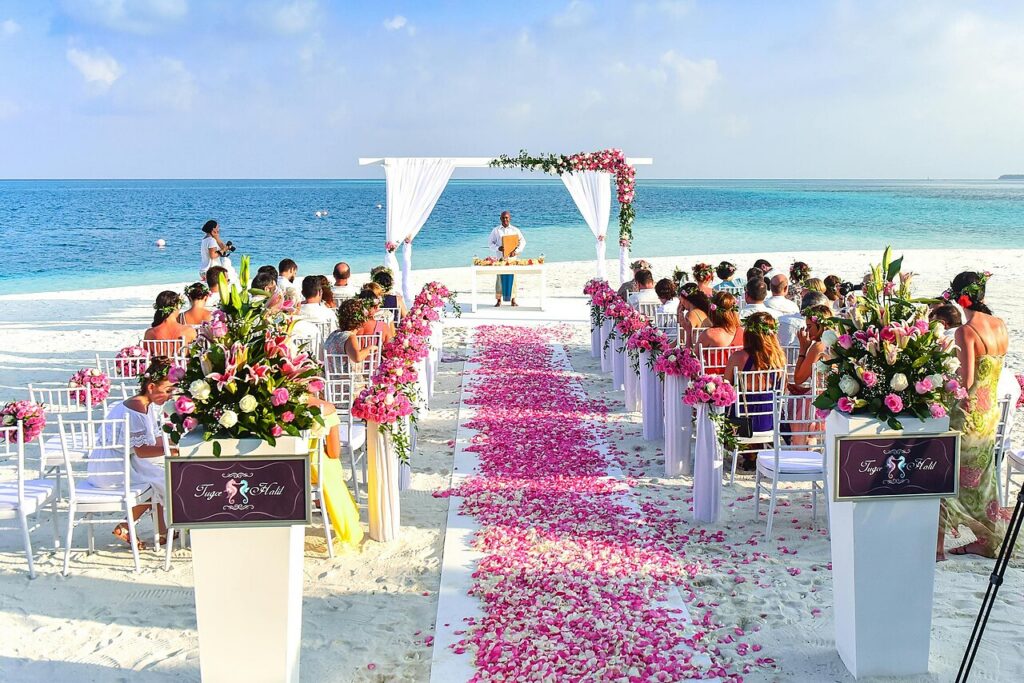
Sin sod is a traditional gift from the groom’s side to the bride’s parents, agreed between the families before the wedding. It is shown at the ceremony as a sign of respect.
- The amount varies a lot by family and region. There is no standard figure.
- Many families return some or all of it to the couple after the wedding to help them start out; others keep it. Today it is often largely symbolic.
- Thai law (the engagement sections of the Civil and Commercial Code) treats sin sod as a gift to the parents for agreeing to the marriage. If the marriage doesn’t go ahead because of the side that received it, it can be claimed back.
- If you are marrying into a Thai family, talk about sin sod with your partner early, calmly and with respect. It is about family and face, not a price. See visiting Thai family.
Legal marriage
The ceremony and the legal marriage are separate.
- Couples register at a district office (amphoe, or khet in Bangkok). It is usually quick once the paperwork is ready.
- A foreign partner usually needs a document from their own embassy confirming they are free to marry, translated into Thai and legalised by the Ministry of Foreign Affairs, plus a passport. Each embassy has its own process, so check yours first.
- Since 23 January 2025, Thailand’s marriage equality law lets couples of any gender register.
- For staying in Thailand as the spouse of a Thai citizen, see the marriage visa. For translations and official papers, see Thai paperwork tips.

As a guest
- Clothes: smart and modest, shoulders and knees covered, in bright or soft colours. Many guests avoid all black, which is linked with funerals, and all white. If the invitation gives a colour theme, follow it.
- Gift: cash in the invitation envelope, dropped in a box at the reception, is normal. Write your name on it. The amount depends on how close you are to the couple, the kind of event and what you can afford; a Thai university economist interviewed by Daily News in 2026 said there is no fixed formula. If unsure, ask a Thai friend in the same circle.
- Timing: morning ceremonies start on time because the hour is auspicious.
- Manners: greet elders with a wai, follow the family’s lead, and ask before photographing monks. See Thai etiquette and Thai names and titles.
- At the water pouring: pour a small amount, say a brief wish (congratulations in English is fine), and move along.
More culture
See Thai etiquette, the Thai calendar and dating in Thailand.
Common questions
Is sin sod required by law? No. It is a custom that families agree between themselves. The law only covers what happens to it if a marriage doesn’t go ahead.
Is a Thai wedding ceremony legally binding? No. Only registration at a district office creates a legal marriage.
How much should a guest put in the envelope? There is no fixed amount. It depends on your relationship with the couple, the venue and your budget, so ask a Thai friend who knows the family.
Can foreigners marry in Pattaya? Yes, at a district office, with documents from their embassy.
Sources
Checked 13 November 2026: Thailand Foundation, Thai wedding customs and regional differences; The Thaiger, sin sod and the Civil and Commercial Code (archive article by two lawyers); Daily News, how much to give at a wedding (April 2026, in Thai); Al Jazeera, marriage equality law in force (January 2025). Customs vary by family and region, and embassy paperwork changes; check with the families involved and your embassy. General information, not legal advice.
Useful next steps
- See the marriage visa.
- See visiting Thai family.
- See Thai etiquette.
Related pages



Ride along with Jonny
Every guide page comes from the nightly rides through Pattaya. Watch them, ask questions in the community, or help keep the camera rolling.
Watch the rides Join the Telegram Leave a tip Support the rides

 ไทย
 中文
 Русский
 한국어
 Deutsch
 Français