

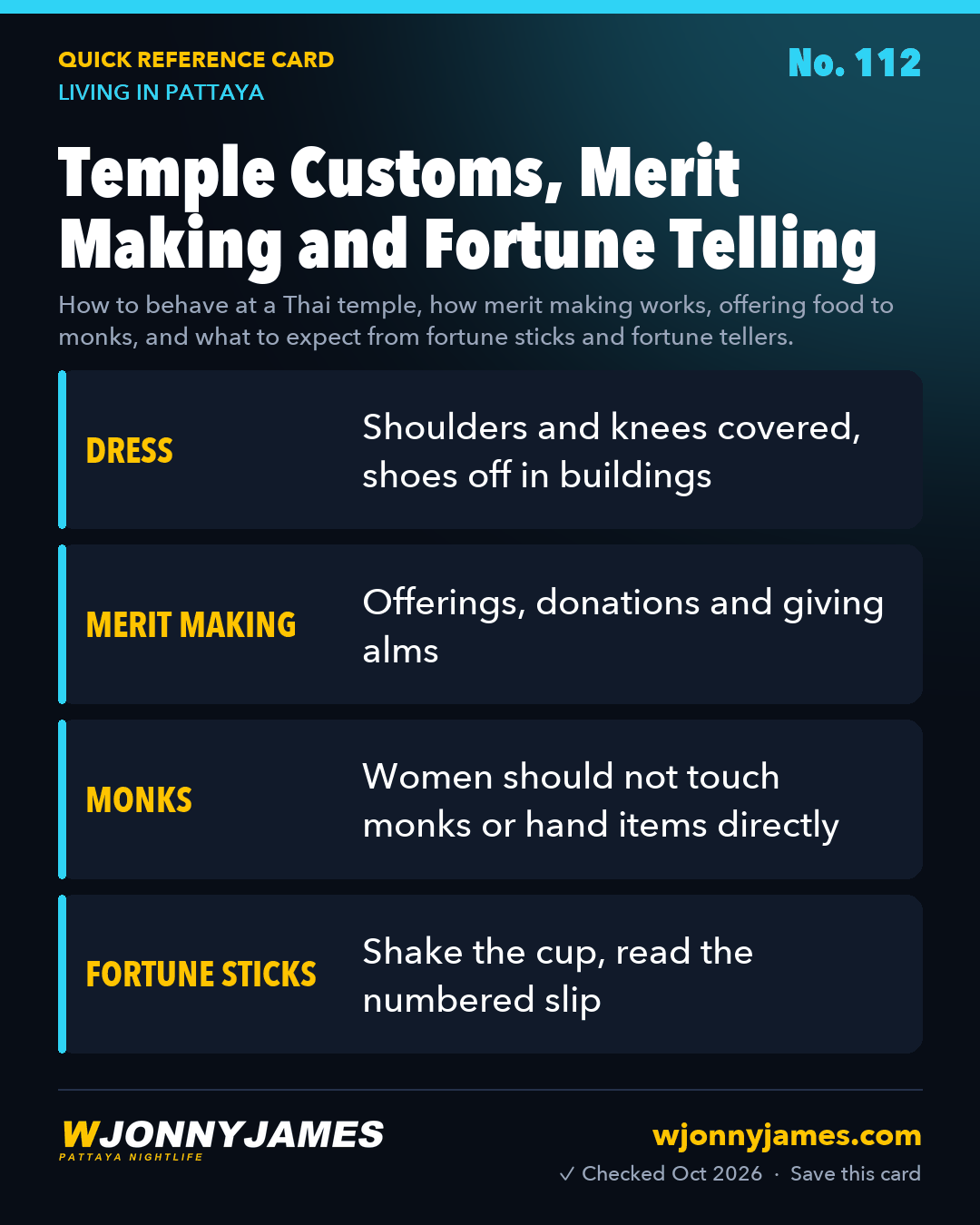
Quick answer: Visitors are welcome at Thai temples, including Pattaya’s working temples. Cover your shoulders and knees, take your shoes off before going into temple buildings, keep your voice down, and never point your feet at a Buddha image or a monk. Women should not touch a monk or his robes, so hand offerings to a man to pass on, or set them down for the monk to pick up. Making merit can be as simple as an offering set or a donation. Taking a Buddha image home needs an export permit. For places to visit, see temples and viewpoints.
At a glance
| Situation | Do | Avoid |
|---|---|---|
| Arriving | Shirt with sleeves, long trousers or a skirt below the knee | Beachwear, very short shorts, vests |
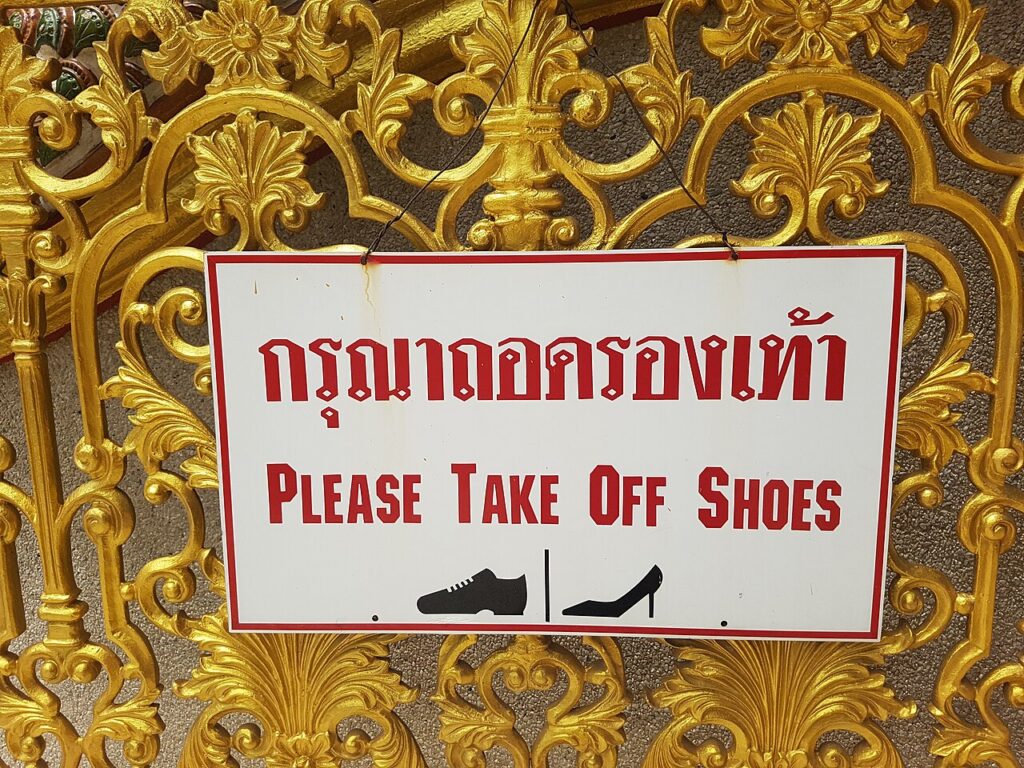
| Entering a building | Leave shoes at the rack, step over the raised threshold | Standing on the threshold |
| Sitting | Kneel or sit with your feet tucked behind you | Feet pointing at a Buddha image or monk |
| Buddha images | Walk round them clockwise | Touching, climbing, posing above them |
| Monks | Stand when a monk enters; keep your head lower than a seated monk | Women touching a monk or his robes |
| Photos | Usually fine, quietly | Getting in the way of people praying |
| Offerings | Flowers, incense, candles, food, a donation | Money or alcohol in an alms bowl |
What to wear
The Tourism Authority of Thailand’s guidance is plain: no beachwear. Men should wear a shirt with sleeves and long trousers or shorts that cover the knees. Women should wear a top with sleeves and a skirt or trousers below the knee. Sandals are fine, ideally with a back strap. A light scarf or sarong in your bag solves most problems; don’t count on the temple lending one. Take off hats and sunglasses when you go inside.
Inside the temple
- Take your shoes off before entering the main hall and wherever you see others doing it. Leave them at the rack or by the steps.
- Step over the raised wooden threshold at the door rather than standing on it.
- Sit on the floor with your legs folded to one side or tucked behind you. Pointing the soles of your feet at a Buddha image or a person is rude in Thailand.
- Walk round Buddha images clockwise. Don’t turn your back on a Buddha image up close; step back a little before you turn.
- Don’t touch, climb or lean on statues, and don’t pose in a way that puts you above the image.
- Phones on silent, voices low, no smoking or snacking.
- Most temples allow photos. Keep out of the way of people praying or making donations, and ask before photographing anyone up close. Drones are out of place.
More everyday manners are in Thai etiquette.
Monks
- Stand when a monk enters the room, and if you sit near one, keep your head lower than his where you can.
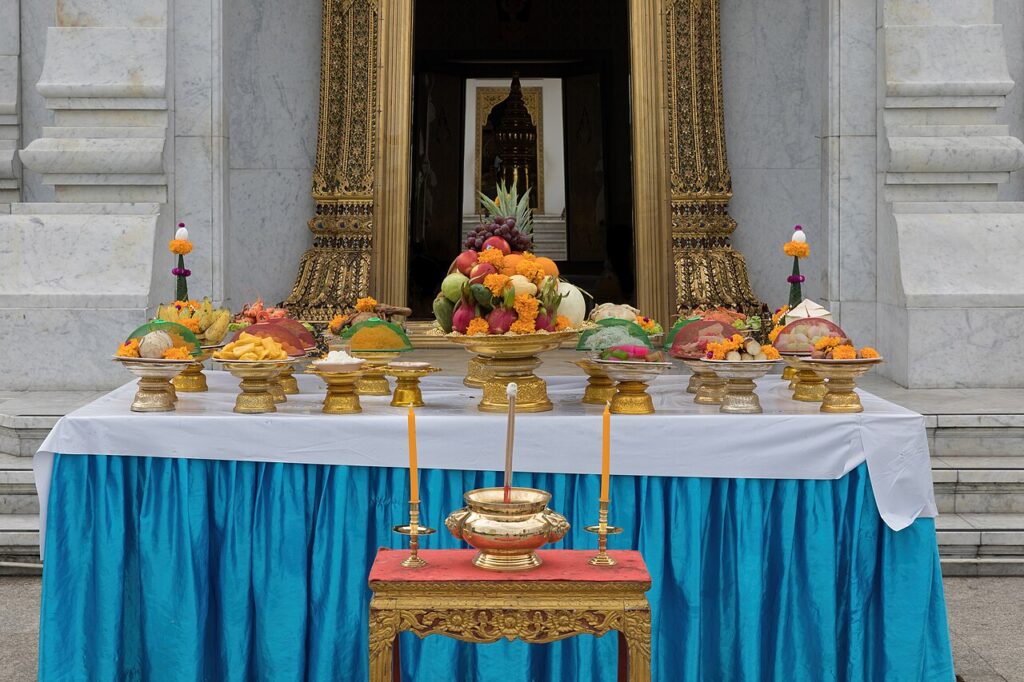
- Women should not touch a monk or his robes. To give something, a woman can hand it to a man to pass on, or set it down on a cloth or tray for the monk to pick up.
- On public transport, some seats are set aside for monks. Leave them free, and women shouldn’t sit right next to a monk.
- Greet a monk with a wai: palms together, head slightly bowed.
Merit making (tham bun)
Making merit is at the heart of Thai Buddhism: you do something good, and the good comes back to you.
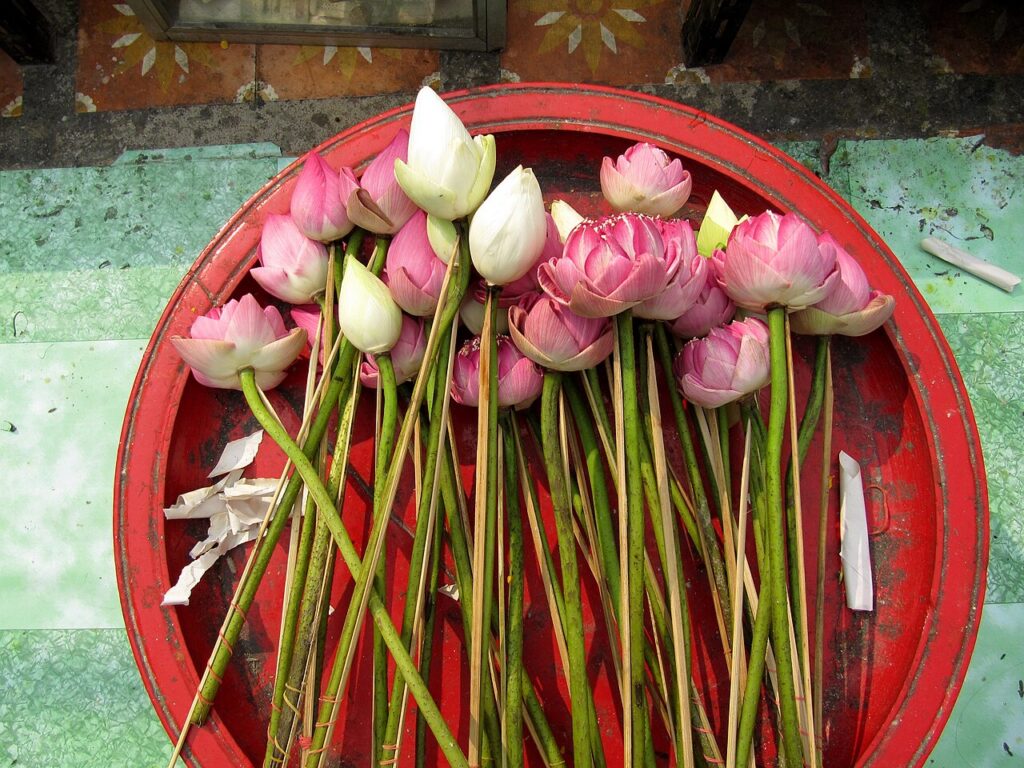
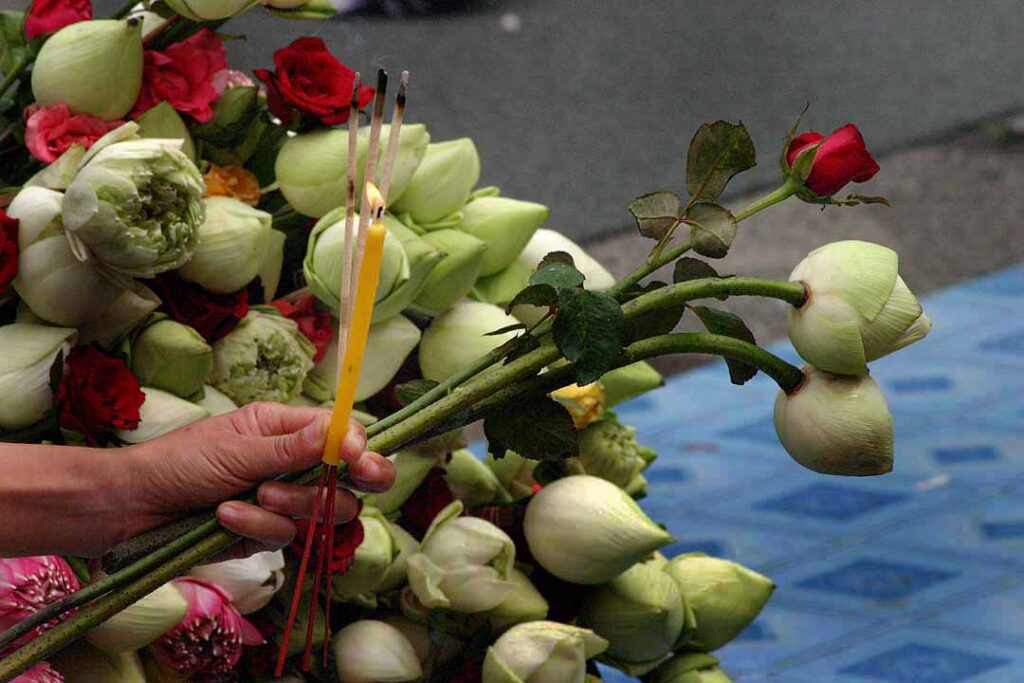
- Offering set: most temples sell a small set of lotus flowers, incense sticks and a candle. Light the candle and incense, place the flowers, and wai.
- Gold leaf: small squares of gold leaf are pressed onto a Buddha image as an offering.
- Donations: donation boxes help with the temple’s running costs. Any amount is fine; nobody watches what you give.
- Kathin season: for about a month after Ok Phansa, the end of Buddhist Lent, communities present new robes to monks at robe offering ceremonies, sometimes with parades. In 2026 that ran from late October to around Loy Krathong on 24 November.
Giving alms at dawn (tak bat)
Monks walk out early each morning with their bowls, usually around 6am to 7am. Anyone, of any faith, can take part.
- Offer cooked rice and food, fruit, drinking water or other soft drinks, or everyday items like soap. Don’t give money, alcohol or tobacco. Vendors near some temples sell ready made alms sets.
- Take your shoes off, wait at the roadside, and place the food in the bowl without touching the monk. Many people kneel or stand lower than the monk.
- The monk may chant a short blessing. Stay quiet and still until he finishes.
- If you only want to watch, keep a respectful distance and don’t use flash.
- The morning after Ok Phansa, temples hold Tak Bat Devo, a big dawn alms giving that remembers the Buddha’s return to earth.
Fortune telling
- Fortune sticks (siam si): kneel in front of the main Buddha image, think of your question, and gently shake the cup of numbered sticks until one falls out. Find the slip with the same number, usually in a rack or cabinet nearby. Some temples have English slips; at others, ask a Thai friend to read it. A small donation is customary.
- Fortune tellers: near some temples, people read palms, faces or birth dates. Treat it as entertainment and agree the price before you sit down.
Holy days
Big temple days follow the lunar calendar. On the five main Buddhist holy days, temples are busy and most shops may not sell alcohol (hotels and licensed venues may). See Buddhist holidays and alcohol, Thai public holidays and the Thai calendar.
Taking a Buddha image home
Thai Customs lists Buddha images, artefacts and antiques as restricted goods that need a permit from the Fine Arts Department, shown at customs when you leave. Sources disagree on whether small, newly made souvenirs are exempt, and a shop receipt is not a permit. Ask the shop and check with the Fine Arts Department before you buy anything sizeable, and allow several days for a permit. Don’t buy parts of Buddha images, such as heads or hands. See souvenir shopping.
Common questions
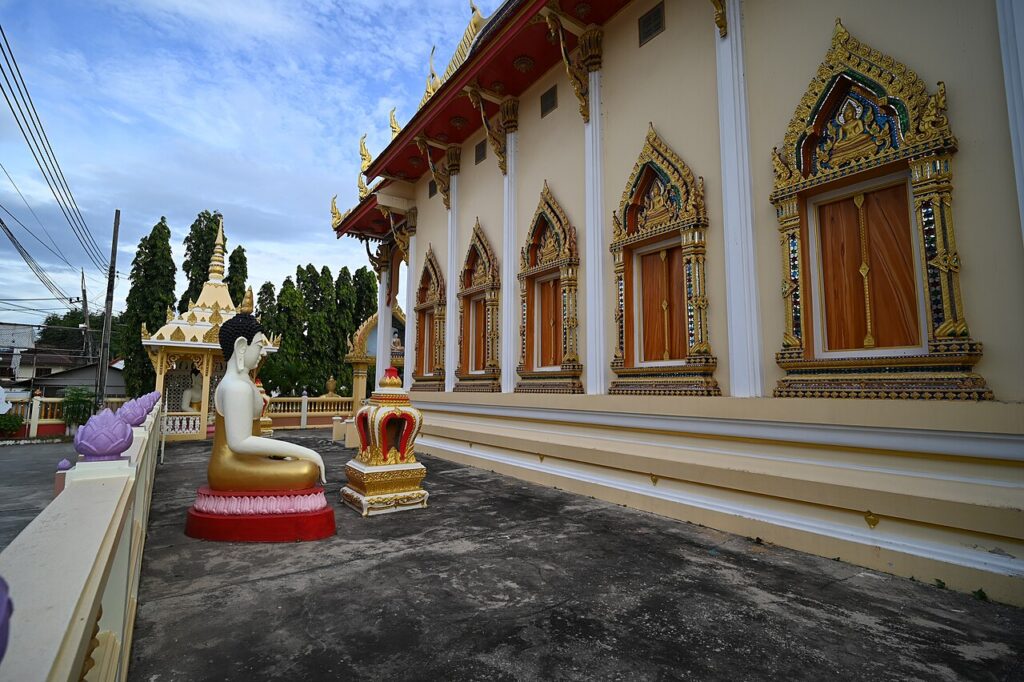
Can tourists go into Thai temples? Yes. Working temples welcome visitors as long as you dress modestly and behave quietly. Paid sights such as the Sanctuary of Truth have tickets; ordinary temples are free.
Can women go into temples? Yes. The rule is about touching monks and handing things directly to them, not about entering.
Do I have to take my shoes off everywhere? No, only before temple buildings and some platforms. Look for a shoe rack or a pile of shoes by the steps.
Sources
Checked 13 November 2026: Tourism Authority of Thailand, temple and sacred site etiquette (dress, shoes, threshold, feet, monks and women, photos, Buddha images); Thai Customs, restricted goods (Buddha images need a Fine Arts Department permit); Bangkok Post, Exporting Buddha (an older report on permits and the ban on Buddha image parts); Pattaya Mail, Tak Bat Devo (27 October 2026). Customs differ a little from temple to temple: when in doubt, copy what Thai visitors do.
Useful next steps
- See temples and viewpoints.
- See Buddhist holidays.
Related guides
Related pages

Ride along with Jonny
Every guide page comes from the nightly rides through Pattaya. Watch them, ask questions in the community, or help keep the camera rolling.
Watch the rides Join the Telegram Leave a tip Support the rides
 ไทย
 中文
 Русский
 한국어
 Deutsch
 Français