

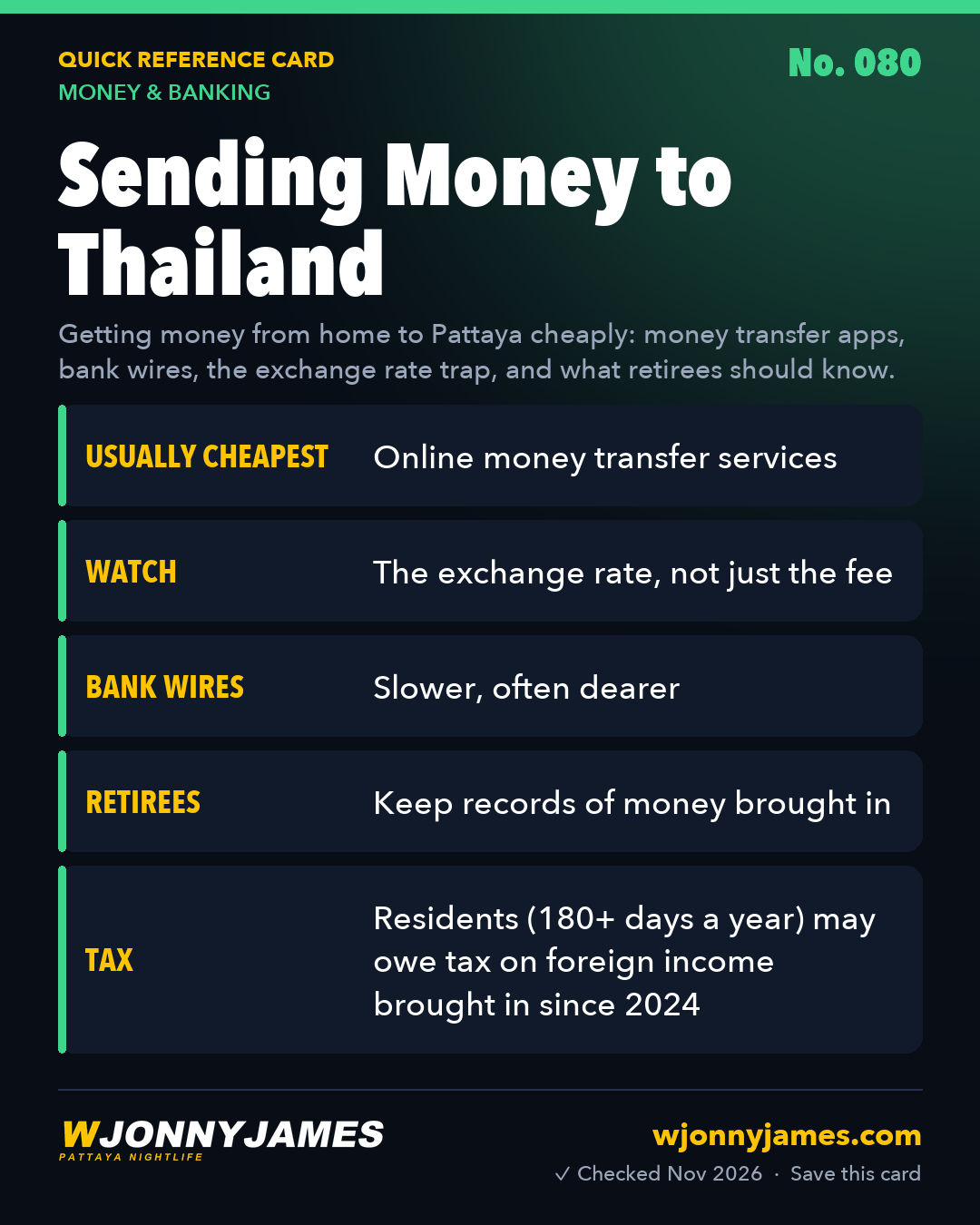
Quick answer: For most people the cheapest way to get money to Pattaya is an online money transfer service paying into a Thai bank account in baht. Bank wires from home are slower and usually lose more to fees and a poor exchange rate, and some Thai banks charge a small fee to receive a wire. Always compare the number of baht that arrive, not the advertised fee. If you live here 180 days or more in a year, foreign income you bring in may be taxable in Thailand since 2024, so keep records and get advice.

The options compared
| Method | Speed | Cost | Best for |
|---|---|---|---|
| Online money transfer service | Minutes to 2 days | Low fee, near mid market rate | Regular transfers to a Thai account |
| Bank wire (SWIFT) from home | 1 to 5 working days | Sending fee, exchange margin, sometimes a receiving fee | Large one off sums, condo purchases |
| Cash pick up services | Same day | Usually higher | No Thai bank account |
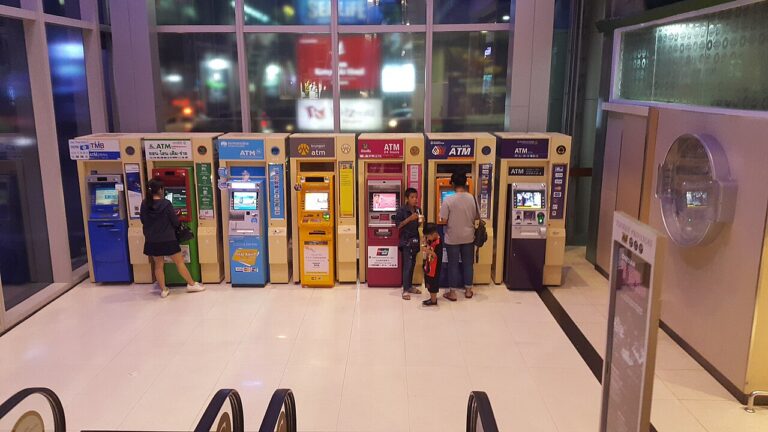
| Foreign card at a Thai ATM | Instant | About ฿220 to ฿250 per withdrawal, plus your bank’s fees | Short trips |
| Carrying cash | Instant | Exchange rate only | Arriving with a buffer |
Online money transfer services
- They convert your money and pay it into a Thai account in baht, usually from a local Thai account, which avoids receiving fees.
- Fees and rates are shown before you pay. Compare two or three for your currency and amount: the best one changes by route and size.
- Transfer limits per payment depend on the receiving Thai bank; large sums may need splitting or a bank wire.
- Some services have changed how their Thai registered accounts work in 2026 under Bank of Thailand rules; this matters if you opened an account registered in Thailand.
Pro tip: I personally use Wise to send money to my Thai bank account. If you sign up with my link, your first transfer up to $600 is free. I get a small reward when someone joins through my link, at no cost to you. Affiliate disclosure.
Bank wires
- Useful for big amounts, and needed for a condo purchase, where the money must arrive from abroad in foreign currency with the right paperwork (the FET form or bank letter).
- Your home bank’s exchange rate is often several percent worse than the mid market rate. Ask whether you can send in your own currency and let the Thai bank convert, then compare.
- Some Thai banks deduct a small fee on incoming wires. Ask your branch.

Your first transfer, step by step
- Open a Thai bank account and note the exact account name, number, bank name and the bank’s SWIFT code.
- Compare two or three transfer services or your bank for the amount you plan to send: look at the baht received.
- Add your Thai account as a recipient. Spell the name exactly as the bank has it.
- Send a small test amount and check it arrives in your Thai banking app.
- Then send the real amount. Save the receipt or confirmation as a PDF.
- For regular transfers, set a reminder rather than a standing order, so you can pick a good day for the exchange rate.
The exchange rate trap
Many services advertise “no fee” but give you a worse exchange rate. Check the rate against the mid market rate on a currency site, and look at how many baht arrive. On ฿100,000 a month, a 3% difference is ฿3,000 every month.
Where the cost hides: a worked example
Three things eat into a transfer: the sending fee, the exchange margin (the gap between the rate you get and the mid market rate), and any fee the Thai bank takes on arrival. The figures below are illustrative, not quotes, to show how the pieces add up on a transfer worth ฿100,000.
| Cost | Bank wire, converted by your home bank | Bank wire, converted by the Thai bank | Online transfer service |
|---|---|---|---|
| Sending fee | Often a flat fee | The same flat fee | Small, shown before you pay |
| Exchange margin | Often 2% to 4% (฿2,000 to ฿4,000) | The Thai bank’s buying rate, often closer to mid market | Usually under 1% |
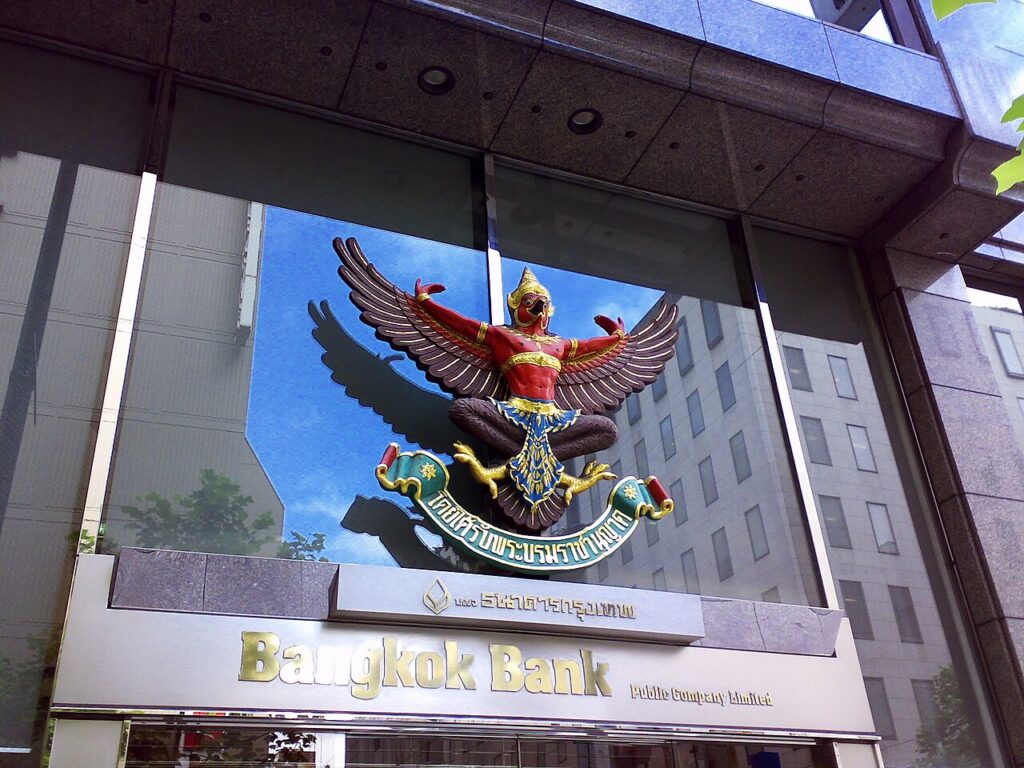
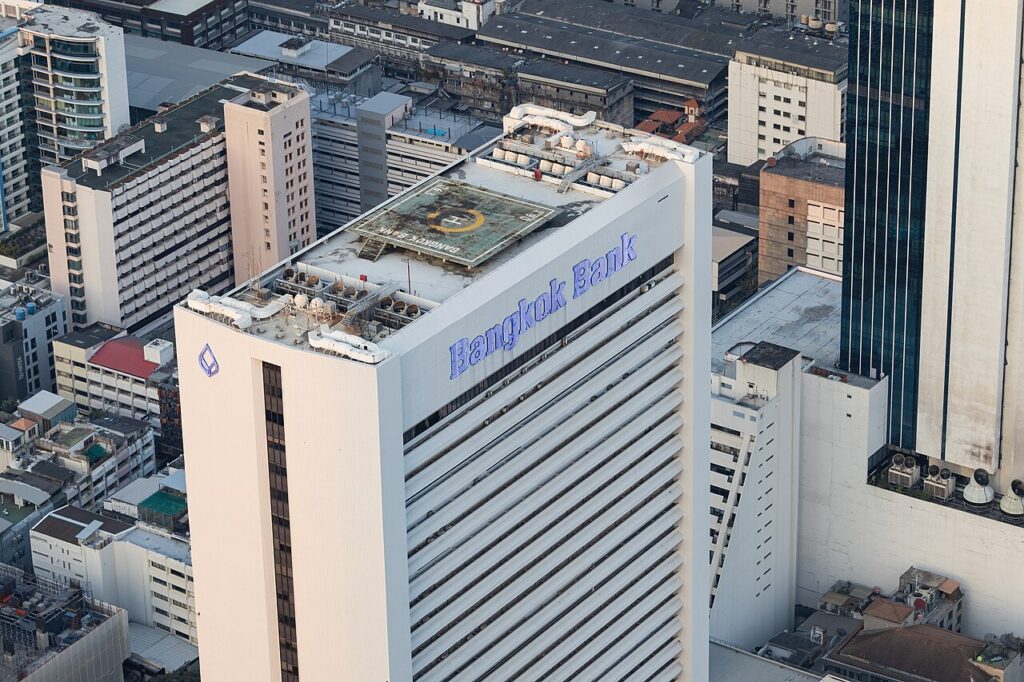
| Receiving fee | Possible | Possible: Bangkok Bank lists 0.25%, minimum ฿200, maximum ฿500 | Usually none when paid out locally |
| Intermediary bank charges | Possible on SWIFT | Possible on SWIFT | None |
The lesson: the advertised fee is often the smallest part. Ask each option for the exact baht that will reach your account, on the same day, for the same amount.
Receiving fees and limits at Thai banks
- Incoming SWIFT wires usually carry a receiving fee, charged to you, not the sender. Bangkok Bank’s published terms give 0.25% of the amount, with a ฿200 minimum and ฿500 maximum per transfer. Other banks have their own tables, so ask yours.
- The bank converts foreign currency at its own telegraphic transfer (TT) buying rate before crediting baht. That rate is a separate cost from the fee.
- Your Thai banking app has its own limits. Under Bank of Thailand rules since 2023, a face scan is needed for app transfers over ฿50,000 at a time or over ฿200,000 in a day, so moving a large arrival on to a landlord or developer takes extra steps. Some banks set lower limits for foreign customers: TTB announced a ฿49,999 daily cap for foreigners from July 2025. Check your own bank before a big payment.
- Keep your passport details up to date with the bank, or app transfers can stop until you visit a branch.
Sending large sums: condo purchases
- To register a condo in a foreigner’s name, the purchase money must come into Thailand from abroad in foreign currency, and the Land Office wants proof. For transfers of about US$50,000 or more, Thai banks issue a Foreign Exchange Transaction form (FET); for smaller ones, ask for a credit advice and a confirmation letter. Sources report that some banks now issue only the confirmation letter, so ask your bank and the Land Office which document they accept.
- Send in your own currency, not baht. If you convert to baht abroad, there is no foreign exchange for the Thai bank to record, and getting the paperwork gets harder.
- Your name, as the buyer, must show as the sender or the receiver. Put the purpose, for example “purchase of condominium unit” with the project and unit number, in the transfer reference.
- Several transfers are fine; keep every FET or credit advice. See buying a condo.
Bringing cash
- Thai Customs requires you to declare foreign currency worth more than US$20,000 when you arrive. Undeclared cash can be seized.
- Exchange booths often give better rates for large notes (US$100, €100) than small ones, and torn or old notes may be refused. See exchanging money.
- Carrying large amounts around town is a risk; a transfer is usually safer.
For retirees and long stayers
- Keep records of money you transfer in. Immigration may want to see transfers for income based retirement extensions, and banks can issue a letter confirming foreign transfers.
- Since 1 January 2024, Thai tax residents (in Thailand 180 days or more in a calendar year) can owe Thai tax on foreign income brought into Thailand in that year. A follow up Revenue Department instruction (Por. 162/2566, November 2023) says income earned before 1 January 2024 is not taxed when you bring it in later, so savings from before 2024 are treated differently from new income. Double tax treaties may also apply. Keeping old savings and new income in separate accounts makes this much easier to show. See Thai tax basics and get advice for your situation.
- Keep transfer receipts and statements for at least a few years.
Tips
- You’ll need a Thai bank account to receive transfers in baht.
- Test with a small amount first, and check the account name exactly matches.
- Set up the payee in advance, so you’re not stuck if a code or app needs updating while you’re here.
- Never send money to someone you’ve only met online, however urgent the story. See common scams.
Common questions
What is the cheapest way to send money to Thailand? Usually an online money transfer service paying into a Thai bank account. Compare the baht received for your amount.
Do Thai banks charge to receive money? Some deduct a small fee on incoming international wires. Transfers paid out locally by money transfer services usually arrive without one.
Is money sent to Thailand taxed? For Thai tax residents, foreign income brought in since 2024 can be taxable. Savings and money that isn’t income are treated differently. Get advice.
How long does a transfer take? From minutes with some online services to a few working days for a bank wire.
Do I need an FET form? Only for things that need proof that money came from abroad, mainly buying a condo in your own name. Below about US$50,000 a transfer, banks give a credit advice or confirmation letter instead.
Why can’t I move the money on from my Thai app? Large app transfers need a face scan (over ฿50,000 at a time or ฿200,000 a day), and some banks cap foreign customers lower. Visit the branch or split the payment.
My transfer hasn’t arrived. What now? Ask the sender for the SWIFT reference (often called the MT103) and give it to your Thai branch. Wrong names or account numbers are the usual cause; money normally bounces back to the sender, minus fees.
Sources
Checked 15 November 2026: Bangkok Bank, transferring money into Thailand; Bangkok Post, mobile banking security rules (face scan limits); TTB, limits for foreign customers (July 2025); KPMG Thailand, Por. 162/2566 on foreign income; Thai Law Online, the FET form; Lex Bangkok, Thai personal income tax for foreigners; Expatica, sending money to Thailand. Fees and limits change; check your bank’s current tables. This is general information, not tax or financial advice.
Records to keep
- Keep transfer receipts. Some visas need proof of money sent from abroad. See retirement visa.
- For a condo purchase, keep the FET form or bank letter for each transfer.
Related pages
 💸 Money & BankingATM Fees in Thailand
 💸 Money & BankingDepositing Cash at 7-Eleven
 💸 Money & BankingBest Exchange Rates in Pattaya
 💸 Money & Banking7-Eleven Stamps in Thailand: What They’re For and How to Use Them
 💸 Money & BankingCash, Cards or QR? Paying in Pattaya
 💸 Money & BankingOpening a Thai Bank Account
Ride along with Jonny
Every guide page comes from the nightly rides through Pattaya. Watch them, ask questions in the community, or help keep the camera rolling.
Watch the rides Join the Telegram Leave a tip Support the rides

 ไทย
 中文
 Русский
 한국어
 Deutsch
 Français