

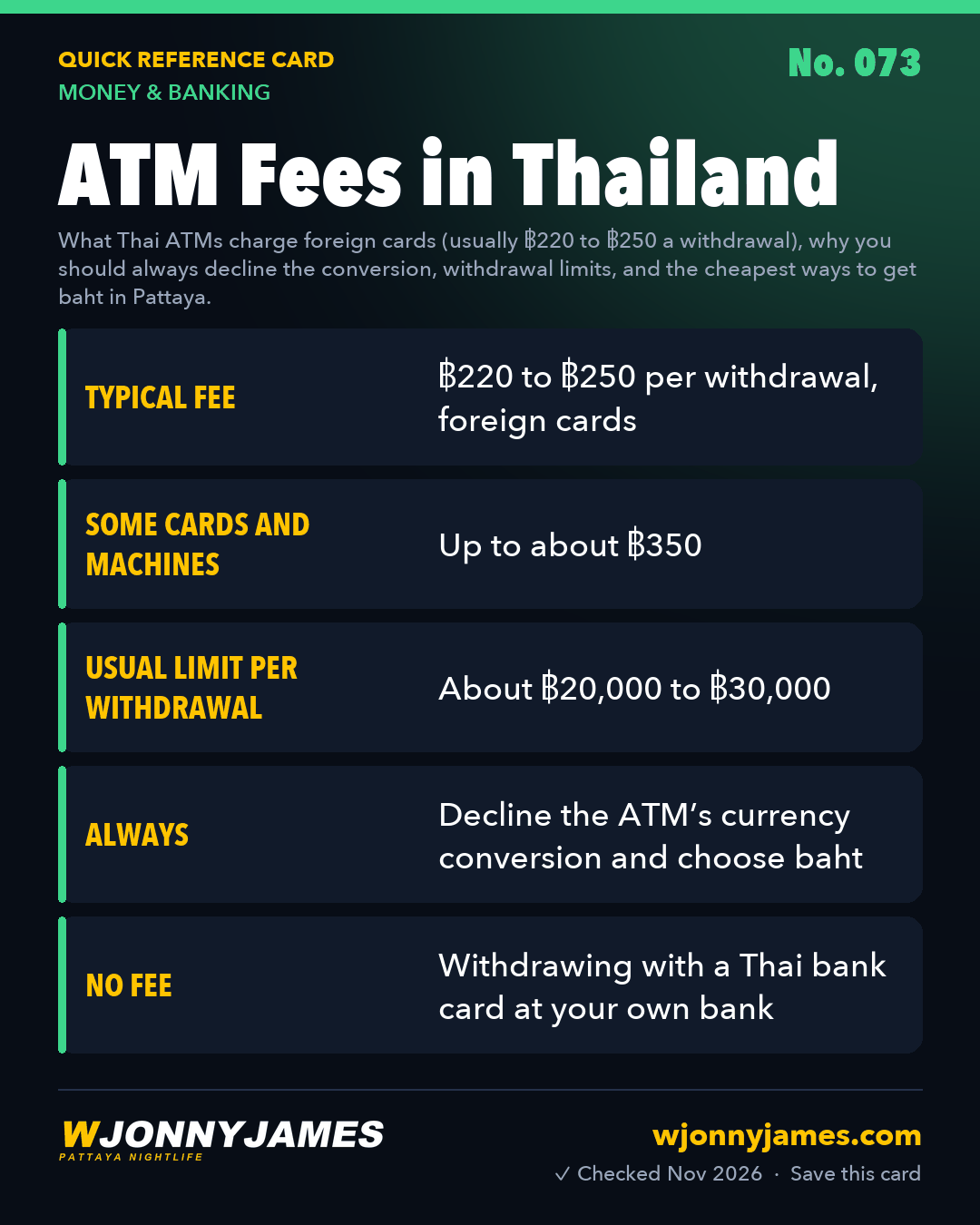
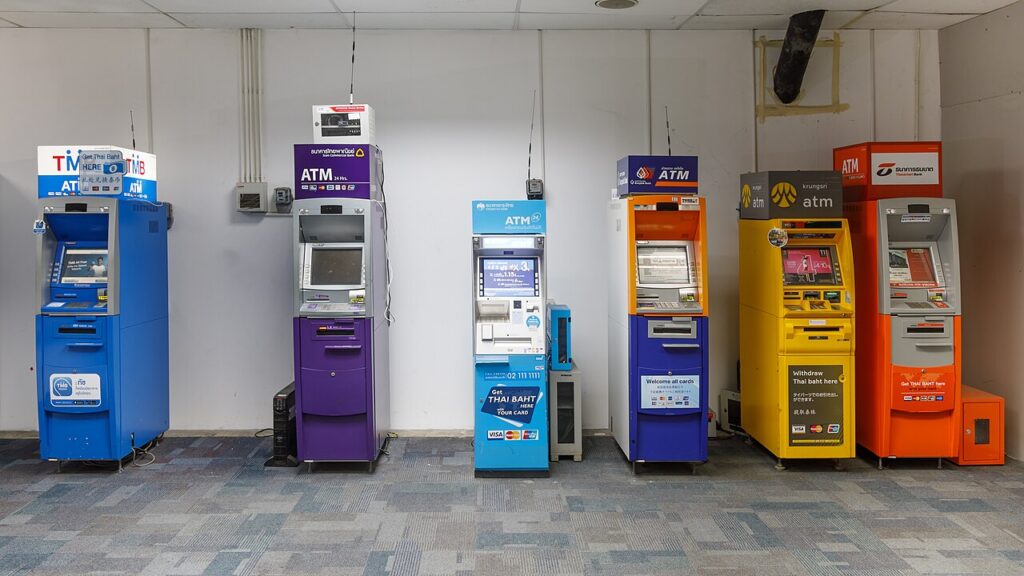
Almost every Thai ATM charges a flat fee when you use a foreign card, on top of whatever your own bank charges. The fee is per withdrawal, not per amount, so how often you withdraw matters more than how much. Here is what you’ll pay in 2026 and how to pay less.
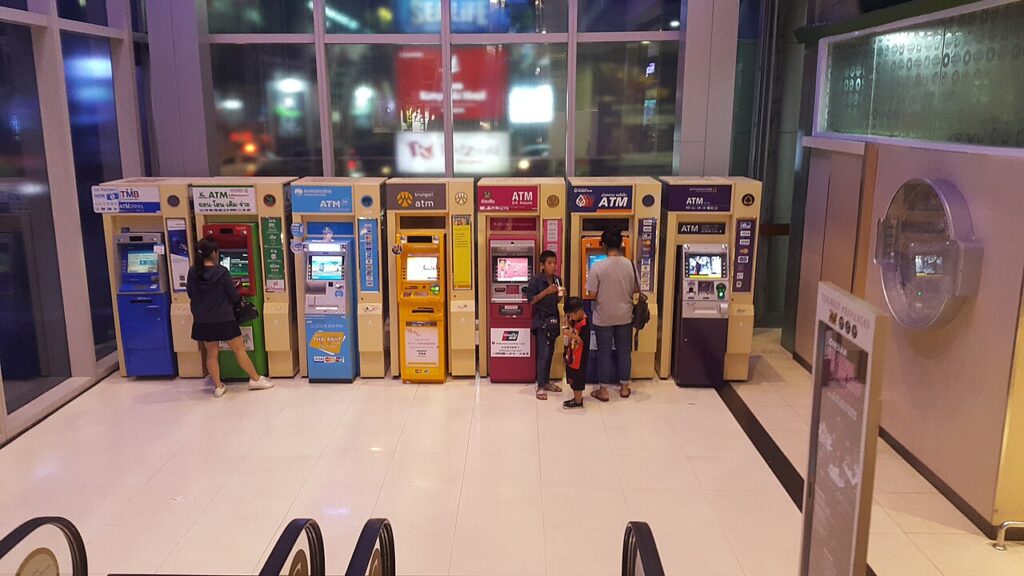
What Thai ATMs charge
| Situation | Fee per withdrawal (approx.) |
|---|---|
| Most Thai banks, foreign card | ฿220 to ฿250 |
| Some card types and machines | Up to about ฿350 |
| Thai bank card at your own bank, same province | Free |
| Thai bank card at another bank | Small fee, usually ฿10 to ฿30 after a few free uses |
Fees have crept up: ฿250 is now the figure most often reported at the big banks, while some machines still show ฿220 and travellers occasionally report less. The fee is always shown on the screen before you confirm, so read it and cancel if you don’t like it. AEON used to be the cheap option at around ฿150, but it closed most of its ATMs in 2024; if you find one still working, it can still be cheaper.
Withdrawal limits
Most machines let you take about ฿20,000 to ฿30,000 per withdrawal with a foreign card. Your own bank may also set a daily limit. Since the fee is the same whatever the amount, take the most you’re comfortable carrying.
The currency conversion trap
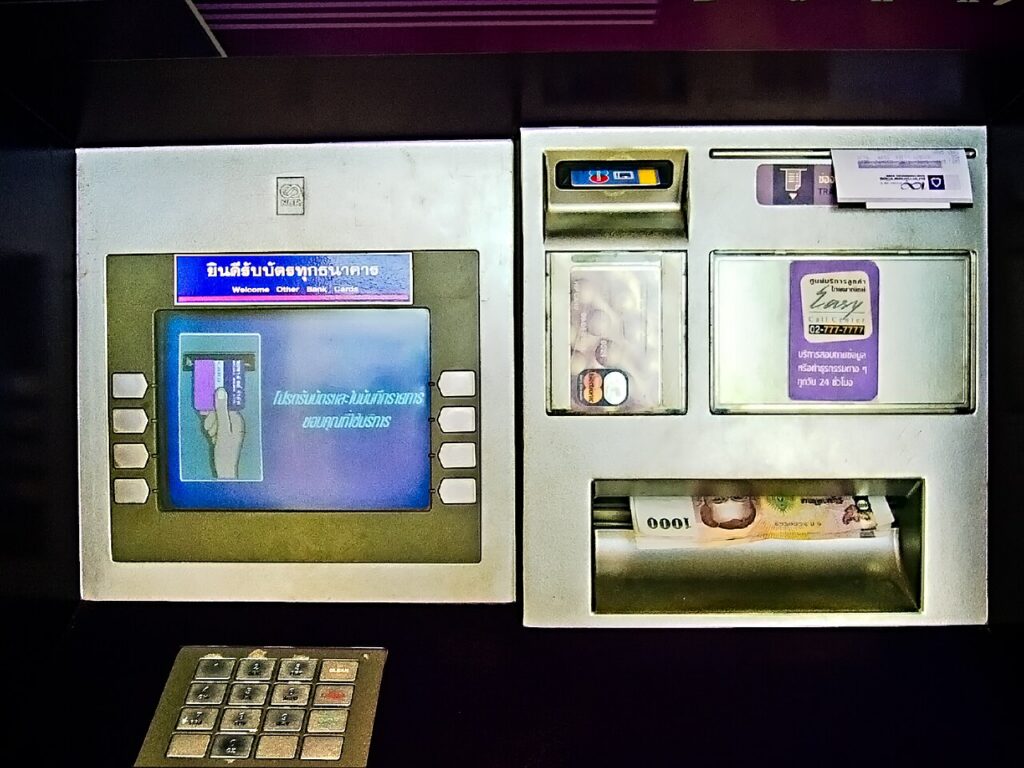
Many ATMs offer to charge you in your home currency “with a guaranteed rate”. Always decline and choose to be charged in baht (often the button says “without conversion”). The ATM’s rate is usually much worse than your bank’s, and on a big withdrawal the difference can be bigger than the ATM fee itself. The same applies when paying by card in shops.
How to pay less
- Withdraw larger amounts less often.
- Use a card that refunds foreign ATM fees, or a travel card with no foreign transaction fee.
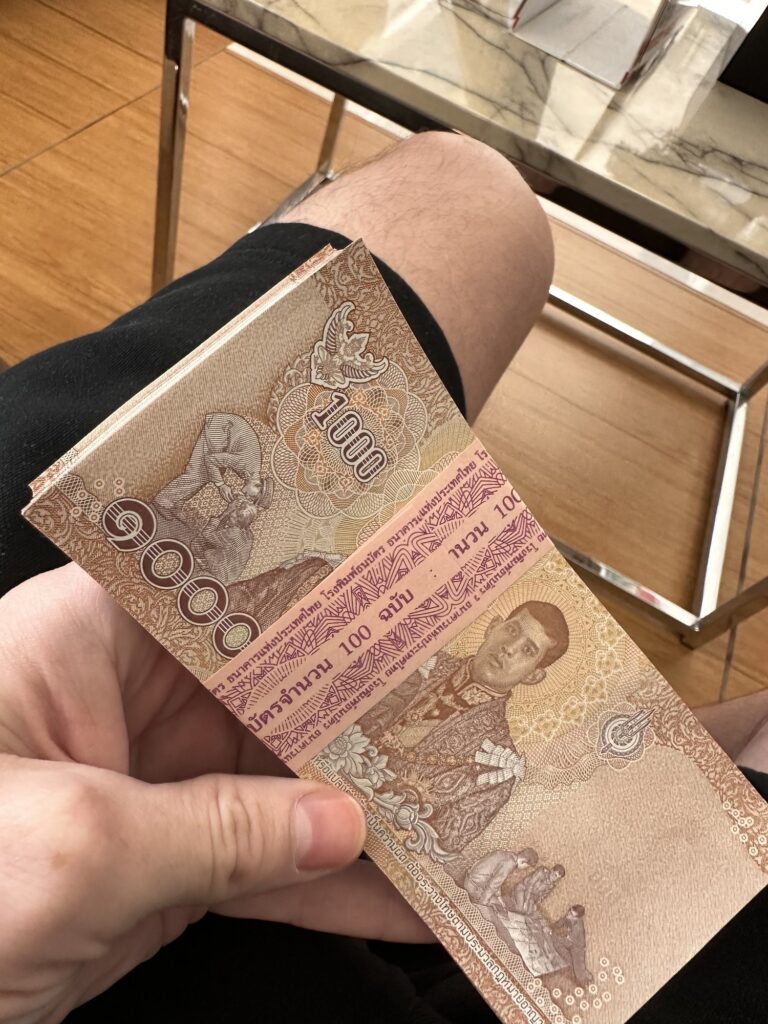
- Bring some cash and change it at a money changer; Pattaya’s changers often beat the ATM rate. See exchanging money.
- Pay by card where it’s accepted, and with a Thai QR app if you have one. See QR payments and PromptPay.
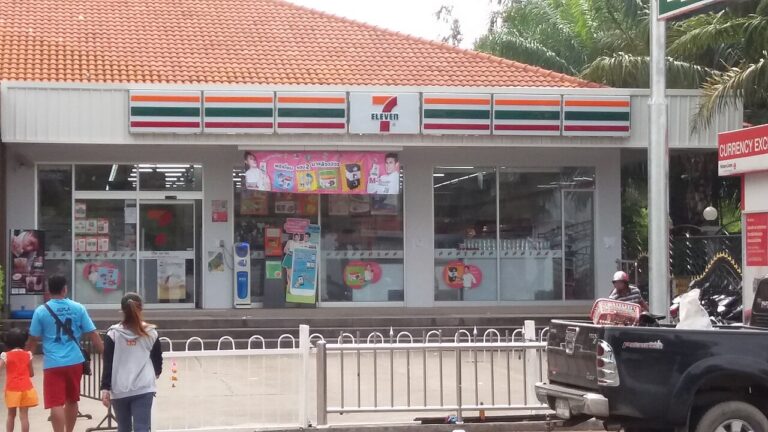
- Living here? A Thai bank account removes the fee, and you can top it up by sending money to Thailand or depositing cash at 7-Eleven.
Safety at the ATM
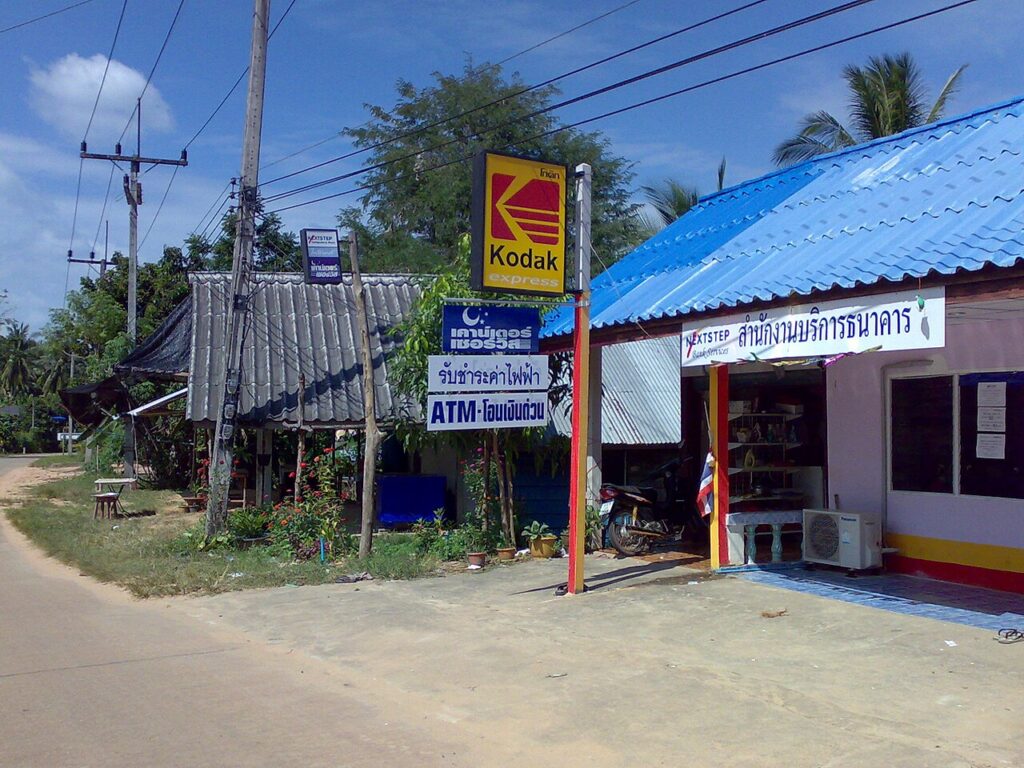
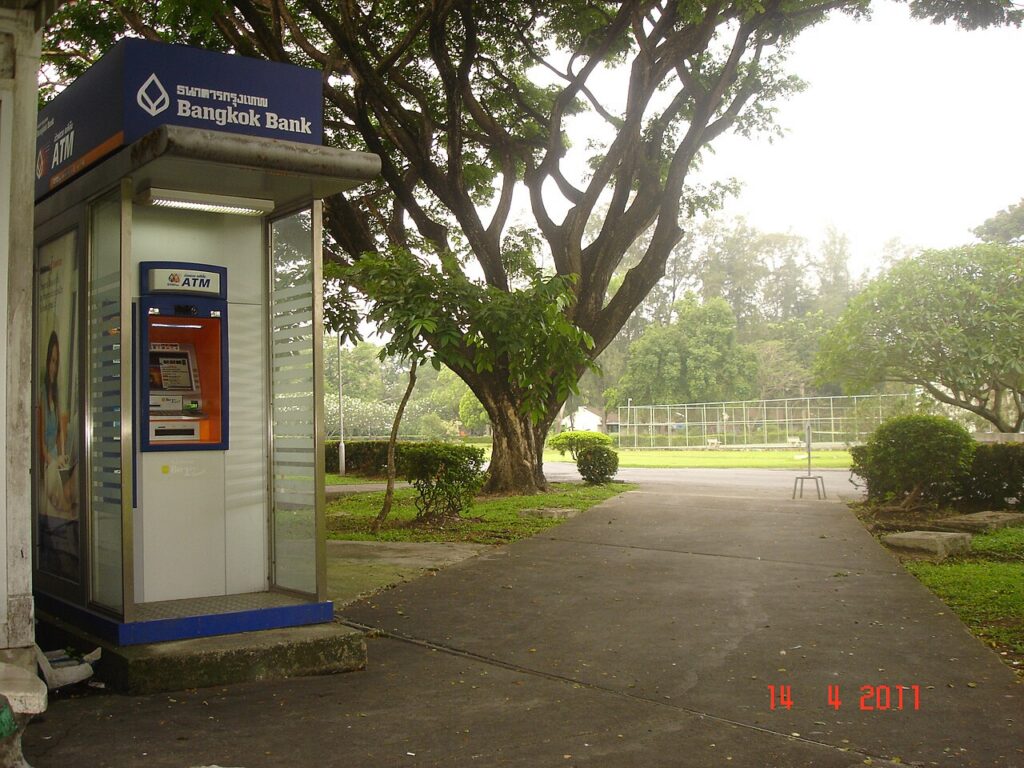
- Use machines attached to a bank branch or inside a mall or 7-Eleven, ideally in daylight.
- Cover the keypad, and check the card slot for anything loose or stuck on.
- Thai ATMs give the cash first and the card after. Wait for your card; forgotten cards are one of the most common problems.
- If the machine keeps your card, contact that bank’s branch with your passport. Report a lost card to your home bank straight away.
- More on staying safe: common scams.
How much cash do you need?
Pattaya still runs on cash for baht buses (฿15), food-deals/street-food/">street food, markets and many bars. See what things cost and drink prices to plan a daily budget.
What it adds up to
| Trip | Withdrawals of ฿20,000 | ATM fees at ฿250 |
|---|---|---|
| One week, ฿30,000 cash | 2 | about ฿500 |
| Two weeks, ฿60,000 cash | 3 | about ฿750 |
| One month, ฿100,000 cash | 5 | about ฿1,250 |
| Withdrawing ฿5,000 at a time for a month | 20 | about ฿5,000 |
The last row is why small, frequent withdrawals hurt. Your home bank may add its own fee and a foreign transaction charge on top.
Common questions
How much do Thai ATMs charge foreign cards? Usually ฿220 to ฿250 per withdrawal, sometimes more. The fee is shown on the screen before you confirm.
Which ATM has no fee in Thailand? With a foreign card, almost none. The way round it is a card that refunds ATM fees, cash exchanged at a money changer, or a Thai bank account.
Should I accept the ATM’s conversion to my home currency? No. Always choose baht, “without conversion”. The ATM’s rate is usually much worse.
How much can I take out at once? Usually about ฿20,000 to ฿30,000 per withdrawal with a foreign card, depending on the machine and your bank.
Sources
Checked 13 November 2026: YouTrip, Thailand ATM withdrawal guide and recent traveller reports. Sources give ฿200 to ฿250; banks don’t publish one clear figure for foreign cards. The fee on the ATM screen is the one that counts.
If the ATM keeps your card
- Use ATMs attached to a bank branch in opening hours, so you can ask staff for help.
- Call your bank to block the card, then visit the branch with your passport.
- Carry a second card in a different place. See cash vs card.
Related pages
 💸 Money & BankingDepositing Cash at 7-Eleven
 💸 Money & BankingBest Exchange Rates in Pattaya
 💸 Money & Banking7-Eleven Stamps in Thailand: What They’re For and How to Use Them
 💸 Money & BankingCash, Cards or QR? Paying in Pattaya
 💸 Money & BankingOpening a Thai Bank Account
 💸 Money & BankingQR Payments & PromptPay
Ride along with Jonny
Every guide page comes from the nightly rides through Pattaya. Watch them, ask questions in the community, or help keep the camera rolling.
Watch the rides Join the Telegram Leave a tip Support the rides

 ไทย
 中文
 Русский
 한국어
 Deutsch
 Français