

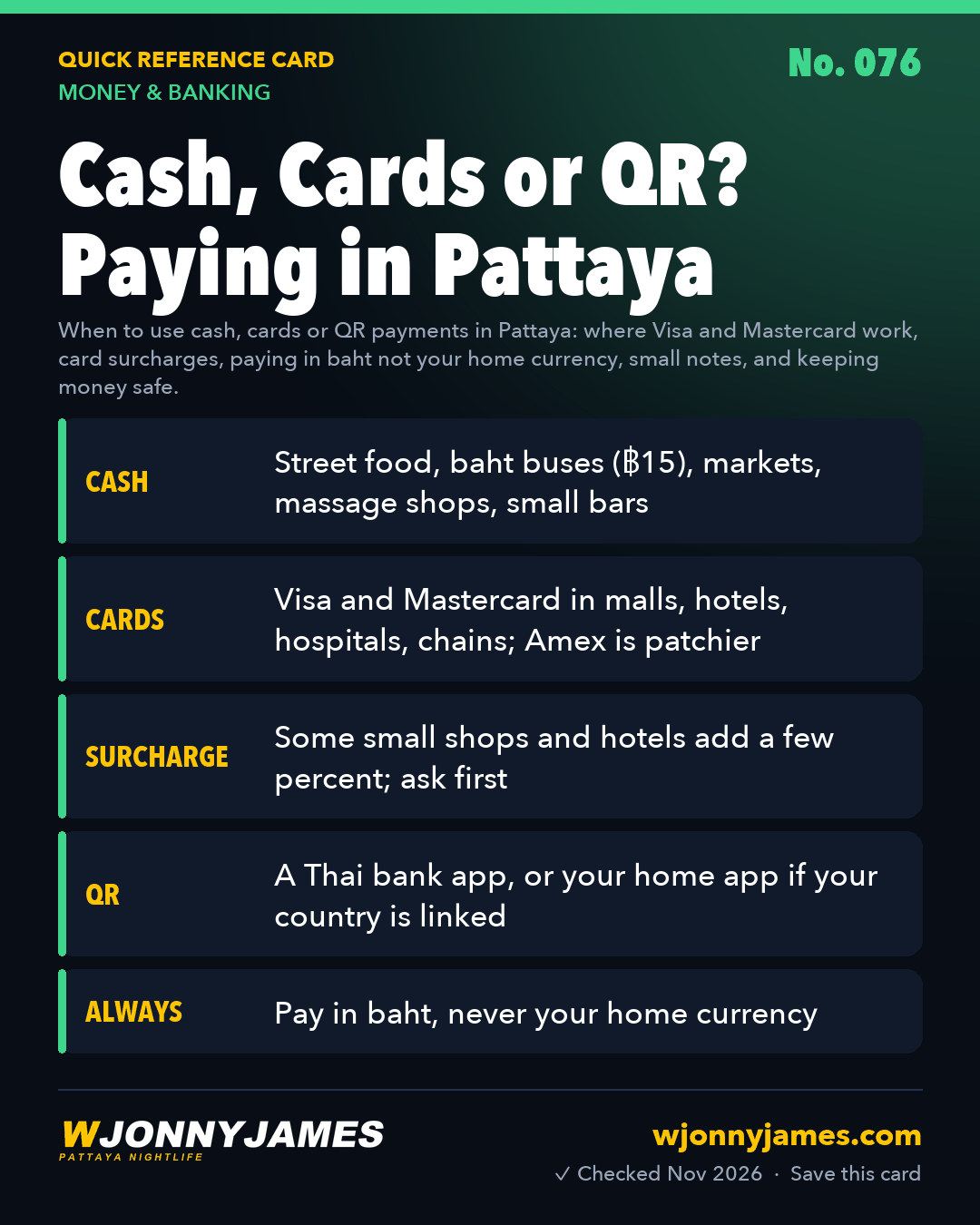
Quick answer: Use cash for the small stuff and a card for the big stuff. food-deals/street-food/">Street food, baht buses (฿15 a ride on the normal loop), markets, motorbike taxis, massage shops and many small bars still want cash or a Thai QR scan. Visa and Mastercard work in malls, supermarkets, hotels, hospitals, chains and most bigger restaurants. Some smaller places add a card surcharge of a few percent, so ask before you pay. Whenever a card machine or ATM offers to charge you in your home currency, say no and pay in baht. Carry small notes, keep a backup card somewhere else, and you’re set.
At a glance
| Paying for | Cash | Card | Thai QR |
|---|---|---|---|
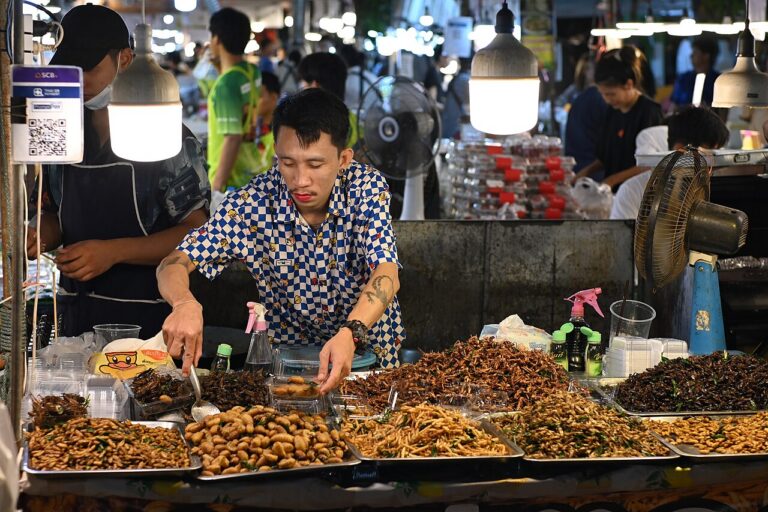
| Street food, markets, fruit stalls | Yes | Rarely | Usually |
| Baht buses and motorbike taxis | Yes | No | Not usually |
| Massage shops, small bars, local restaurants | Yes | Sometimes, maybe with a surcharge | Often |
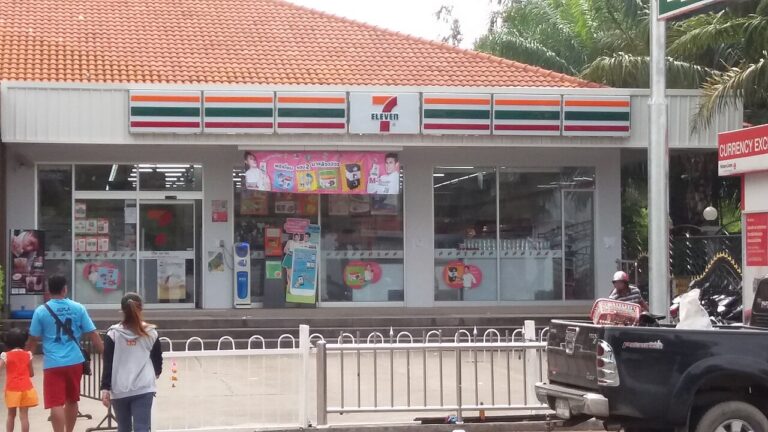
| 7-Eleven, supermarkets, malls | Yes | Yes | Yes |
| Hotels, hospitals, bigger restaurants | Yes | Yes | Often |
| Bolt and Grab | Yes, to the driver | Yes, in the app | Not usually |
Why cash still matters
Thailand pays by phone more every year, but many visitors without a Thai bank account can’t join in, and plenty of Pattaya still runs on notes. A Thaiger guide updated in September 2026 lists street food, wet markets, small family restaurants, songthaews (baht buses), motorbike taxis, beach vendors and small guesthouses as “cash or QR only”. If you don’t have a Thai banking app, that means cash.
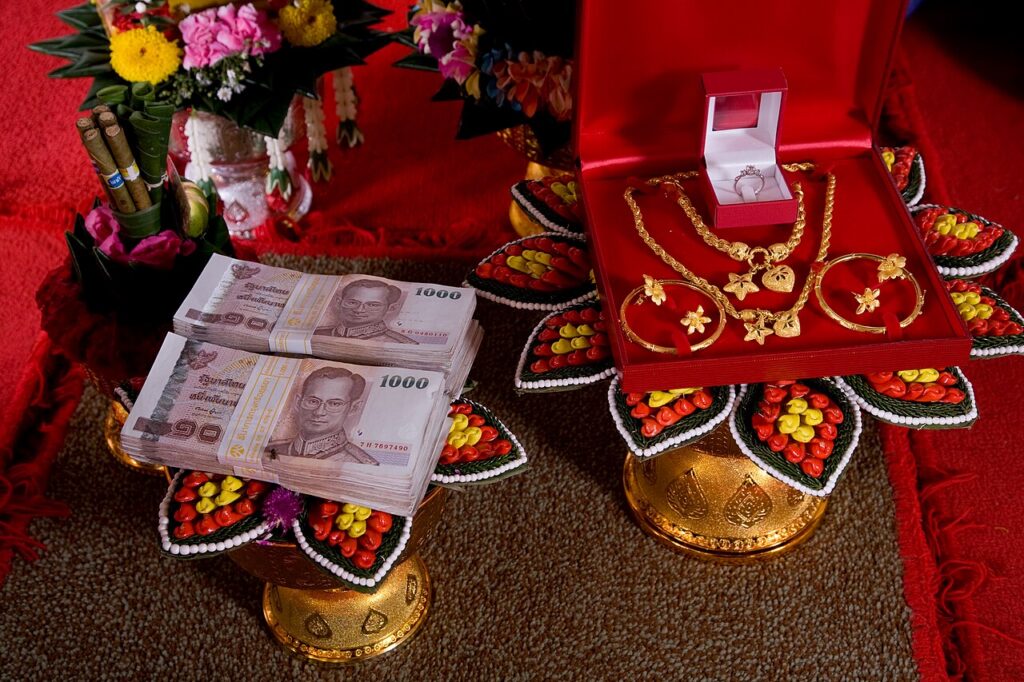
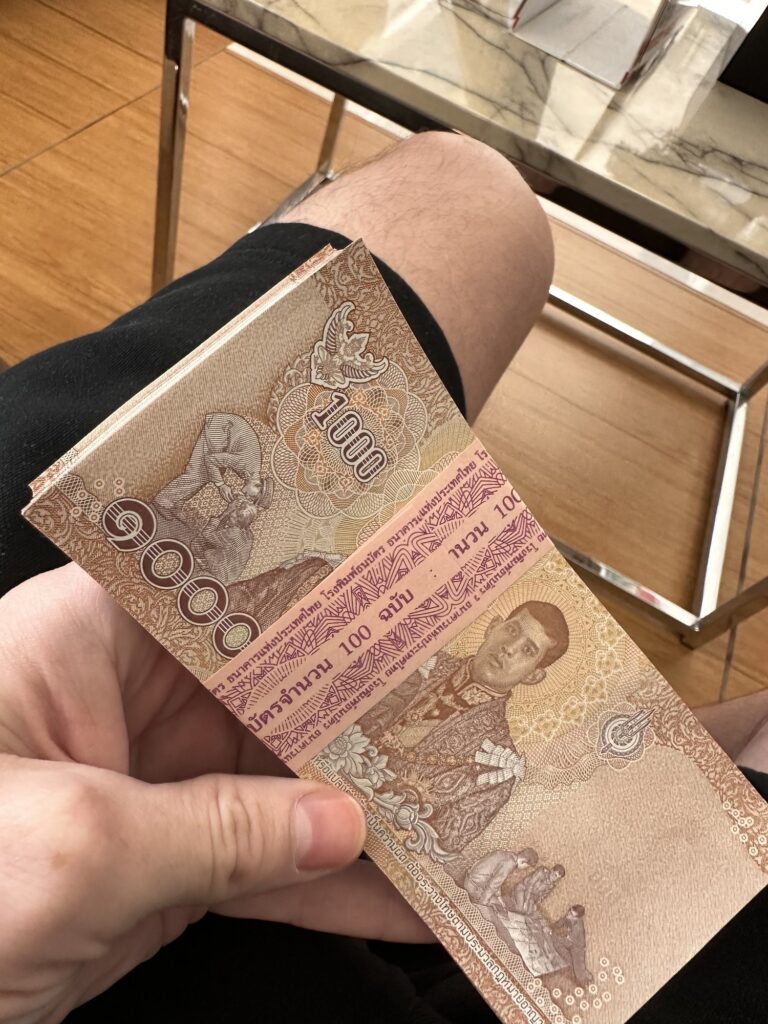
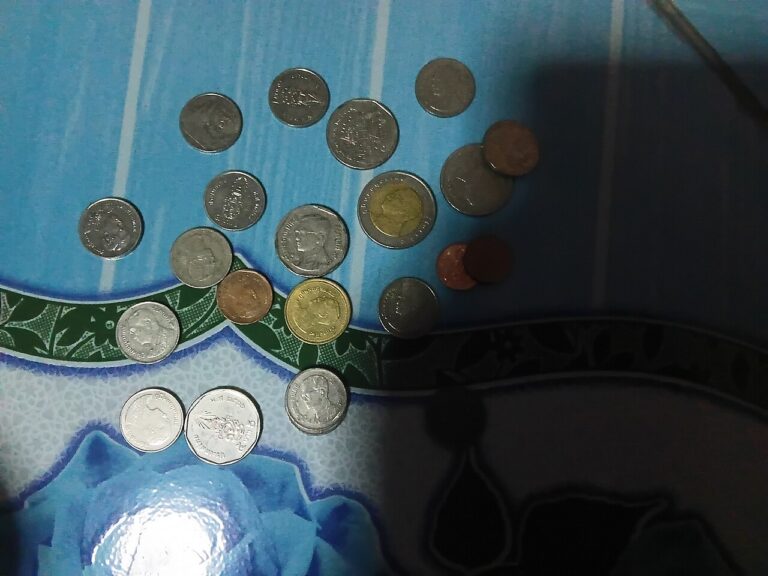
Thai notes come in ฿20, ฿50, ฿100, ฿500 and ฿1,000, with coins of ฿1, ฿2, ฿5 and ฿10. ATMs mostly pay out ฿1,000 notes, which stalls, baht bus drivers and motorbike taxis often can’t change. Break big notes where there’s a till: 7-Eleven, supermarkets, mall food courts. Asking the ATM for an amount like ฿19,900 instead of ฿20,000 can get you some smaller notes, if the machine stocks them.
Pro tip: a cashier claiming your ฿1,000 note was a ฿100 is rare, but it happens, and the two notes look similar.
Look at each note as you hand it over, and count your change before you walk away.
When cards work
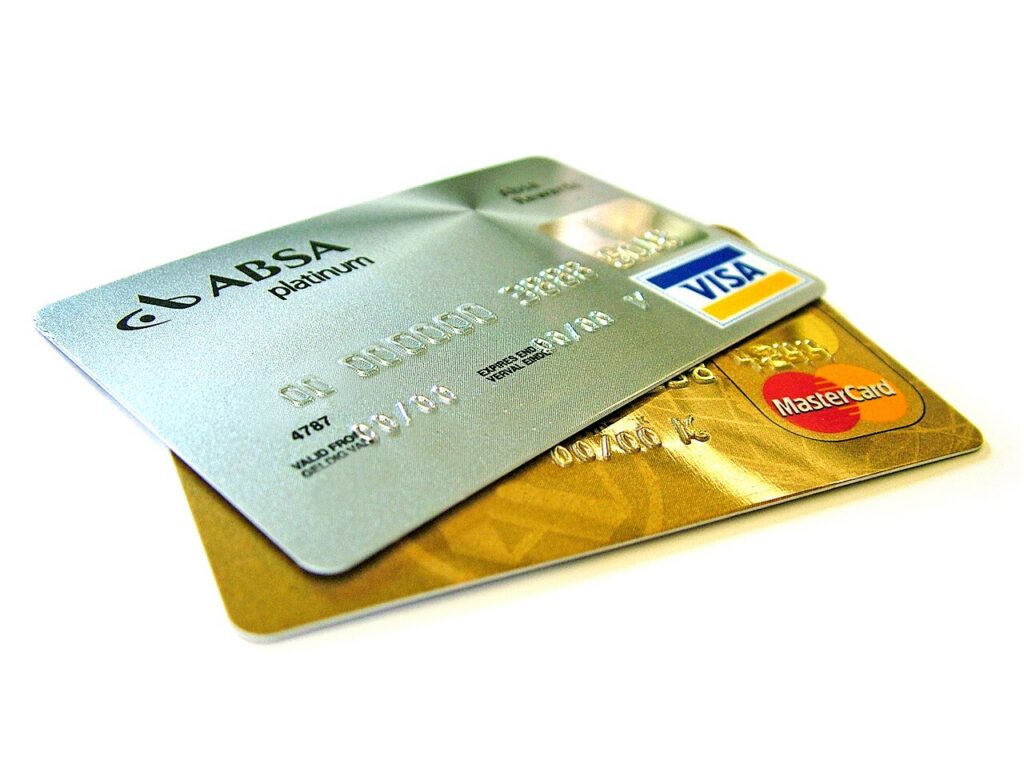
- Where: malls, chains, supermarkets, hotels, hospitals and most city restaurants take Visa and Mastercard. American Express is accepted less often, so carry a backup card on another network.
- Surcharges: some small hotels and independent shops add a few percent for cards. Thaiger says it is often negotiable. Ask first, and pay cash if the extra isn’t worth it.
- Your bank’s fee: many home banks add a foreign transaction fee of about 2 to 3% on every card payment abroad. A card without that fee saves money on a long stay.
- Tap to pay: contactless cards and phone wallets work at many bigger shops. Smaller places may ask you to insert the card and type your PIN.
- Hotels: expect a deposit hold on your card at check in. It is released after check out, but can take days to drop off your statement.
- Hospitals: private hospitals take cards, and may want a deposit before treatment. See hospital costs.
Always pay in baht
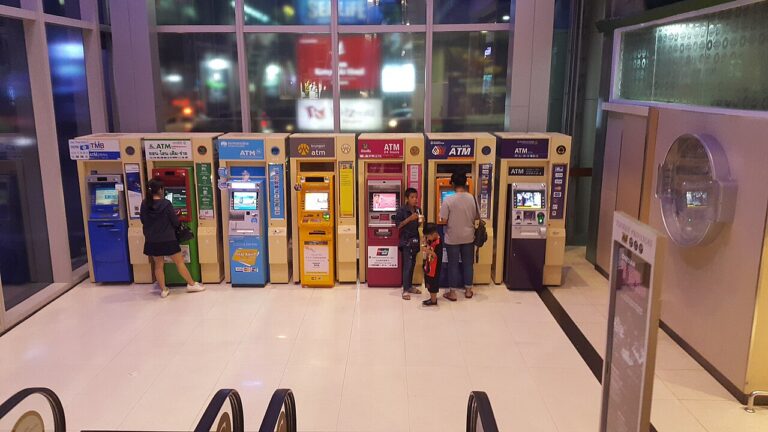
If a card machine or ATM asks whether you want to pay in dollars, pounds or euros “at a guaranteed rate”, choose baht (THB). That offer is called dynamic currency conversion, and the rate is set by the machine’s provider, not your bank. It is almost always worse. If a shop runs your card in your home currency without asking, ask them to cancel and run it again in baht before you sign. At ATMs, press “without conversion” or the equivalent. See ATM fees, where the withdrawal fee itself is usually ฿220 to ฿250 per foreign card withdrawal.
QR payments
Almost every shop and stall has a Thai QR code by the till. With a Thai bank app you can pay nearly anywhere, instantly. Visitors from linked countries, including China, Hong Kong, Singapore, Malaysia, Indonesia, Vietnam, Cambodia, Laos and South Korea, can scan with their home apps. Cross border Thai QR payments are growing fast: Time Out Bangkok reported, from National ITMX figures, that the value of cross border Thai QR payments in December 2025 was up 143% on a year earlier. See QR payments and PromptPay and mobile banking apps.
How much cash to carry
- For a normal day out, carry enough for food, transport and a massage in small notes. See Pattaya on 1,000 baht a day for what a day costs.
- Leave the rest, your passport and a backup card in the room safe.
- Bringing cash from home? Large, clean notes get the best rate. See exchanging money.
- Using ATMs? Fewer, larger withdrawals keep fees down. Living here? A Thai bank account removes the foreign card fee, and you can top it up by depositing cash at 7-Eleven.
Keeping money safe
- Split cash between your wallet, a pocket and the room safe.
- Keep your card in sight when you pay, and check the amount on the screen before you enter your PIN.
- Check bills before paying, especially in tourist areas. See common scams; for scams you can call 1441.
- Save your bank’s international phone number somewhere other than your phone, so you can block a lost card quickly.
Common questions
Is Pattaya cash or card? Both. Cards work in malls, hotels, chains and bigger restaurants, but street food, baht buses, markets and many small shops want cash or a Thai QR scan.
Should I pay in my home currency or baht? Always baht. The conversion offered by card machines and ATMs is almost always more expensive than your own bank’s rate.
Can I pay a baht bus by card? No. Pay the driver in cash when you get off: ฿15 on the normal loop, up to about ฿20 on longer runs.
Do Thai shops charge extra for cards? Some smaller shops and hotels add a few percent. Ask first; it is often negotiable, or you can pay cash.
Sources
Checked 13 November 2026: The Thaiger, using cards in Thailand (updated 10 September 2026); Time Out Bangkok, Thai QR cross border payments up 143% (3 February 2026). Card surcharges and bank fees vary by shop and card issuer; check before you pay.
Related guides
Related pages
Ride along with Jonny
Every guide page comes from the nightly rides through Pattaya. Watch them, ask questions in the community, or help keep the camera rolling.
Watch the rides Join the Telegram Leave a tip Support the rides
 ไทย
 中文
 Русский
 한국어
 Deutsch
 Français