

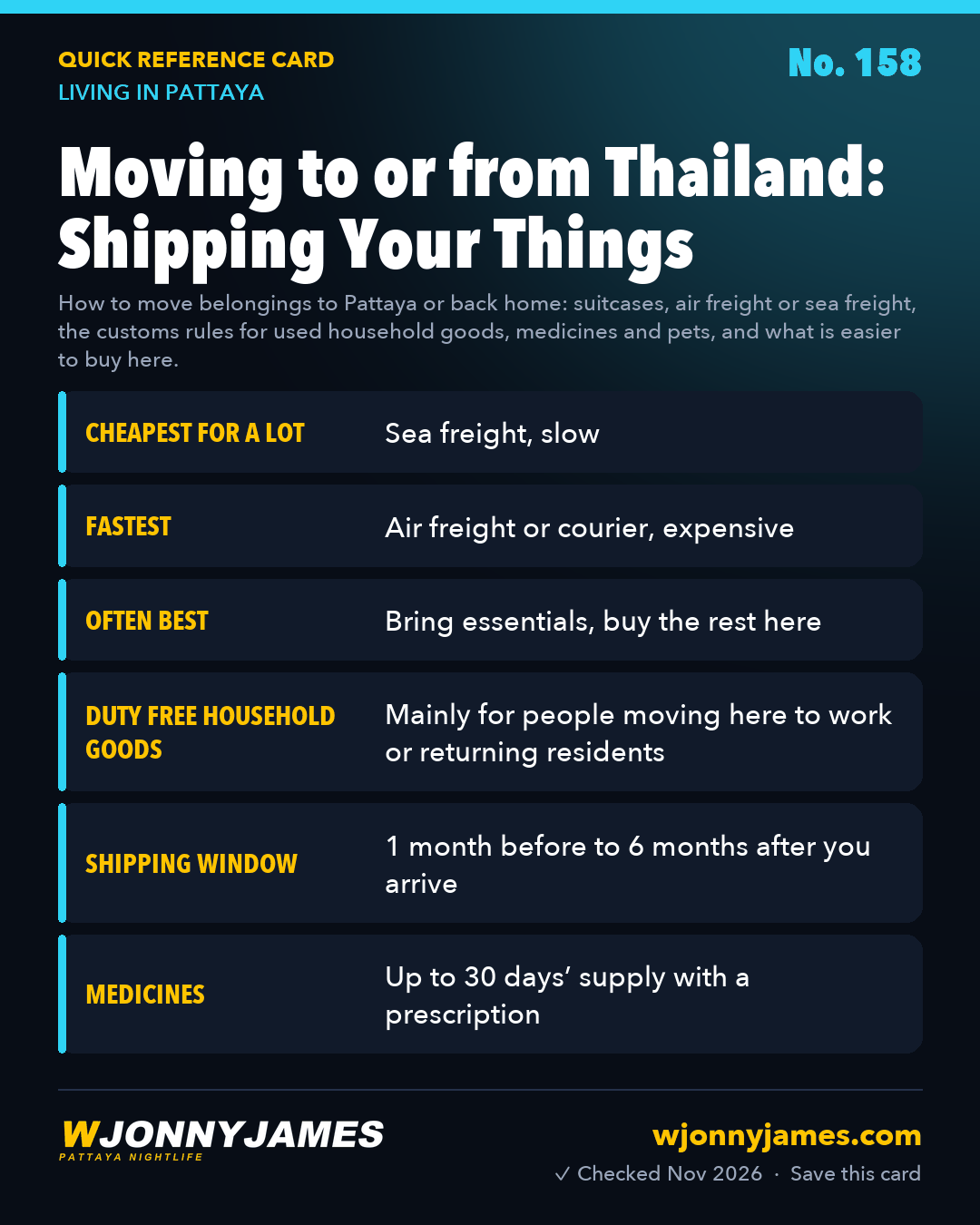
Quick answer: Most people who move to Pattaya bring far less than they expect, because furniture, appliances and household basics are easy and cheap to buy here. Extra suitcases are usually the cheapest way to bring clothes and personal items, air freight suits a few boxes, and sea freight is the cheapest way to move a lot, but slow. Thai Customs lets used household goods in duty free mainly for people changing residence to work here on a one year visa or work permit and for returning residents, and the goods must arrive between one month before and six months after you. Other movers may pay duty, so ask your removal company before you ship. Bring medicines in their original packs with a prescription, up to 30 days’ supply.
At a glance
| Option | Best for | Speed | Watch out for |
|---|---|---|---|
| Extra suitcases | Clothes, small electronics, documents | With you | Airline weight limits and excess fees |
| Courier or air freight | A few boxes | Days to a couple of weeks | Expensive by weight; duty on new items |
| Sea freight | Part or all of a household | Several weeks plus customs | Packing quality, insurance |
| Buy here | Furniture, appliances, kitchen basics | Same week | Quality varies; check before you buy |
Your options
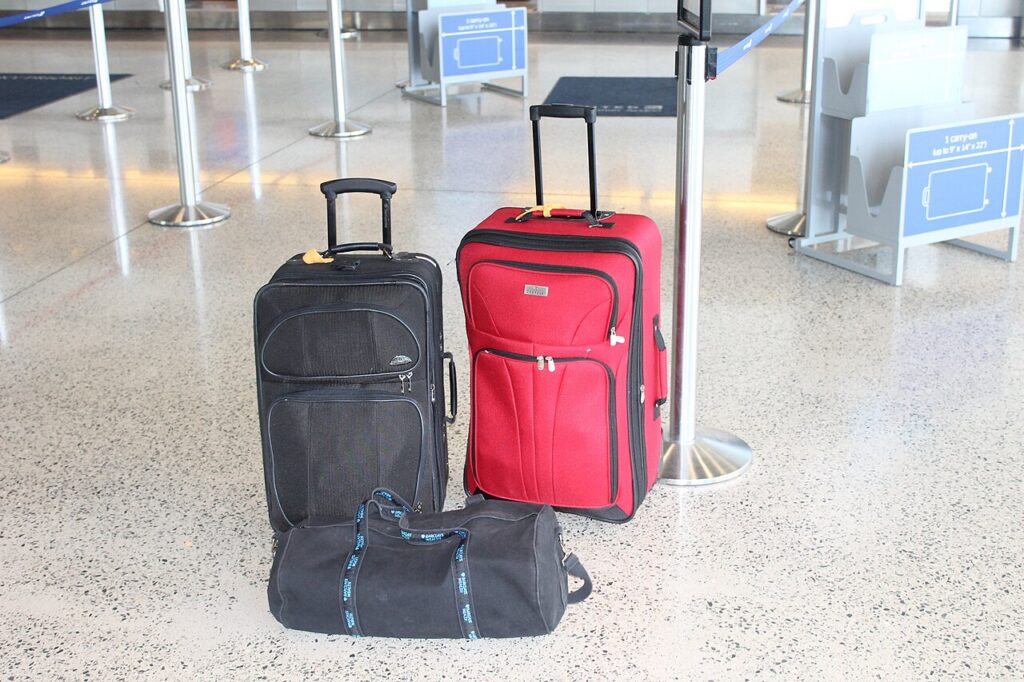
- Extra suitcases. Often the cheapest way to bring clothes, small electronics and personal items.
- Air freight or courier. Fast but priced by weight, so it suits a few boxes. Thailand Post’s EMS and international couriers also work for sending things home. See post offices and shipping and shipping parcels.
- Sea freight. The cheapest way to move a lot. International removal companies pack, ship, clear customs and deliver. Thailand’s main deep sea port, Laem Chabang, is in Chonburi just north of Pattaya, which helps with delivery here.
- Get two or three quotes, ask what is included at both ends, and insure anything you would hate to lose.
Customs: used household goods
The exemption rules, as Thai Customs sets them out for household effects:
- Who qualifies: people changing residence to Thailand who will work here on a one year non-immigrant visa or hold a work permit of at least one year, their accompanying spouse, and Thai nationals or residents returning after at least a year abroad.
- Not everyone qualifies. If you are coming on a retirement, marriage, DTV or tourist stay, ask your removal company before you ship whether the exemption applies to you; if it doesn’t, duty and VAT may be due.
- Used, owned and reasonable. Goods must have been owned and used abroad, in reasonable quantities. Electrical appliances such as TVs, fridges and air conditioners are limited to one of each, or two for a family; extra units are taxed.
- Timing: the shipment must arrive no earlier than one month before and no later than six months after you arrive.
- Paperwork: passport, visa or work permit evidence, bill of lading or air waybill, packing list and a duty exemption application. Your mover usually handles it.
- New items, alcohol and anything in large quantities may be taxed. E cigarettes and vapes are banned in Thailand; don’t pack them. See laws visitors break.
Medicines
- You can bring up to 30 days’ supply of a prescribed medicine for personal use, in its original labelled packs, with a letter or prescription from your doctor, according to Thai embassy guidance.
- Some medicines, such as certain strong painkillers, sedatives and stimulants, are controlled in Thailand. These may need a Thai FDA permit applied for online at least two weeks before you travel, or may not be allowed at all. Check your medicine on the Thai FDA’s traveller permit site first.
- Most common medicines are available here. See pharmacies and medicines and ask a doctor or pharmacist about equivalents.
Pets
Bringing a dog or cat needs an import permit from the Department of Livestock Development, a microchip, rabies vaccination and a health certificate, arranged before you fly. The steps as the Royal Thai Consulate General in Chicago sets them out (checked November 2026; other embassies give slightly different timings, so check the one for your country):
| Step | Timing | Notes |
|---|---|---|
| Microchip | Before you apply for the permit | The microchip certificate goes with the permit application |
| Rabies and other vaccines | At least 21 days before you fly | Dogs: rabies, distemper, hepatitis, parvo, leptospirosis. Cats: rabies, feline panleukopenia. Records in English |
| Import permit (Form R1/1) | Apply at least 7 business days before departure | Emailed to the Animal Quarantine Station at your arrival airport (Suvarnabhumi, Phuket or Chiang Mai); valid 60 days |
| Health certificate | Within 10 days of travel | Issued by a vet and endorsed by your home country’s government; original paper only |
| Arrival | On landing | Inspection by the quarantine station, ฿500 per animal in cash; healthy pets are usually not quarantined |
Pets must be at least four months old. A rabies blood test is listed as optional from the US, but some countries’ rules differ, and airlines have their own crate and breed rules, so ask your airline before you book. A pet relocation company can handle all of it for a fee. See living with a dog.
A simple moving timeline
| When | What to do |
|---|---|
| 2 to 3 months before | Decide what to bring, sell or store. Get two or three removal quotes. Start pet paperwork if you have one |
| 6 to 8 weeks before | Book the mover or freight, check whether you qualify for the household goods exemption, ask your doctor for prescriptions and a letter |
| 2 to 4 weeks before | Pack or have the mover pack, make a full packing list, insure the shipment, check your medicines on the Thai FDA site |
| Moving week | Carry documents, medicines, valuables and a week of essentials with you, not in the freight |
| After you arrive | Your shipment must arrive within six months. Keep your passport and visa copies handy for customs clearance |
Sea freight often lands after you, so book short term furnished accommodation for the first weeks. See renting a condo.
What to bring, what to buy
- Bring: important documents and certified copies, prescriptions, electronics you rely on, favourite kitchen tools, quality bedding or towels if you are fussy, and clothes in larger sizes, which can be harder to find.
- Buy here: furniture, appliances, fans, most kitchen basics and everyday clothes. See shopping malls and second hand buy and sell.
- Thailand uses 220V. Check that chargers and appliances accept it, and bring adapters for your plugs.
Pro tip: what I miss most is food-deals/western-food/">Western food. Soft drinks aren’t the same, and I can’t quite get the same milk, pasta sauce, breads and flavours; what comes close costs a lot. Toiletries can surprise you too: the deodorant I used for years isn’t sold here except imported, at about ฿500 (as of Nov 2026). After three years I found a Nivea roll on that works fantastically and is ridiculously cheap.
More on that: deodorant and toiletries and Western food in Pattaya.

Moving home from Thailand
- Sell what you can first: furniture and appliances often sell quickly in local groups. See second hand buy and sell.
- Check your home country’s rules for returning residents before you ship; most have their own duty relief for used household goods.
- Buddha images and antiques generally need an export permit from Thailand’s Fine Arts Department. Ask your mover before you pack one.
- Give your landlord notice, get your deposit back, and settle utility bills. Keep or close your Thai bank account depending on whether you will return. See Thai bank account and leaving Thailand.
Moving inside Thailand
For moves between Pattaya and other Thai cities, see moving things between cities.
Common questions
Do I pay import duty on my household goods? Used goods are duty free if you qualify, mainly people moving here to work on a one year visa or work permit and returning residents, and if they arrive within the time window. Otherwise duty and VAT may be due.
How long does sea freight to Pattaya take? Several weeks at sea plus time for customs clearance, depending on the route. Your mover will give an estimate.
Can I bring my medicines to Thailand? Usually yes, up to 30 days’ supply with a prescription. Controlled medicines may need a Thai FDA permit or may be banned.
Do pets go into quarantine in Thailand? Usually not, if the paperwork is complete and the animal shows no sign of illness on arrival, but the quarantine officer can hold any animal. Expect a ฿500 fee per pet.
Should I ship my furniture? Usually not. Furniture is easy and cheap to buy here, and many rentals come furnished. Ship things that are valuable to you or hard to replace.
Sources
Checked 13 November 2026: Airports of Thailand (Suvarnabhumi), household items import clearance, setting out the Thai Customs exemption rules; Royal Thai Embassy London, bringing medications to Thailand (updated March 2024); Thai Customs Department (contact centre 1164); Royal Thai Consulate General Chicago, bringing pets to Thailand (checked 15 November 2026). Rules change and depend on your visa; confirm with your removal company and Thai Customs before you ship. General information, not legal advice.
Useful next steps
- See first week checklist.
- See visa options.
- See opening a Thai bank account.
Related pages


Ride along with Jonny
Every guide page comes from the nightly rides through Pattaya. Watch them, ask questions in the community, or help keep the camera rolling.
Watch the rides Join the Telegram Leave a tip Support the rides
 ไทย
 中文
 Русский
 한국어
 Deutsch
 Français