

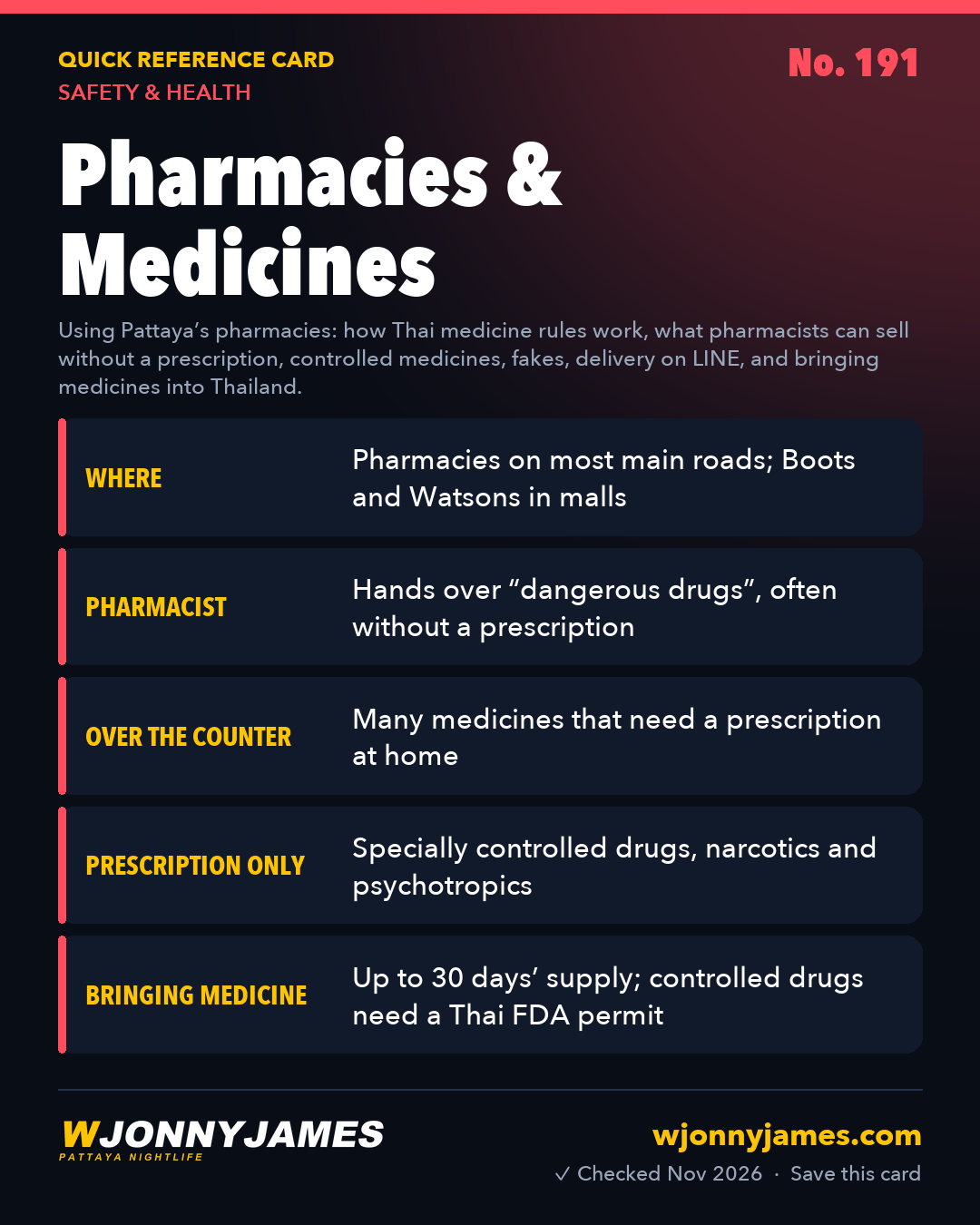
Quick answer: Pattaya has pharmacies on almost every main road, from small family shops to chains like Boots and Watsons in the malls. Thai law lets a pharmacist sell many medicines that would need a doctor’s prescription in the West, so for minor problems a pharmacy is often the quickest first stop. Strong painkillers, sleeping pills, anti anxiety and ADHD medicines are a different story: they’re tightly controlled and need a prescription. If you bring medicines into Thailand, carry no more than 30 days’ supply in the original packaging with your prescription, and check whether yours needs a Thai FDA permit. This page is general information, not medical advice: ask a pharmacist or doctor about your own situation.
At a glance
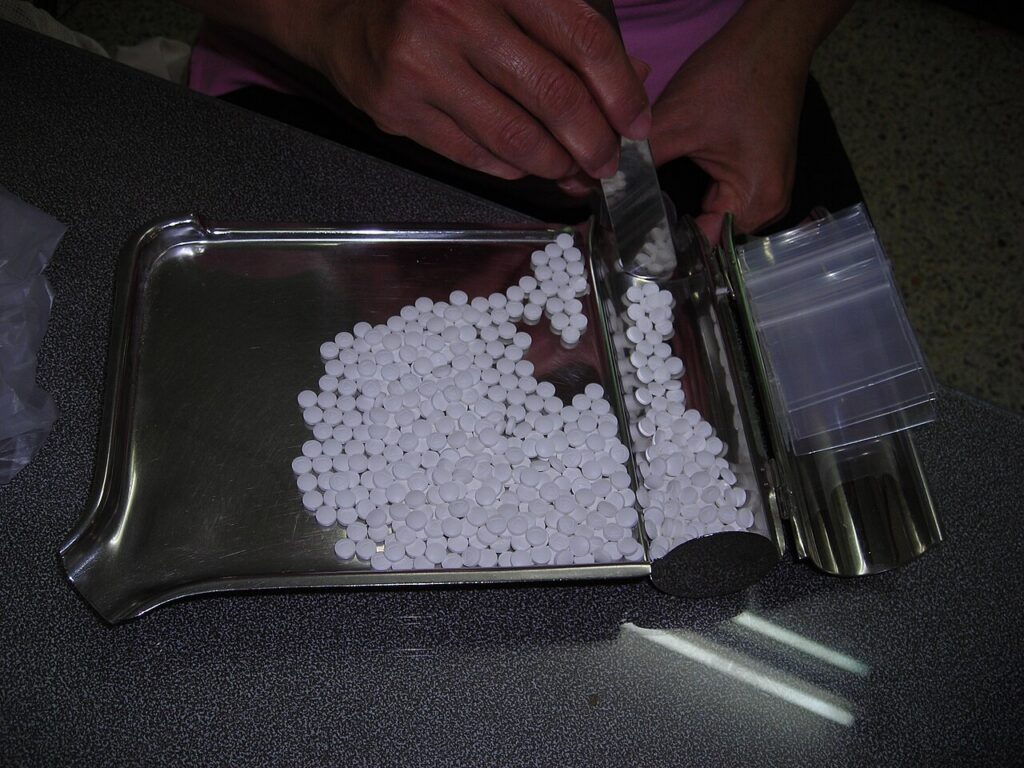
Thai law puts medicines into groups. The group decides where a medicine can be sold and who can hand it over.
| Group | Where and how it’s sold |
|---|---|
| Household remedies | Basic, lower risk products; some may be sold outside pharmacies |
| Dangerous drugs (ya antarai) | Pharmacy only, handed over by the pharmacist; often no prescription needed. Many antibiotics are in this group |
| Specially controlled drugs | Prescription needed |
| Narcotics and psychotropic substances | Prescription and strict legal controls; a permit to bring them into Thailand |
The same medicine can sit in different groups depending on strength and form, so the box in your hand at home may not follow the same rule here.
Where to go
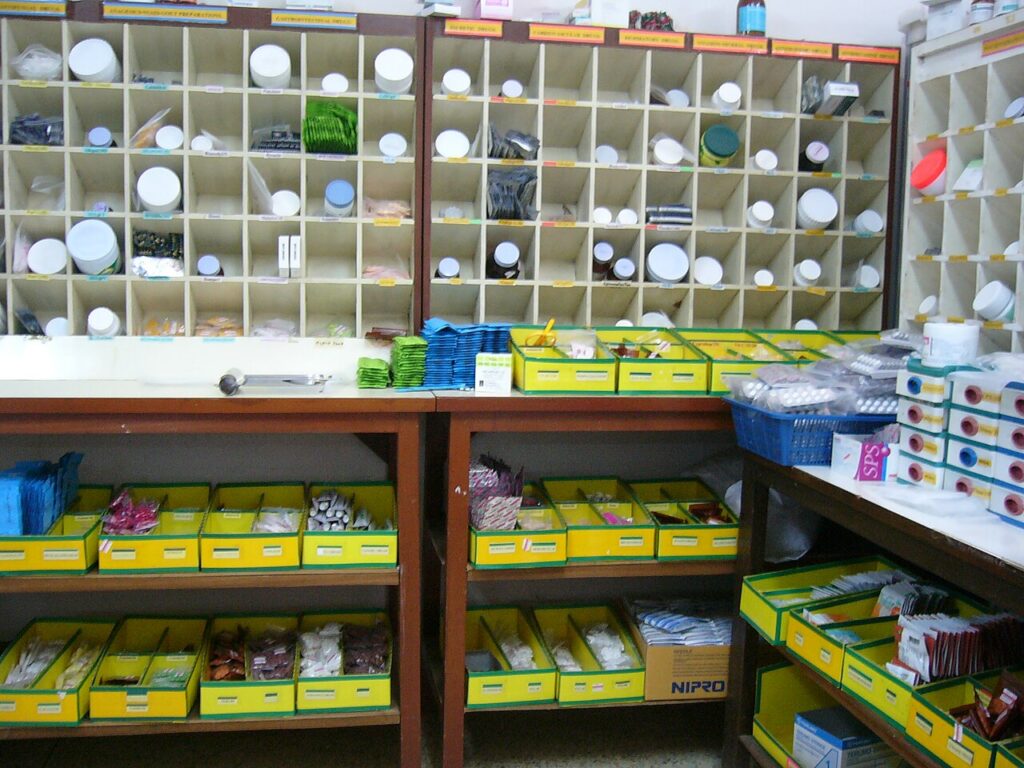
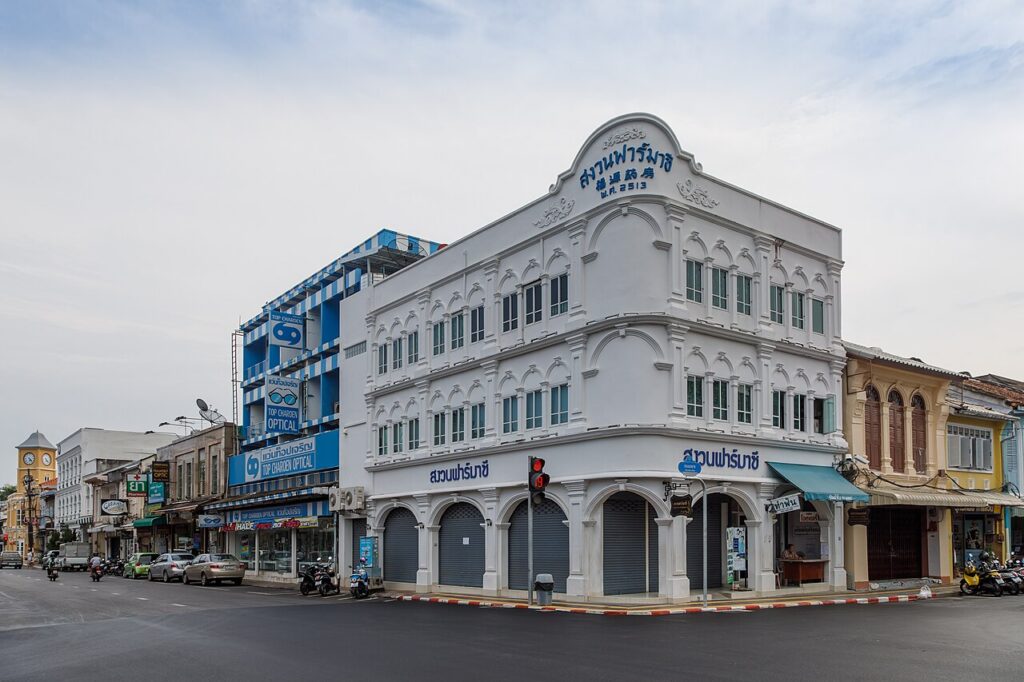
- Local pharmacies are everywhere, often with a pharmacist who speaks some English. Some open 24 hours.
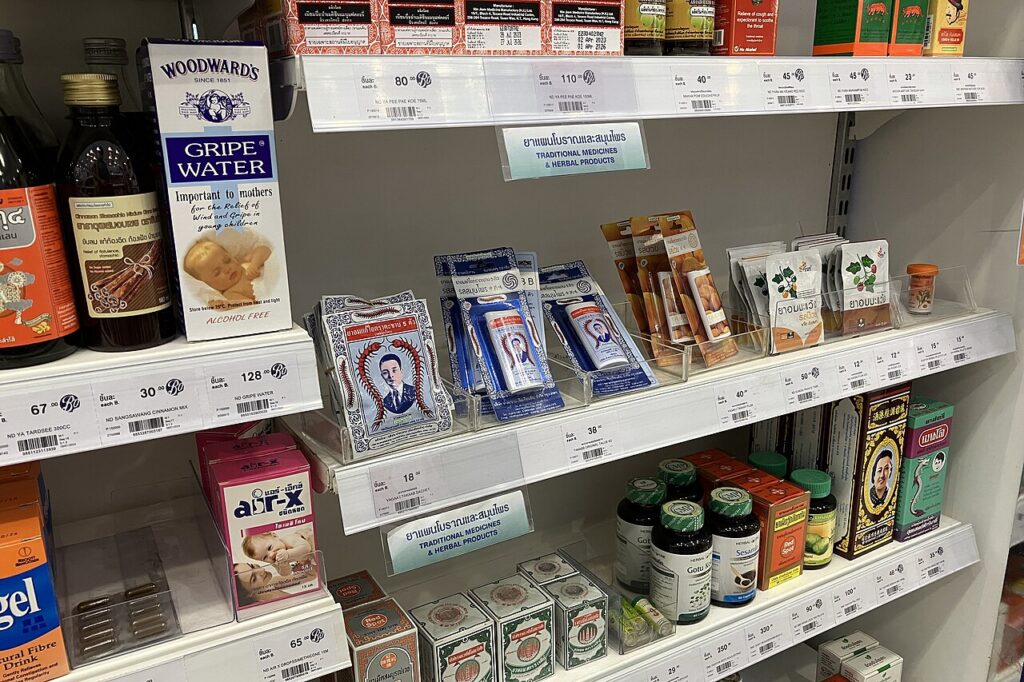
- Chains such as Boots and Watsons, mostly in malls, have clear price tags and a familiar range. Boots alone has about 250 stores in Thailand.
- Hospital pharmacies dispense after you see a doctor there. See hospitals and clinics.
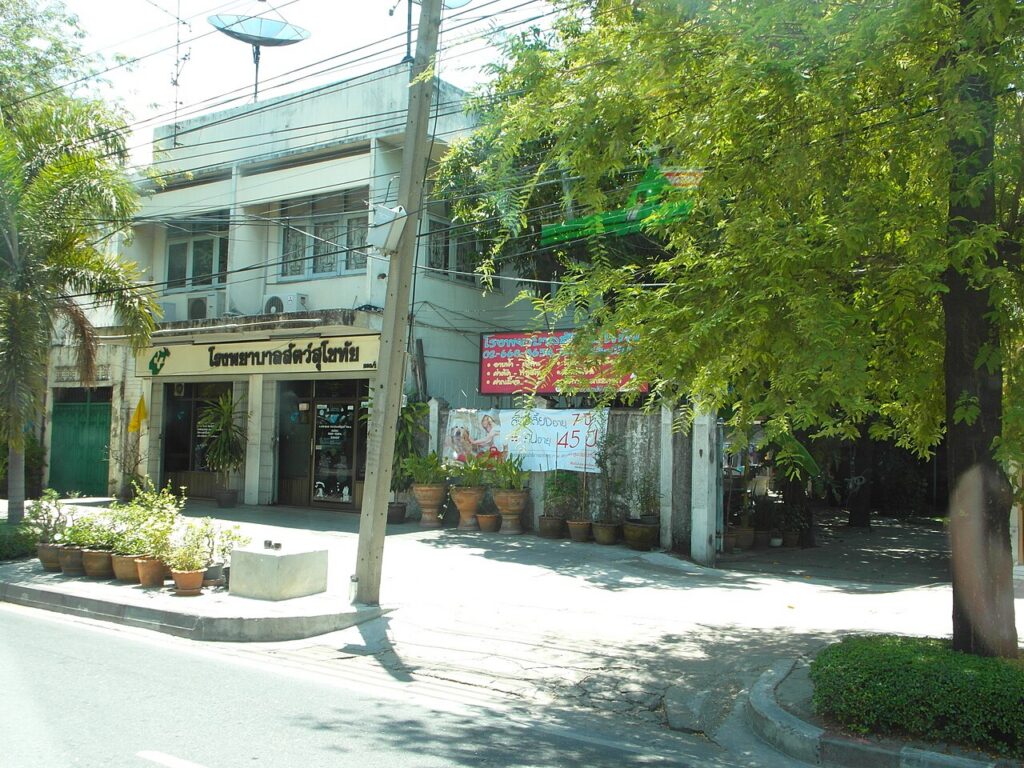
- A licensed pharmacy should display its licence and a sign showing the pharmacist on duty. If you can’t see one, ask.
What a pharmacist can help with
Thai pharmacists can sell many medicines on their own judgement: common antibiotics, inhalers, antihistamines, stomach remedies, rehydration salts, wound care and more.
- Tell the pharmacist your symptoms, any allergies, other medicines you take, and whether you’re pregnant or breastfeeding.
- Show the box, a photo of the packaging, or the generic name of your usual medicine. Photos beat spelling. Brand names often differ in Thailand. See pharmacy phrases.
- Ask for the directions in writing, in English, and follow them exactly.
- Antibiotics don’t help colds or flu, which are usually viral. Being able to buy them easily doesn’t mean you need them. If you’re not sure, see a doctor.
Pro tip: At 12:51am, wheezing with bronchitis, I sent a 24 hour pharmacy a photo of an inhaler on LINE. They replied in English within five minutes, I paid ฿250 by scanning their Thai QR code, and they booked a Bolt driver for ฿40. About 25 minutes after my first message it was at my door. (October 2026.) Read how I did it.
Delivery
- Many pharmacies take orders on LINE. Search Google Maps for a 24 hour pharmacy and look for a LINE ID on its listing or website.
- Send a clear photo, then ask if they can deliver by Bolt or Grab. You’ll usually pay for the medicine by Thai QR code and the delivery fee in cash to the driver. See the LINE app guide and QR payments.
Pro tip: What I take every day: Dr. Pong RDI100 multivitamin. Pharmacies here sell it, but I order it on Shopee because it’s a little cheaper and comes to my door. I also take fish oil, zinc and a vitamin B complex. I can’t tell you any of it does anything measurable; it’s just my routine. Ask a pharmacist if you take other medicines. (I earn a small commission from Shopee if you buy through my links, at no extra cost to you. Affiliate disclosure.)
Controlled medicines
Narcotics and psychotropic substances are strictly controlled in Thailand. Codeine based painkillers, many sleeping pills and anti anxiety medicines, and ADHD stimulants are often in these groups. They need a prescription, usually from a doctor here, and some are hard to get at all.
- Don’t buy them from anyone who offers them without a prescription. Penalties under Thai drug laws can be severe. See laws visitors break.
Avoiding fakes
- Buy from licensed pharmacies, not street stalls, market tables or social media sellers.
- Check the box is sealed, in date, and carries a Thai registration number.
- If a medicine looks or tastes different from your usual one, stop and ask the pharmacist or a doctor.
Bringing medicines into Thailand
- Ordinary prescription medicines: Thai embassies say you can bring up to 30 days of prescribed use for yourself. Keep them in the original labelled packaging with a copy of your prescription or a doctor’s letter.
- Narcotic and psychotropic medicines: these need a permit from the Thai FDA. Apply on the Thai FDA’s permit site for travellers, which has a tool to check whether your medicine is controlled. The Thai Embassy in London advises applying at least two weeks ahead; processing takes about 3 to 5 working days.
- Print the permit and carry it with the medicine through customs.
- Sources differ on how many days’ supply a permit can cover, so check the Thai FDA site for your medicine rather than relying on a summary.
- Taking controlled medicines out of Thailand has rules too, and your home country may have its own limits on what you bring back.
When to see a doctor instead
- High fever, severe pain, trouble breathing, or symptoms that last more than a few days.
- Any dog or monkey bite. See stray dogs and rabies.
- Suspected dengue. Avoid ibuprofen and aspirin until a doctor has checked. See dengue.
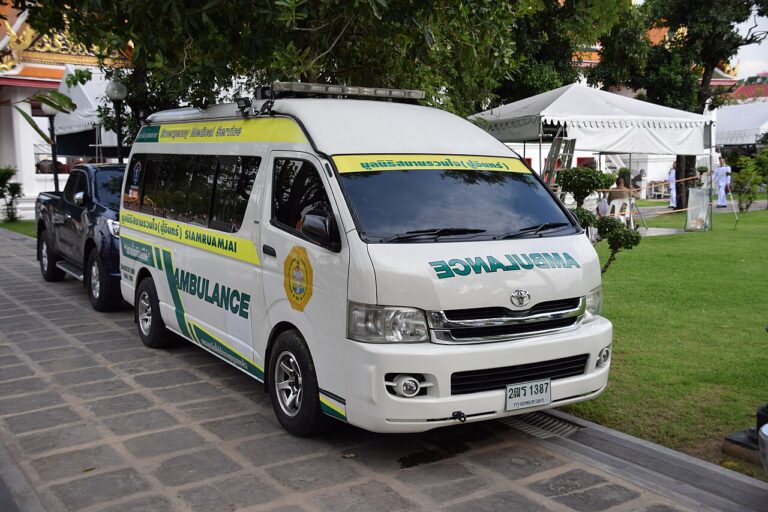
- In an emergency, call 1669 for an ambulance. See emergency numbers.
- For sexual health, testing and PEP, see sexual health and STI testing.
Common questions
Can I buy antibiotics without a prescription in Thailand? Many common antibiotics are “dangerous drugs” that a pharmacist can sell without a doctor’s prescription. Ask the pharmacist whether you really need one, and take it exactly as directed.
Are pharmacies in Pattaya open 24 hours? Some are. Search Google Maps for “24 hour pharmacy Pattaya”, and many will deliver if you message them on LINE.
Can I bring my prescription medicines to Thailand? Usually yes, up to 30 days’ supply in the original packaging with your prescription. Controlled medicines, such as strong painkillers and some sleeping or ADHD medicines, need a Thai FDA permit first.
Do Thai pharmacists speak English? Many in tourist areas do. A photo of the box and a translation app help.
Sources
Checked 13 November 2026: Royal Thai Embassy London, Bringing medications to Thailand (30 day rule, Thai FDA permit, apply two weeks ahead, updated March 2024); Royal Thai Consulate General Chicago, Bringing medication into Thailand (updated December 2024); Thai FDA, permit for travellers; Chiang Rai Times, Pharmacies in Thailand (medicine groups, pharmacist and licence signs, updated October 2026; not an official source); Inside Retail Asia, October 2026 (Boots stores in Thailand). Which group a medicine belongs to can change; ask a pharmacist or doctor.
From the blog
Related pages

Ride along with Jonny
Every guide page comes from the nightly rides through Pattaya. Watch them, ask questions in the community, or help keep the camera rolling.
Watch the rides Join the Telegram Leave a tip Support the rides
 ไทย
 中文
 Русский
 한국어
 Deutsch
 Français