

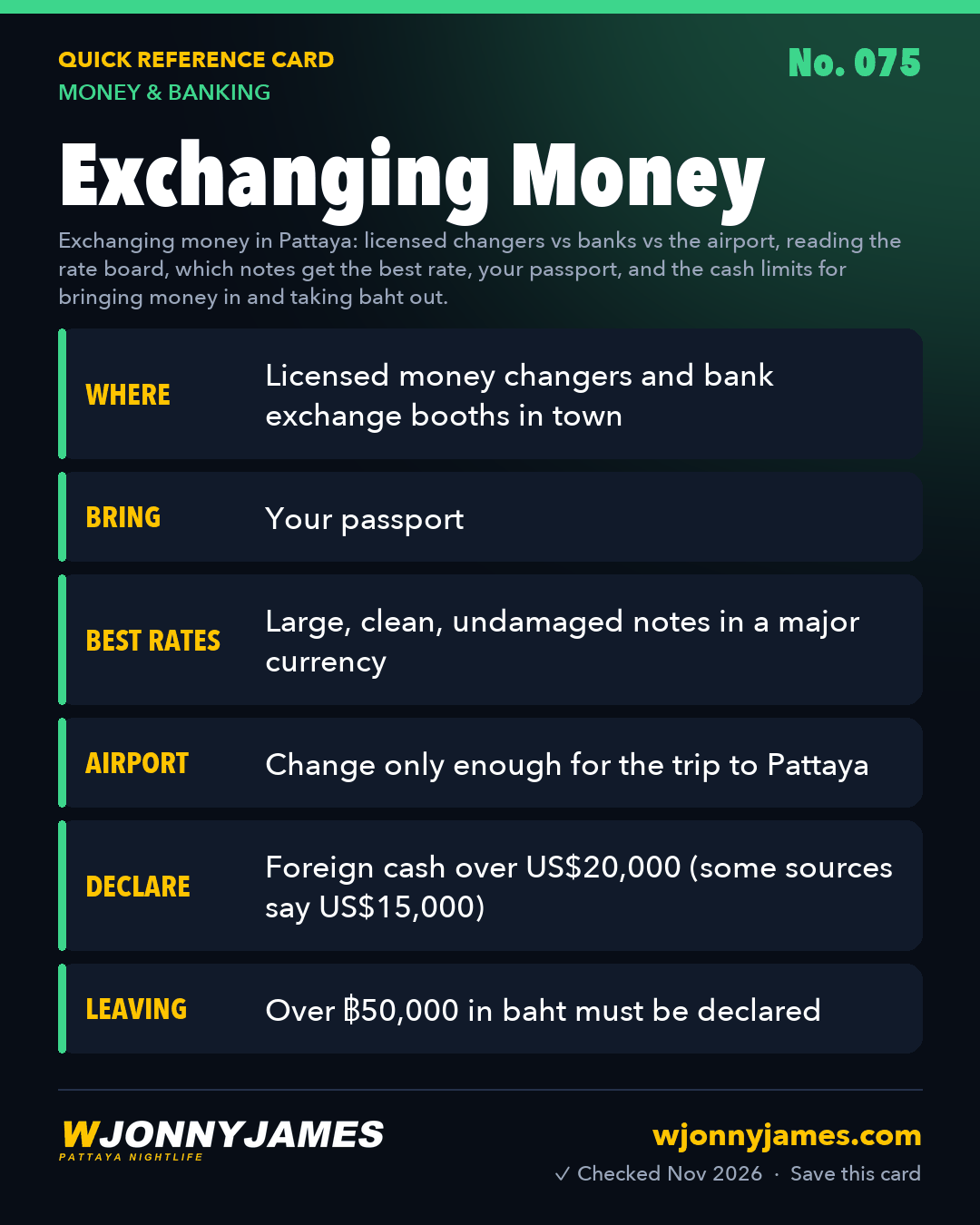
Quick answer: My favourite is TT Exchange, the yellow booths you see all over Pattaya. Check today’s rates on the TT website before you go, and make sure the booth has the TT logo, because there are fake yellow copies. Bring large, clean notes in a major currency and your passport. At the airport, change only enough for the taxi and maybe a tip. For big sums, compare the “we buy” rate at two or three booths and count the baht at the window. If you brought cash, a changer usually works out cheaper than a foreign card ATM, which charges about ฿220 to ฿250 per withdrawal. And if you carry more than US$20,000 in foreign cash, declare it when you arrive.
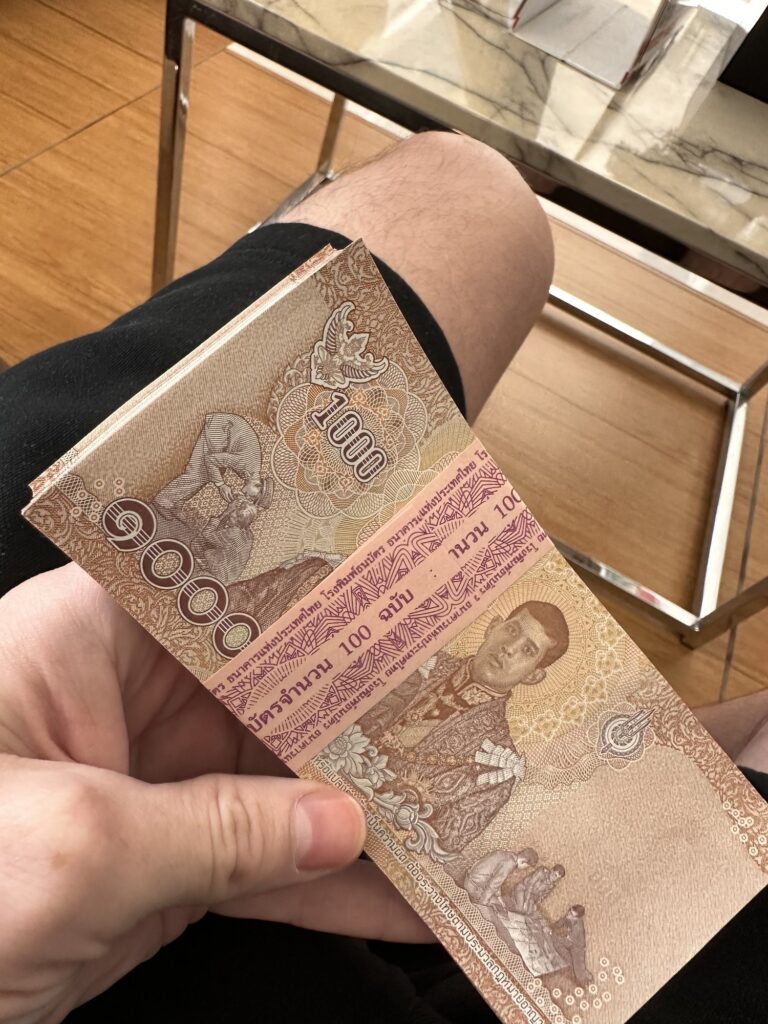
Pro tip: watch out for fake TT Exchange booths. They copy the same yellow branding, but they don’t have the TT logo. They’ll still change your money, but rarely at the best rate. If you don’t see the logo, walk on to the next one.
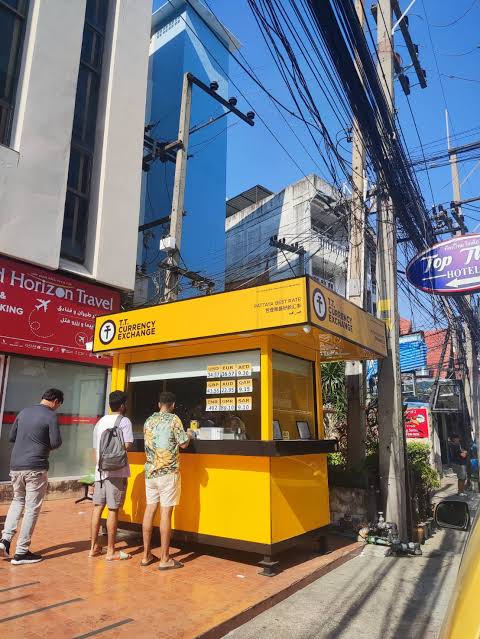 The real TT Exchange: yellow, with the TT logo. Photo: T.T. Currency Exchange.
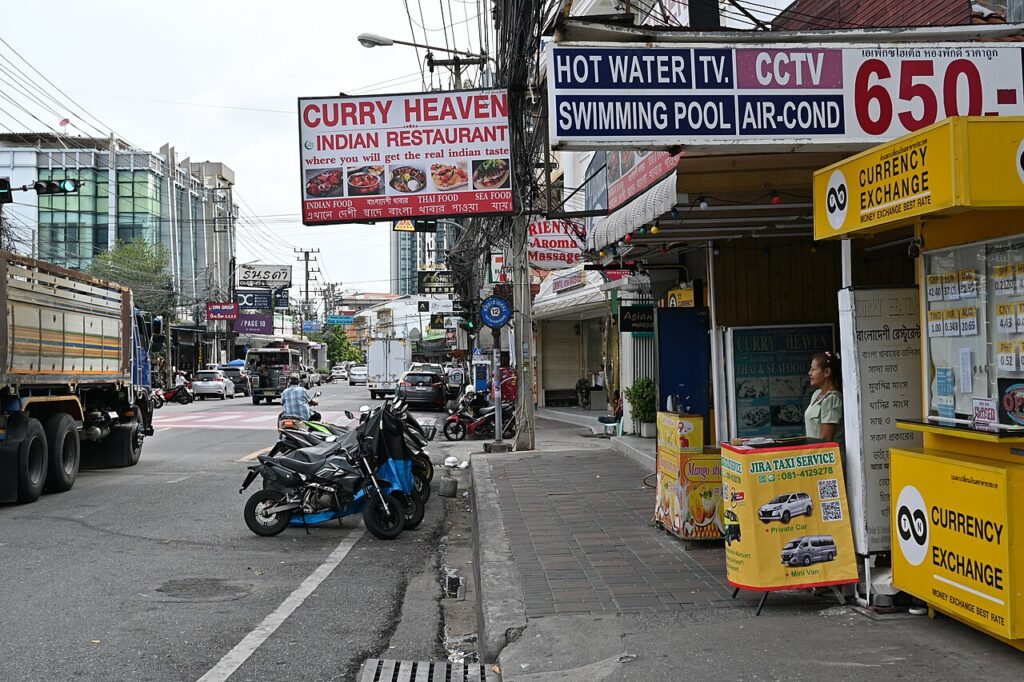
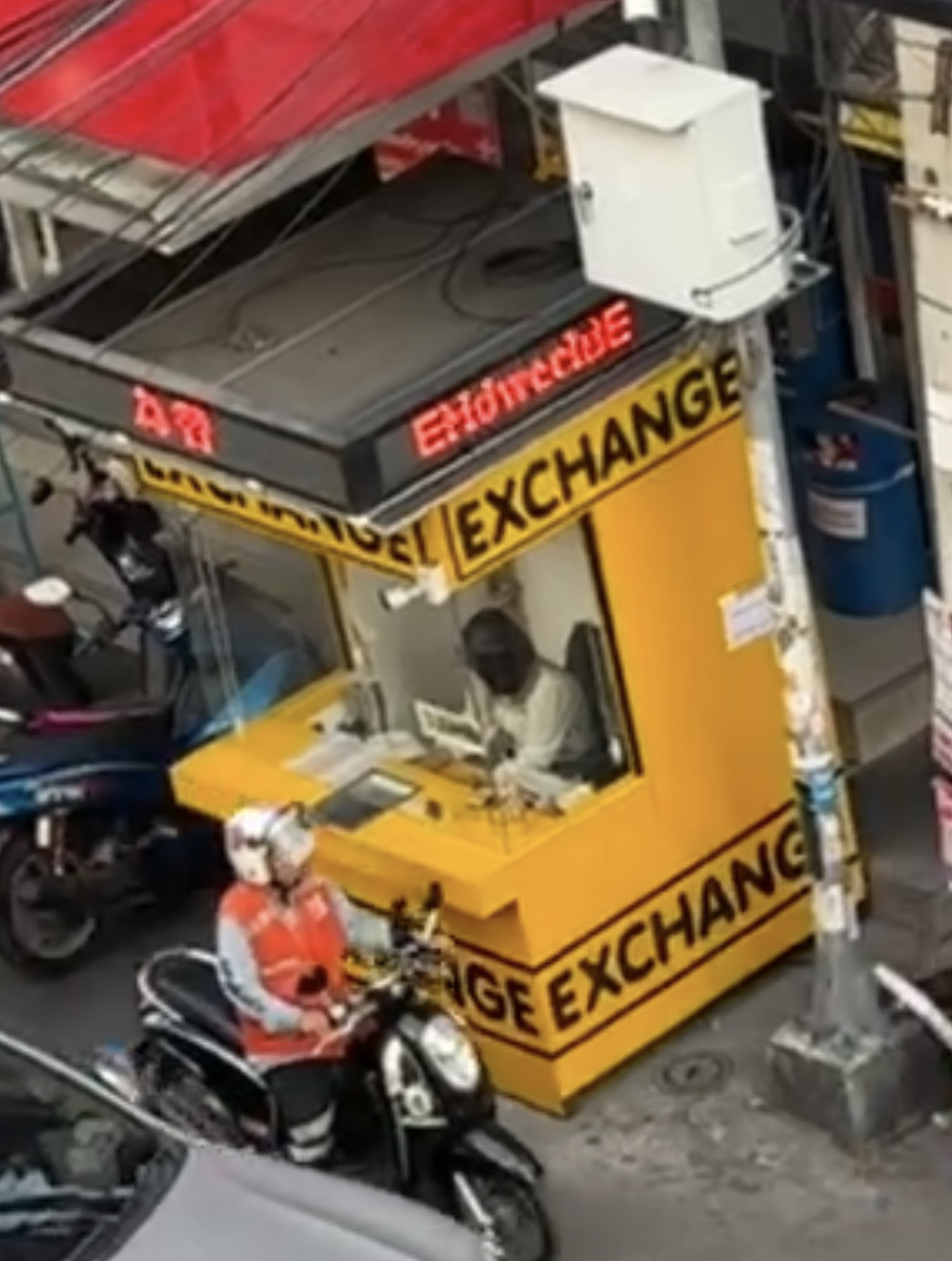 A copycat booth in Pattaya: the same yellow, but no TT logo.
Check the rate before you go
TT Exchange posts its live rates on its website, so you can see what you’ll get before you leave home. Rates can differ a little between branches and change during the day, so for a big amount, check on the day.
Check today’s TT Exchange rates
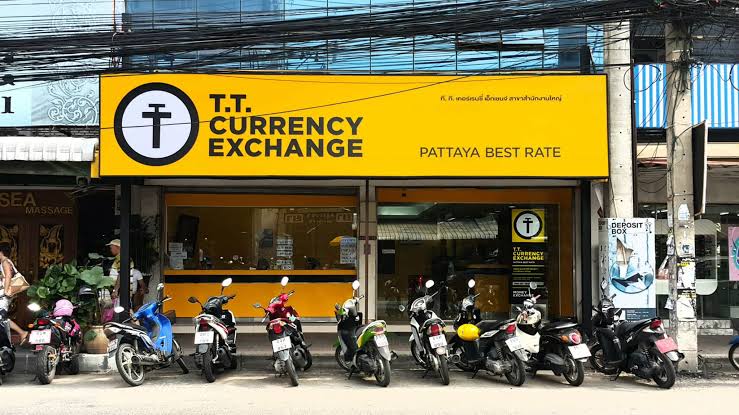
TT Exchange branches and hours
TT has branches all over Pattaya and Jomtien, including its main office on Second Road, living-in-pattaya/shopping-malls/">Royal Garden Plaza, Beach Road, Thappraya Road near Pattaya Park, Cozy Beach and Jomtien Second Road. Most are reported to open from about 9am to 9pm, but hours and even rates differ a little from branch to branch, so check the TT website for the one nearest you.
At a glance
| Option | Rate | Good to know |
|---|---|---|
| Licensed money changer in town | Usually the best for cash | Passport needed; compare a few |
| Bank exchange booth | Fair, often a little lower | On main roads and in malls |
| Airport booth | Usually lower | Change just enough for the trip |
| Foreign card at a Thai ATM | Your bank’s rate | About ฿220 to ฿250 per withdrawal, plus your bank’s fees |
| Hotel front desk | Usually poor | Emergencies only |
Where to change in Pattaya
Exchange booths line Beach Road, Second Road and the main sois, and every big mall has a few. There are two kinds:
- Bank booths run by the big Thai banks. Reliable, with fair rates.
- Licensed money changers: nonbank companies authorised to buy and sell foreign banknotes under Thailand’s foreign exchange rules. They usually beat bank booths by a little. TT Exchange (the yellow booths) is my favourite and the one most expats name first.
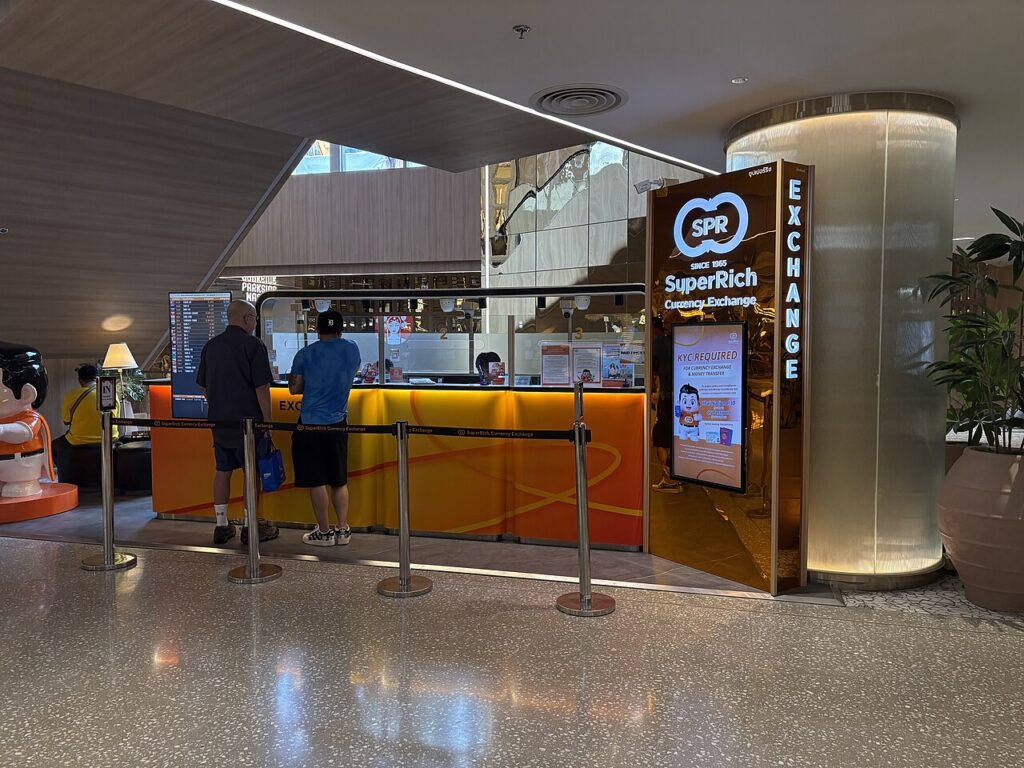
- Super Rich, famous in Bangkok, now has counters in Pattaya too: the orange Super Rich is reported at Terminal 21 and the green one at Central Pattaya. Check their websites for the branch and rate before you go.
Rates differ only a little between booths, so for a few hundred dollars the nearest licensed booth is fine. For larger amounts, compare two or three.
What Pattaya expats say
I asked around, and a Pattaya expat group had plenty of opinions:
- TT Exchange and Super Rich get named the most, and people argue about which one wins.
- Second Road has lots of booths close together, so there’s more competition.
- One regular uses a booth on Pattaya Klang near Second Road, and admits it’s partly because they’re in that area a lot.
- The best booth can change from day to day. Unless you’re changing a large amount, hunting for the very best rate can cost more time than it saves.
- Bank branches usually give lower rates than the money changers.
- For card payments and transfers, some expats skip cash and use apps like Wise or Revolut.
Reading the rate board
- Look at the “we buy” rate: that is what you get for your currency. The “we sell” rate is for people buying foreign money.
- Many boards list different rates for different note sizes. Large notes such as US$100 usually get a better rate than US$20 or smaller.
- Rates change during the day. What counts is the baht you receive, so check the receipt.
- Ask before you hand anything over if you’re unsure what rate applies to your notes.
Notes that get the best rate
- Large, clean, undamaged notes. Tears, writing, stamps, stains or heavy creases can mean a lower rate or a refusal.
- Bigger bills get better rates, and many places won’t take crumpled, torn or damaged notes at all. In my experience, some of the bad rate booths will still take damaged notes, so they’re your last resort for those.
- Older series US dollars may get a slightly lower rate at some booths, while traveller reports say others pay the same. Ask first.
- Coins can’t be exchanged, so spend foreign coins before you fly.
- Major currencies such as US dollars, euros, pounds and Australian dollars get the best rates. Less common currencies may get a poor rate or only be taken at a few booths.
What to bring
- Your passport. Booths ask for it; some accept a copy, but don’t count on it.
- Count your baht at the window before you walk away, and keep the receipt.
- Keep the notes in a wallet or envelope until you’re at the counter, not on show in the queue.
The airport
Don’t change much at the airport: the rates are bad. If you have to, change just enough for the taxi to Pattaya and maybe a tip, then change the rest in town. See arriving at Bangkok airport and airport transfers.
Changer or ATM?
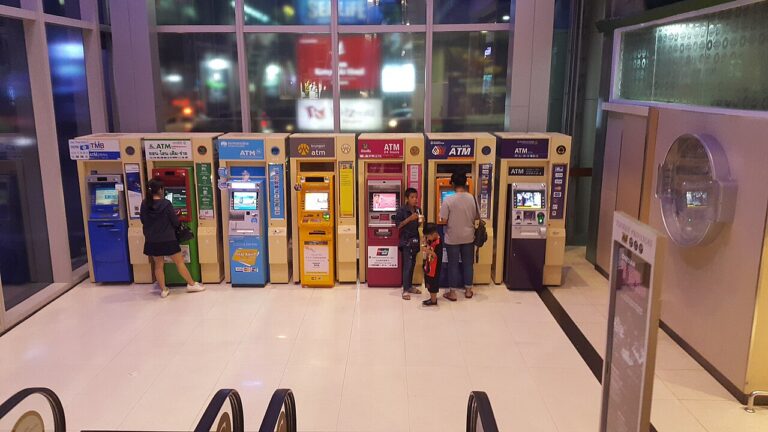
- A foreign card ATM withdrawal costs about ฿220 to ฿250 each time, plus whatever your home bank charges. On ฿10,000, ฿250 is 2.5%. See ATM fees.
- Some banks now charge more: Krungsri’s fees from 11 March 2026 are reported as ฿250 with a foreign Visa card and ฿350 with a foreign Mastercard. The ATM shows the fee before you confirm, so read the screen.
- A Wise card gives you 2 free withdrawals a month on Wise’s side, up to a limit that depends on your country, but the Thai ATM’s own fee still applies. See Wise’s help page on ATMs.
- If an ATM or card machine offers to charge you in your home currency, decline and choose baht.
- For a short holiday, many people bring some cash to exchange and use a card for bigger bills. See cash vs card.
- Visitors from countries linked to Thai QR can pay many shops directly from their home app. See QR payments and PromptPay.
Bringing cash in and taking it out
- Foreign currency: Thai embassy guidance says to declare more than US$20,000 or the equivalent to customs when you arrive or leave. A February 2026 Thaiger guide advises declaring from US$15,000 because some official sources give that figure. Not declaring is a criminal offence, so if you are anywhere near those amounts, declare.
- Foreign cash going out: the Bank of Thailand’s rules let you take foreign banknotes out of Thailand up to the amount you bought from a bank or licensed money changer, so keep your exchange receipts.
- Thai baht out: up to ฿50,000 to most countries, or ฿500,000 to neighbouring countries. Above that, declare it or exchange it before you leave. See leaving Thailand.
- Proof of funds: immigration can ask tourists to show ฿20,000 per person, or ฿40,000 per family, and the Thaiger guide says it should be cash, not a bank statement.
- Leftover baht: booths in town will sell you foreign currency, but you lose on the rate twice. Spend down to a small amount, or keep it for your next trip.
Safety
- Never change money with people on the street, however good the rate sounds.
- Keep large amounts of cash out of sight, and leave most of it in the hotel safe.
- Watch the counting, and recount yourself.
- For scams, call 1441. See common scams.
Living here
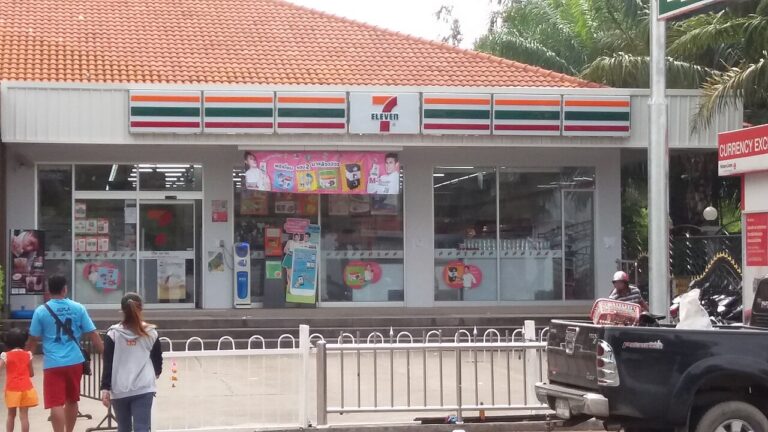
For regular money from home, a transfer into a Thai bank account is usually cheaper than exchanging cash. I personally use Wise to send money to my Thai bank account. If you sign up with my link, your first transfer up to $600 is free. I get a small reward when someone joins through my link, at no cost to you. Affiliate disclosure. See sending money to Thailand, opening a Thai bank account and depositing cash at 7-Eleven.
Common questions
Where is the best place to exchange money in Pattaya? My pick is TT Exchange, the yellow booths with the TT logo. Check its rates online first. Super Rich and other licensed changers in town are good too; avoid the airport and your hotel.
Are there fake TT Exchange booths? Yes. Some copy the yellow branding but don’t have the TT logo. Use the ones with the logo.
Do I need my passport to exchange money in Thailand? Yes. Bring the original; a copy isn’t always accepted.
Is it better to exchange cash or use an ATM? If you brought cash, exchanging it usually costs less than foreign card ATM fees of about ฿220 to ฿250 per withdrawal.
How much cash can I bring into Thailand? You can bring more, but foreign cash over US$20,000 must be declared. Some sources say US$15,000, so declare if you are close.
Sources
Checked 19 November 2026: T.T. Currency Exchange, rates and branches; Bank of Thailand, exchange control regulation; Wise, using your card at ATMs; The Longest Way Home, Thai ATM fees 2026; Nasha Planeta, where to exchange money in Pattaya (Super Rich branches, TT hours); Wise, exchange offices in Pattaya (TT branch list); a Pattaya expat group discussion, November 2026. Earlier checks, 13 November 2026: Royal Thai Embassy London, bringing currency in and out of Thailand (updated 2 November 2026); The Thaiger, arriving with too much cash (20 February 2026); Bank of Thailand, types of foreign exchange licences; T.T. Currency Exchange. Sources conflict on the declaration threshold (US$20,000 or US$15,000). Rates change daily.
Related guides
Related pages
 💸 Money & BankingATM Fees in Thailand
 💸 Money & BankingDepositing Cash at 7-Eleven
 💸 Money & Banking7-Eleven Stamps in Thailand: What They’re For and How to Use Them
 💸 Money & BankingCash, Cards or QR? Paying in Pattaya
 💸 Money & BankingOpening a Thai Bank Account
 💸 Money & BankingQR Payments & PromptPay
Ride along with Jonny
Every guide page comes from the nightly rides through Pattaya. Watch them, ask questions in the community, or help keep the camera rolling.
Watch the rides Join the Telegram Leave a tip Support the rides
 ไทย
 中文
 Русский
 한국어
 Deutsch
 Français