

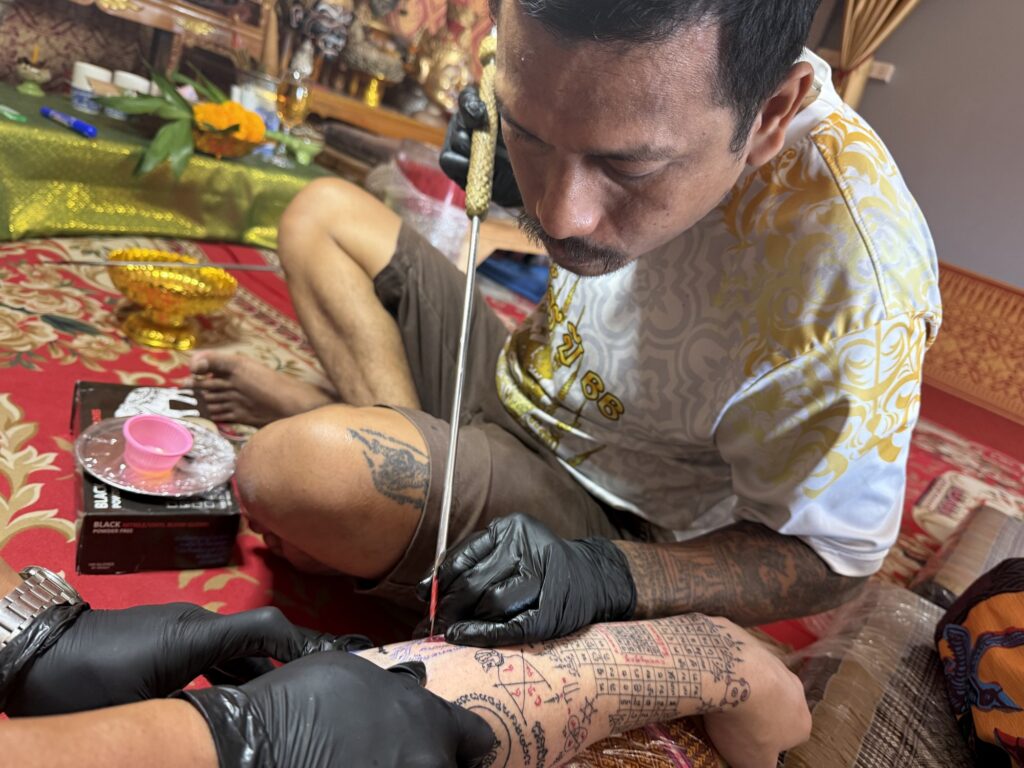
Getting a Sak Yant hand poked with a long steel rod. Photo: Jonny James
Quick answer: Sak Yant (สักยันต์) are sacred Thai tattoos: geometric designs, animals and lines of old Khmer script, hand poked with a long steel rod by an Ajarn (master) or a monk, then blessed. Each design is meant to give something, like protection, luck, charm or strength, and the blessing usually comes with rules for how you live. One of my arms is a full Sak Yant sleeve and I own 22 books on them, so this page is where I share what I’ve learned. To get one yourself, see getting a Sak Yant in Pattaya.
What makes a tattoo a Sak Yant
A normal tattoo is art. A Sak Yant is closer to an amulet you wear in your skin. Three things make it one:
- Who does it. An Ajarn or a monk who has learned the designs and the chants, usually from a teacher in a lineage.
- How it’s done. Traditionally by hand, with a long rod tapped into the skin. Most masters now use a steel rod; some use a machine.
- The blessing. The master chants over you and the tattoo, often with holy water. Without that, many Thais would say it’s just ink.
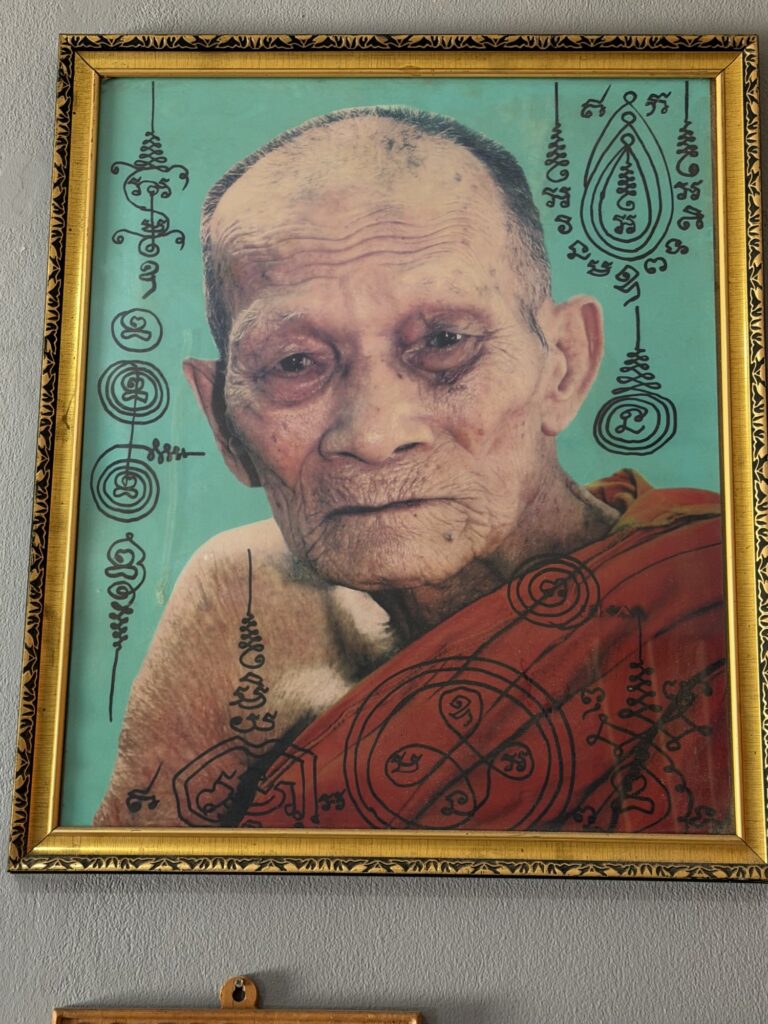
A revered monk’s photo on the wall of the Sak Yant shop, with yant drawn above it.
The designs you’ll see most
Every lineage draws them a little differently, and the books disagree on the details, so treat these as the common meanings, not the only ones.
- Gao Yord (nine spires): nine peaks standing for nine Buddhas or nine blessings. A classic first Sak Yant, often on the upper back.
- Hah Taew (five lines): five rows of script, each line its own blessing. The usual list is warding off bad spirits, turning away bad luck, protection from curses, good fortune and charm.
- Paed Tidt (eight directions): protection from whichever direction trouble comes.
- Suea (tigers): a single tiger or twin tigers for power and courage. Popular with Muay Thai fighters.
- Unalome: the spiral and line that stands for the path to enlightenment, often added above other designs.
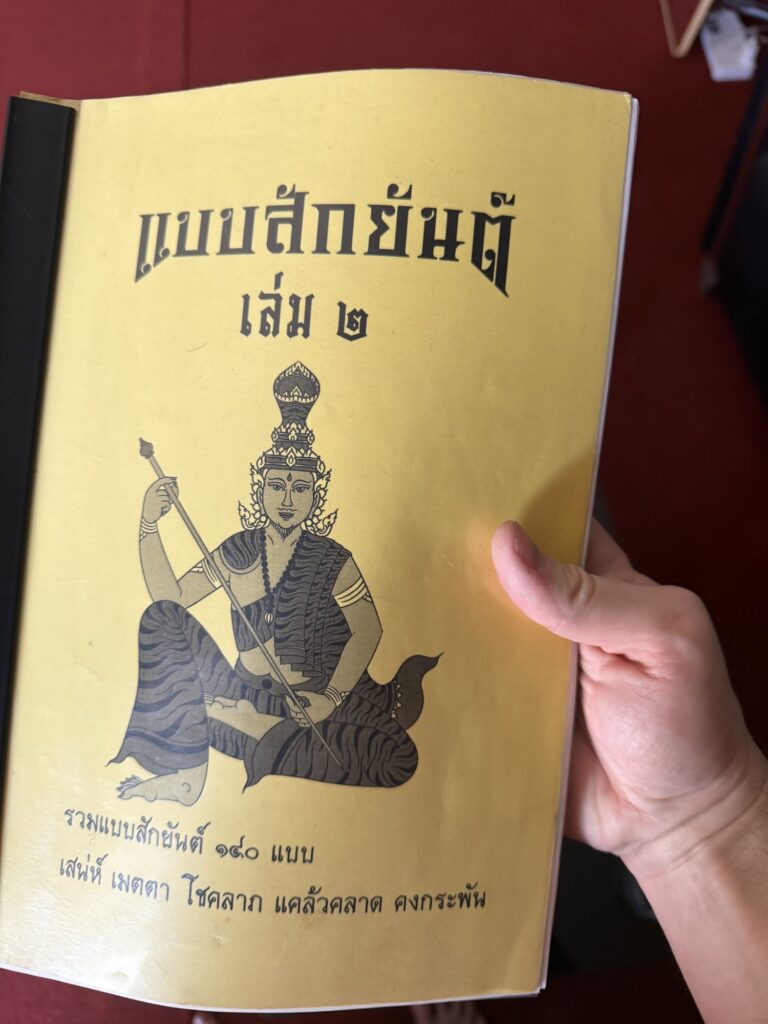
A design book in the shop. You flip through it to choose your Sak Yant.
The books in Sak Yant shops are how you choose. You flip through, pick a design and talk it through with the Ajarn, who may suggest something else for you.
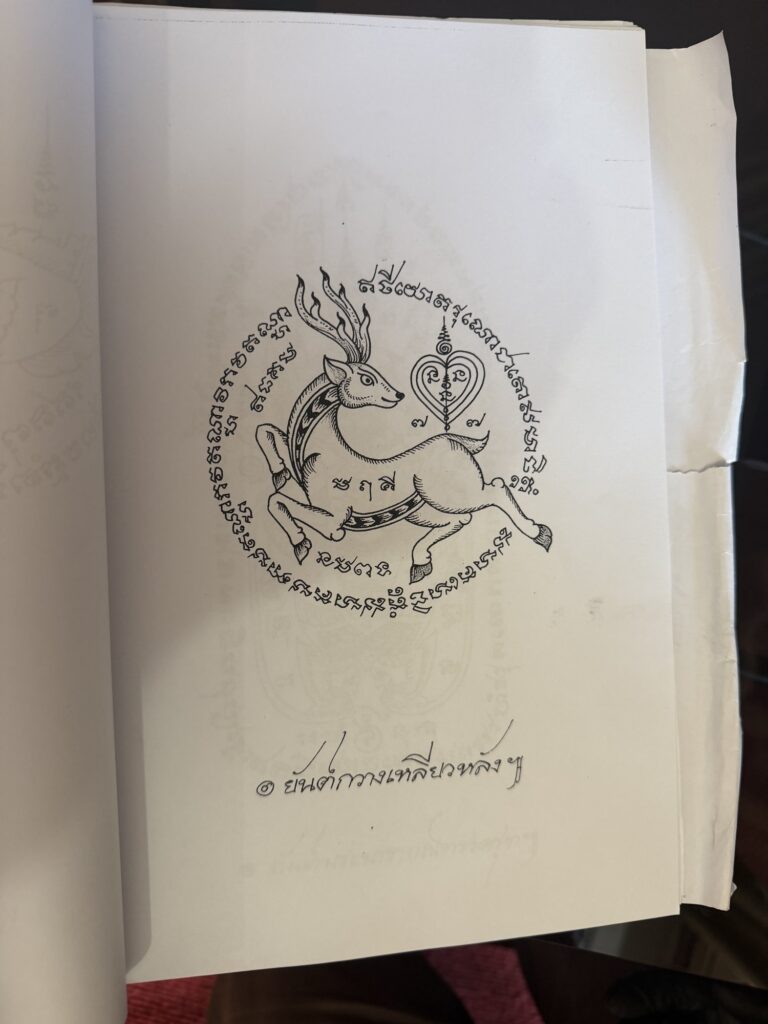
One of the sacred symbols in my own books.
The rules
You’ll find long lists of Sak Yant rules online, and many were first written for monks. The ones almost every master agrees on are the five Buddhist precepts: don’t kill, steal, lie, commit adultery or get drunk. Your Ajarn may add a few of his own. Take them seriously; it’s part of the deal.
Respect
- Sak Yant go on the upper body. The head and the back of the neck are the most sacred places; never below the waist.
- Don’t get one as a fashion piece and then mock it. Thais notice, and many care.
- Monks don’t touch women, so a woman getting a Sak Yant from a monk usually has a cloth between them, or goes to a lay Ajarn instead.
Wai Kru: the yearly festival
Every March, thousands of people with Sak Yant gather at Wat Bang Phra in Nakhon Pathom to honour the masters and have their tattoos reblessed. Some people go into a trance and charge at the stage. It’s one of the most intense things you can see in Thailand.
The Sak Yant I have
One of my arms is a full Sak Yant sleeve. These are the main pieces on it, and for three of them I can show you the design as it’s drawn in my books.
- Hanuman, on my outer arm: the monkey warrior from the Ramakien, Thailand’s version of the Ramayana. It stands for strength, courage and getting out of trouble.
- Paed Tidt, on my bicep: my first Sak Yant. The eight directions, for protection from wherever trouble comes.
- Yant Kaew Manee Chot, on my forearm: a general protection yant. Mine covers the top of my wrist and the front half of my forearm. It’s not a famous one, but I really like it.
- Yant Maha Laluay Yai, on my shoulder: a big round yant, with extra hand poked script written all around it.
- Sarika, on my wrist: the love yant (more on it below).
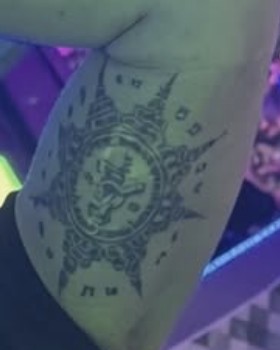
My first Sak Yant, the Paed Tidt on my bicep, fresh and still under its protective film. Photo: Jonny James
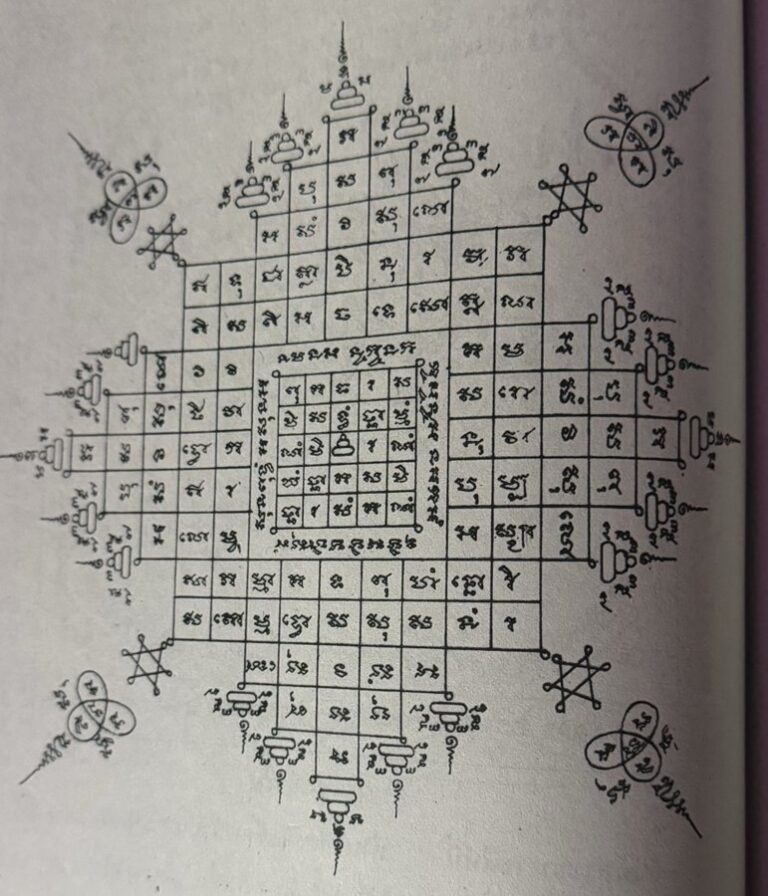
Yant Kaew Manee Chot, the protection yant on my forearm, as drawn in my favourite hardcover. Photo: Jonny James
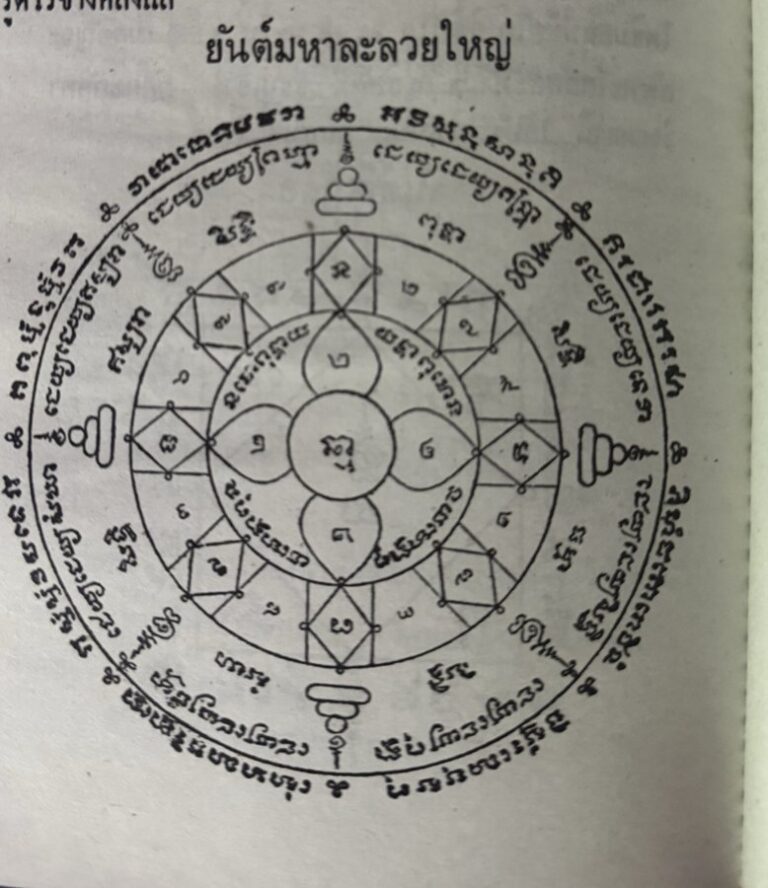
Yant Maha Laluay Yai, the one on my shoulder. Photo: Jonny James
Sarika, the love yant
Sarika (สาริกา) is a talking bird from Thai folklore, and its yant is one of the most popular for love and affection. It isn’t only a tattoo. Often it’s drawn on a cloth: you write your name on a piece of paper, wrap it inside the cloth and put it up high in your living room or bedroom, never in the kitchen or the bathroom. Like any Sak Yant, it comes with rules you’re meant to follow while you have it.
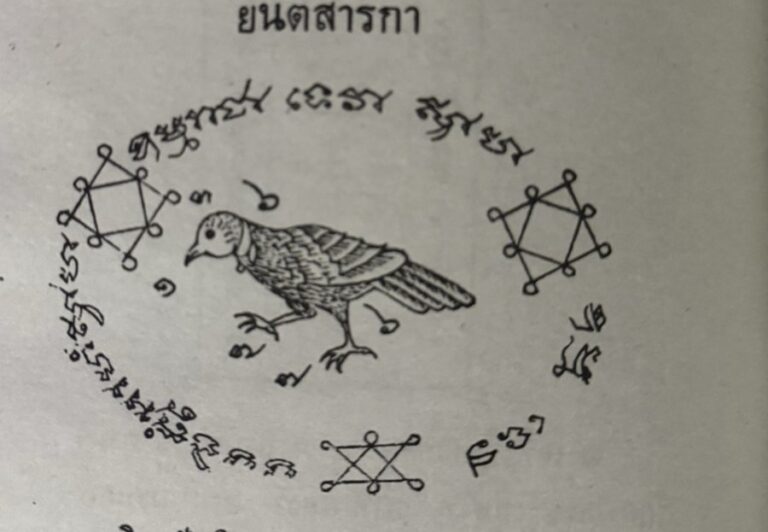
Yant Sarika, the bird on my wrist, in one of my books. Photo: Jonny James
Pro tip: pick the master before the design. A good Ajarn will ask why you want it and help you choose, and that conversation tells you a lot.
My Sak Yant books
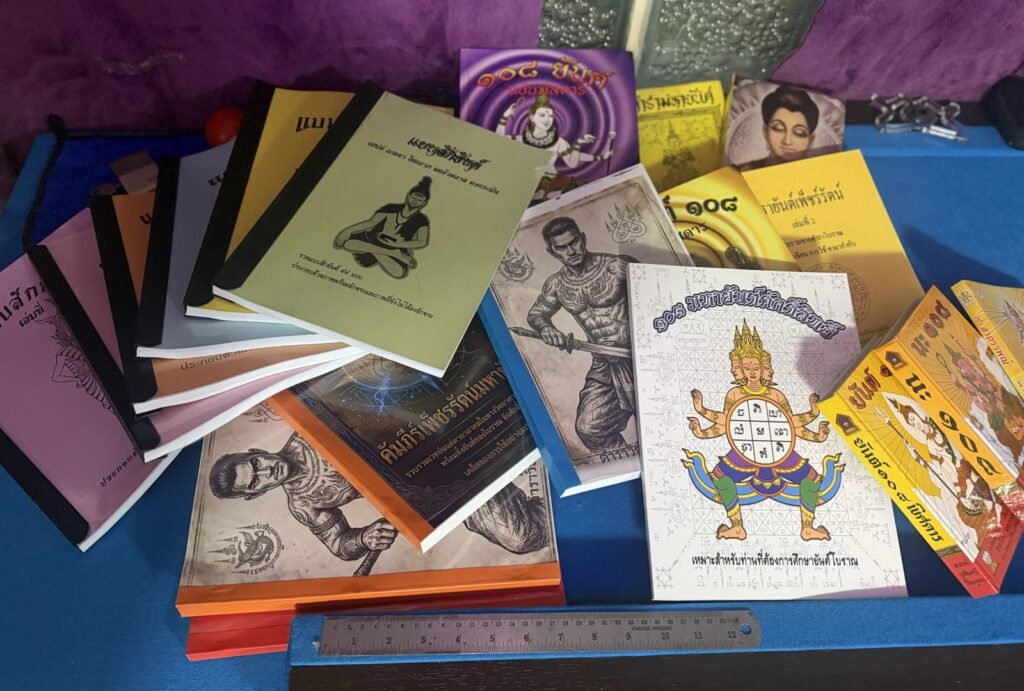
Almost all of my Sak Yant books. Photo: Jonny James
Here’s what nobody tells you: I’d guess only about 5% of the designs I’ve seen in these books are anywhere online. The popular yants show up in book after book, but the rare ones are only in print. If you want real choice, you need the books.
- For choosing a tattoo: the six book Tattoo Yan series. Every page is a design with no explanation, so it’s purely visual, made for you and your tattoo artist to pick from. If the tattoo is what you’re after, get all six.
- Best value: the big white softcover with the four faced god on the cover. Detailed information and a ton of diagrams.
- Skip if you don’t read Thai: my least favourites are mostly writing in Thai or Khmer script, with few pictures. If you can read them you’ll get more out of them than I did.
I have pages marked in three of these books for the pieces I still want to finish my sleeve.
Pro tip: The design books I use most: 108 Talisman Baroque Edition is my favourite hardcover. Mahayan Book A is my favourite small book (mine is an old copy, so it may be hard to find). The Synt 108 is the best of that publisher’s small books, The Speaker Na108 has tons of designs, and The Book of the Lord has great information and diagrams. Three I’d skip: 108 Witchcraft Baroque Edition, Mahayant 108 Baroque Edition (yellow cover) and the Mantra Magic textbook. They have less in them for the price. (I earn a small commission from Shopee if you buy through my links, at no extra cost to you. Affiliate disclosure.)
All of my books, ranked: my Sak Yant book shelf. I’m also slowly photographing the designs, one at a time, for a Sak Yant library here. It’s a big project, so it will grow over time.
Related guides
Related pages




Ride along with Jonny
Every guide page comes from the nightly rides through Pattaya. Watch them, ask questions in the community, or help keep the camera rolling.
Watch the rides Join the Telegram Leave a tip Support the rides
 ไทย
 中文
 Русский
 한국어
 Deutsch
 Français