

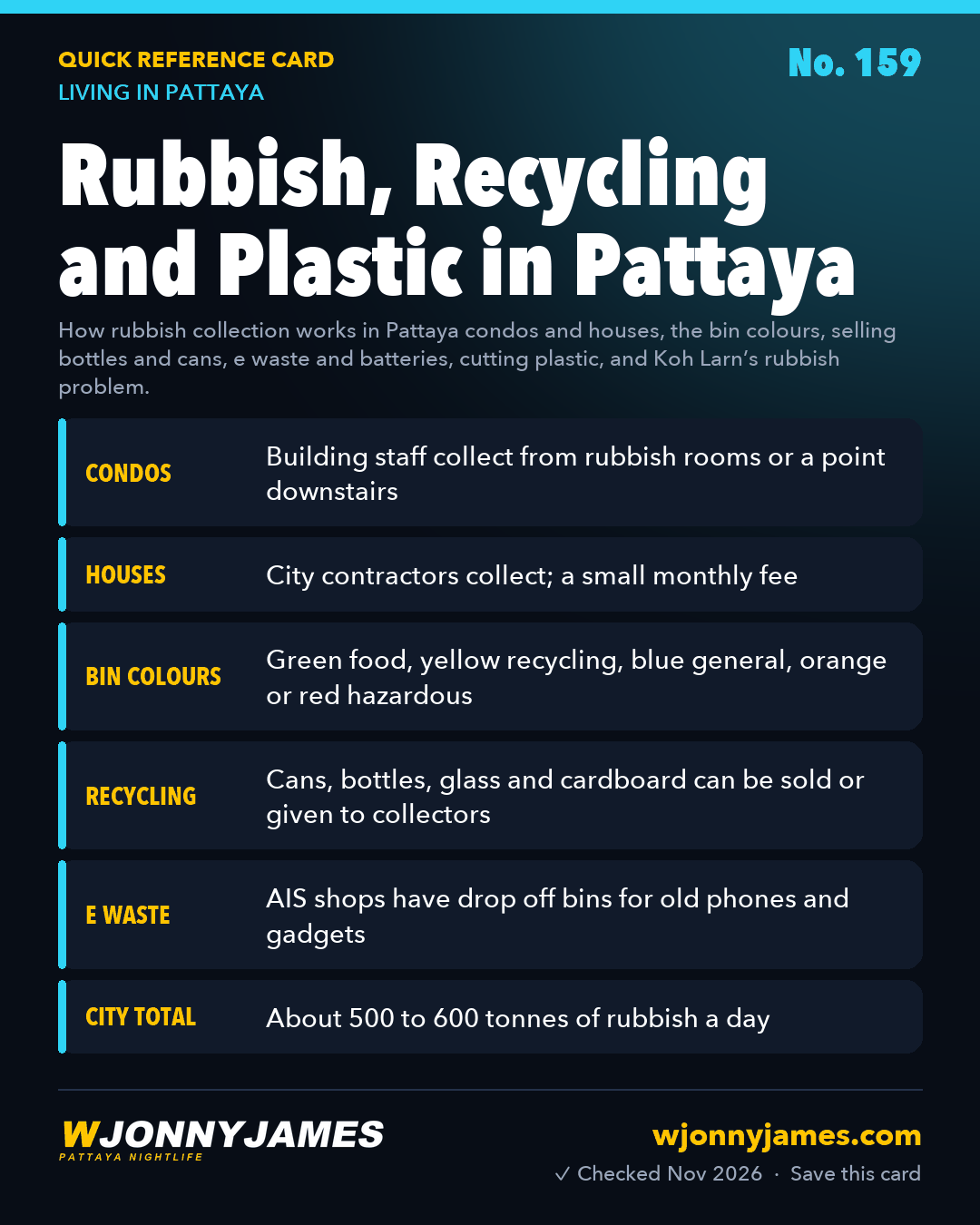
Quick answer: In a condo, you leave rubbish in the rubbish room on your floor or at the collection point downstairs, and the building deals with it. In a house, the city’s contractors collect from the bin outside, usually for a small monthly fee. Recycling in Pattaya is mostly informal: aluminium cans, plastic bottles, glass and cardboard have value, so cleaners, collectors and scrap shops take them. Old phones and gadgets can go in the e waste bins at AIS shops. Pattaya produces about 500 to 600 tonnes of rubbish a day, so every bit of sorting helps.
At a glance
| What | Where it goes |
|---|---|
| Food scraps | Green bin if your building has one; otherwise drain, tie and put in general waste |
| Cans, plastic bottles, glass, cardboard | Yellow bin, the building’s recycling corner, collectors or a scrap shop |
| Snack wrappers, dirty plastic, foam, tissues | Blue general waste bin |
| Batteries, light bulbs, spray cans | Orange or red hazardous bin where there is one; never loose in general waste |
| Old phones, chargers, cables | E waste bins at AIS shops |
| Furniture and appliances that still work | Sell or give away. See second hand buy and sell |
Condos and apartments
- Most condos have a rubbish room on each floor or a collection point downstairs. Building staff empty it, and the cost is part of your common fees or rent. See condo living rules.
- Ask the juristic (building management) office whether they sort recyclables and where batteries and bulbs should go. Rules differ from building to building.
- Tie bags well and don’t leave food waste in the corridor: it brings ants, cockroaches and rats. See bugs and pests.
Houses
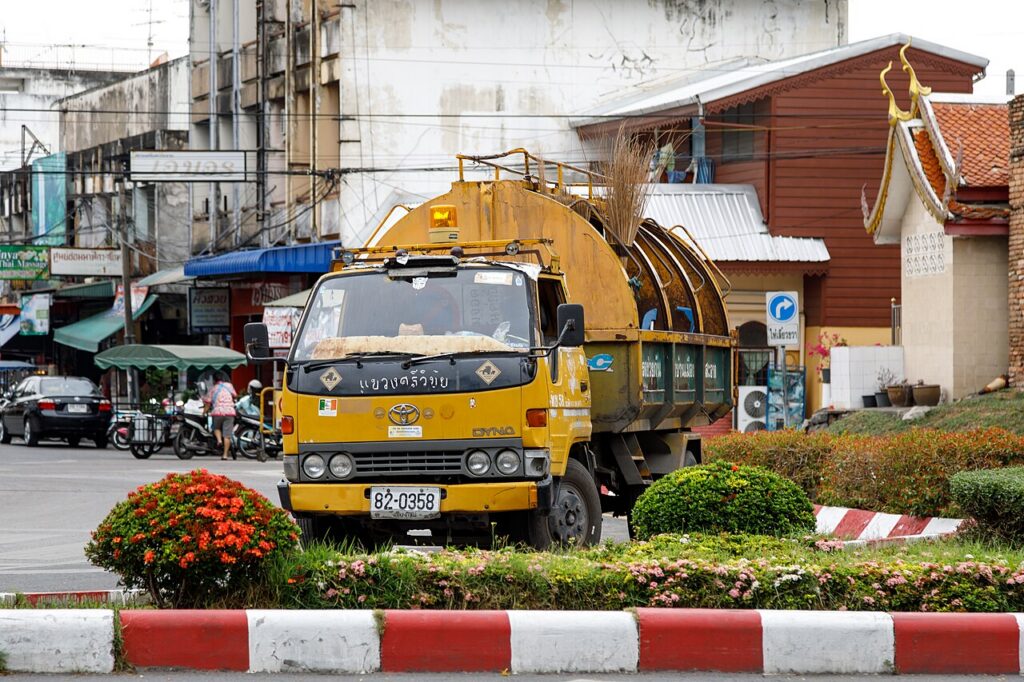
- City contractors collect household rubbish from the bins outside houses. Schedules vary by area and aren’t published online, so ask your neighbours or landlord which days the truck comes.
- Households pay a small monthly fee. We couldn’t find a current official Pattaya rate: a 2016 Pattaya Mail report put the cap at ฿24 a month, and an expat guide from 2025 gives a typical ฿20 to ฿80 across Thailand. Ask your landlord how it is paid. See City Hall and local services.
- Street dogs and cats tear open bags left on the ground, so use a lidded bin and put rubbish out close to collection time.
- Don’t burn rubbish. Smoke from burning plastic is harmful, and it adds to the haze. See air quality.
The bin colours
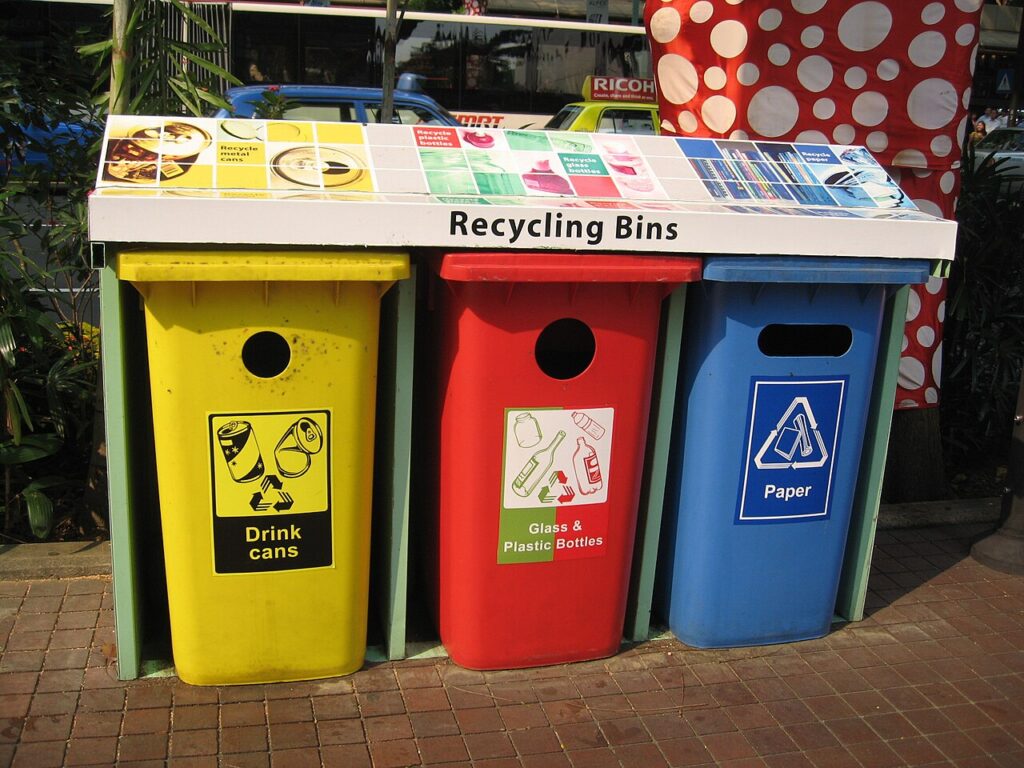
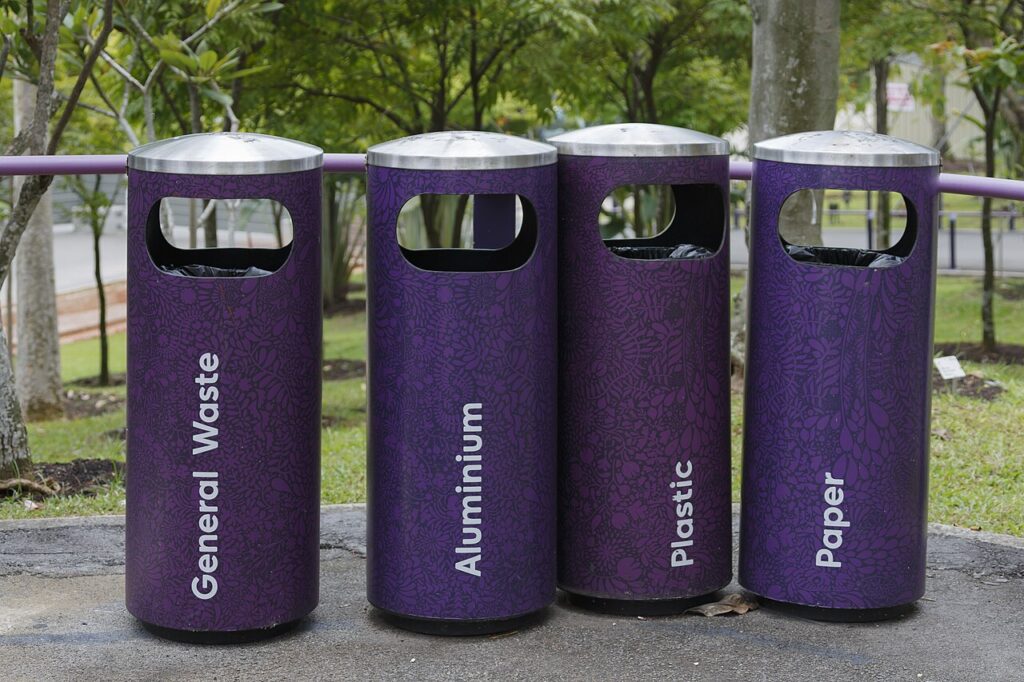
Thailand commonly uses four bin colours. They are a widespread convention rather than one law, so you’ll see variations.
- Green: food and organic waste. Drain liquids first.
- Yellow: recyclables, such as plastic bottles, aluminium cans, paper boxes and glass bottles. Empty and flatten them.
- Blue: general waste that can’t be recycled, such as snack wrappers, food stained plastic bags, foam boxes and tissues.
- Orange or red: hazardous waste, such as batteries, light bulbs, spray cans and printer cartridges. Wrap broken bulbs in paper.
Recycling and selling
- Aluminium cans are the most valuable household recyclable. Plastic bottles, glass bottles, metal and clean cardboard can also be sold.
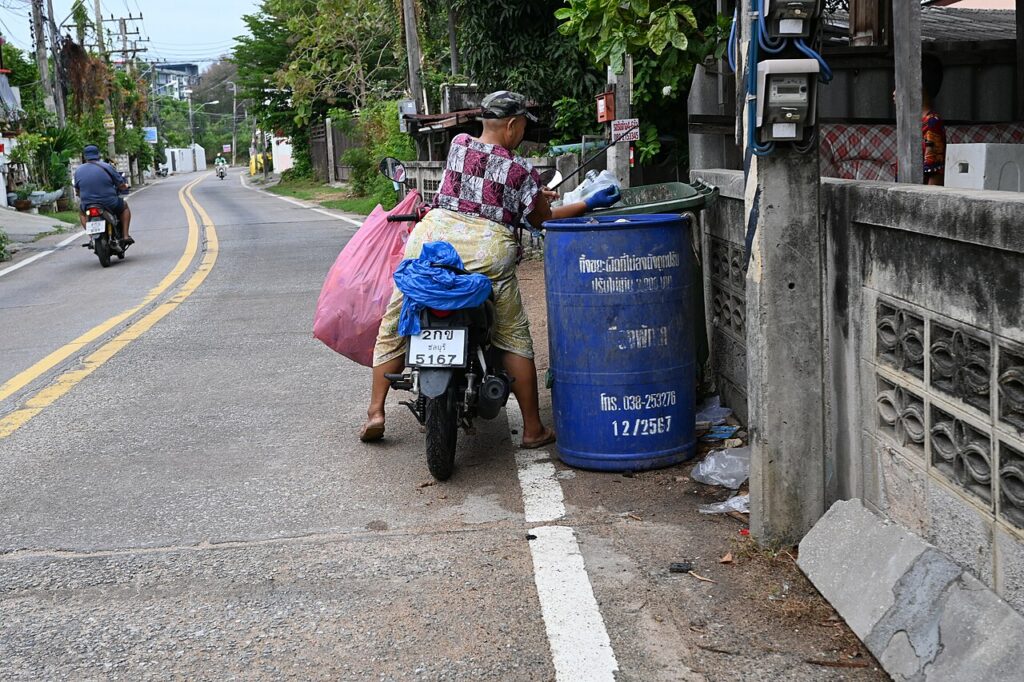
- Scrap shops (ร้านรับซื้อของเก่า, raan rap sue khong kao) buy recyclables by the kilo, and collectors with carts or trucks pick them up from homes and streets. Prices change, so ask before you load up.
- Many people simply bag recyclables separately and leave them for the cleaner, building staff or collectors, who sell them on. It’s a small but real income for them.
- Plastic bags, food stained plastic and foam are hard to recycle and usually end up as general waste.
E waste and batteries
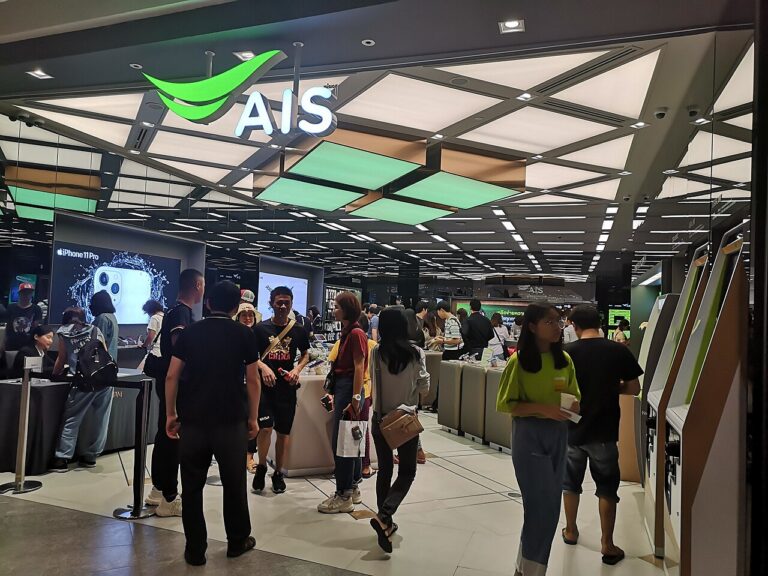
- AIS runs e waste drop off bins at AIS shops nationwide and at partner locations, with a locator on its website. They take old phones and small devices; check what each bin accepts.
- Batteries and power banks are hazardous waste. Keep them out of general waste and use a hazardous bin or an e waste point.
- For repairs and second hand phones, see phone repair and electronics.
Cutting plastic
- Big retailers stopped handing out free single use plastic bags from 1 January 2020 under a voluntary agreement with the government. It isn’t a law, so smaller shops and markets still give them out. Carry a reusable bag.
- Refill a water bottle at a filtered water machine or get large bottles delivered. See drinking water.
- Say “mai ao tung” (no bag) at 7-Eleven if you don’t need one, and refuse extra straws and cutlery with food-deals/food-delivery-apps/">food delivery.
Where it all goes
Pattaya City pays private contractors to collect, transport and dispose of its rubbish. Its 2026 to 2027 contract, worth about ฿421 million, is based on about 590 tonnes a day. In November 2026 the mayor led a visit to a Bangkok waste to energy plant as the city studies burning rubbish for electricity.
Koh Larn shows what happens when waste piles up. Pattaya Mail reported in April 2026 that the island had more than 150,000 tonnes of accumulated rubbish, with at least 25 tonnes added every day, and a new incinerator able to handle up to 50 tonnes a day had just opened. On an island day trip, take your bottles and wrappers back with you. See Koh Larn.
Beaches
Take your rubbish with you, especially after festivals and the New Year countdown, when the city has to clean up the beach. Join a beach clean up if you see one advertised. See expat clubs and beach safety.
Common questions
Do I have to sort rubbish in Pattaya? There’s no city wide sorting rule for residents that we could find, but many condos ask you to separate recyclables, and hazardous items should never go in general waste.
Can I sell cans and bottles in Pattaya? Yes. Scrap shops buy aluminium cans, plastic bottles, glass and cardboard by the kilo, and collectors will take them from you.
Where can I throw away old phones and batteries? AIS shops have e waste bins for old phones and small devices. Batteries and bulbs go in a hazardous bin where your building has one.
Do shops in Thailand still give plastic bags? Big chains stopped giving free single use bags in 2020, but smaller shops and markets often still do. Bring your own.
Sources
Checked 13 November 2026: Pattaya Mail, ฿266 million for 590 tonnes a day (17 August 2026); Pattaya Mail, waste to energy study (6 November 2026); Pattaya Mail, Koh Larn waste facility (26 April 2026); Pattaya Mail, garbage fees (2016); Thairath, bin colours (April 2026); Expatica, recycling in Thailand (March 2025); AIS e waste drop off points. No current official Pattaya fee schedule found.
Useful next steps
- Sell bottles, cans and cardboard to local scrap shops, or leave them out for collectors.
- See bugs and pests.
Related pages
Ride along with Jonny
Every guide page comes from the nightly rides through Pattaya. Watch them, ask questions in the community, or help keep the camera rolling.
Watch the rides Join the Telegram Leave a tip Support the rides
 ไทย
 中文
 Русский
 한국어
 Deutsch
 Français