

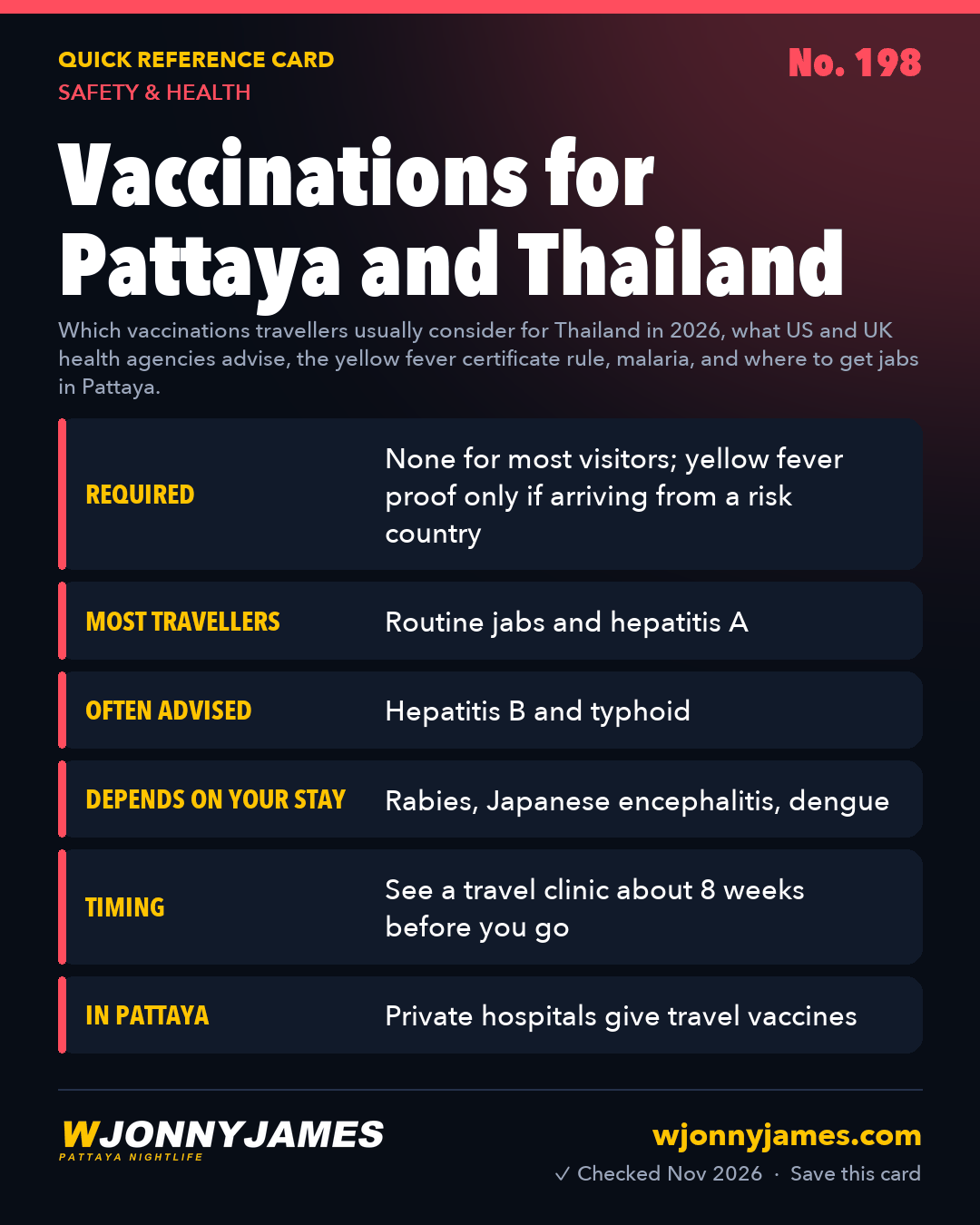
Quick answer: Most visitors to Thailand need no vaccinations to enter. The one rule is a yellow fever certificate if you arrive from, or spend more than 12 hours in transit through, a country with yellow fever risk. Health agencies advise being up to date with routine vaccines such as measles and tetanus, plus hepatitis A. Hepatitis B and typhoid are often advised, and rabies, Japanese encephalitis and dengue depend on how long you stay and what you do. US and UK advice differs in places, so see a doctor or travel clinic about eight weeks before you fly. Private hospitals in Pattaya give most travel vaccines. This page is general information, not medical advice.
At a glance
| Vaccine | US advice (CDC) | UK advice (TravelHealthPro) |
|---|---|---|
| Routine: measles (MMR), tetanus, polio, flu | All travellers up to date | Everyone up to date; tetanus booster if the last was over 10 years ago and care may be limited |
| Hepatitis A | Unvaccinated travellers aged 1 and over | Most travellers |
| Hepatitis B | Unvaccinated travellers under 60 | Could be considered for all; advised for long stays and higher risk activities |
| Typhoid | Most travellers | Those at higher risk, such as long stays or visiting family |
| Rabies | Depends on your risk; ask a doctor | Stays over a month, running or cycling, remote areas |
| Japanese encephalitis | Living in Thailand, or a month or more in affected areas | Similar; risk peaks May to October, mainly in the north |
| Dengue (Qdenga) | Not listed on CDC’s Thailand page | People aged 4 and over who have had dengue before; others after discussion |
| Chikungunya | Consider for stays of six months or more | Outbreak areas and long term travellers |
| Yellow fever | Not recommended; proof needed only from risk countries | No risk in Thailand; certificate rule as CDC |
Entry rules
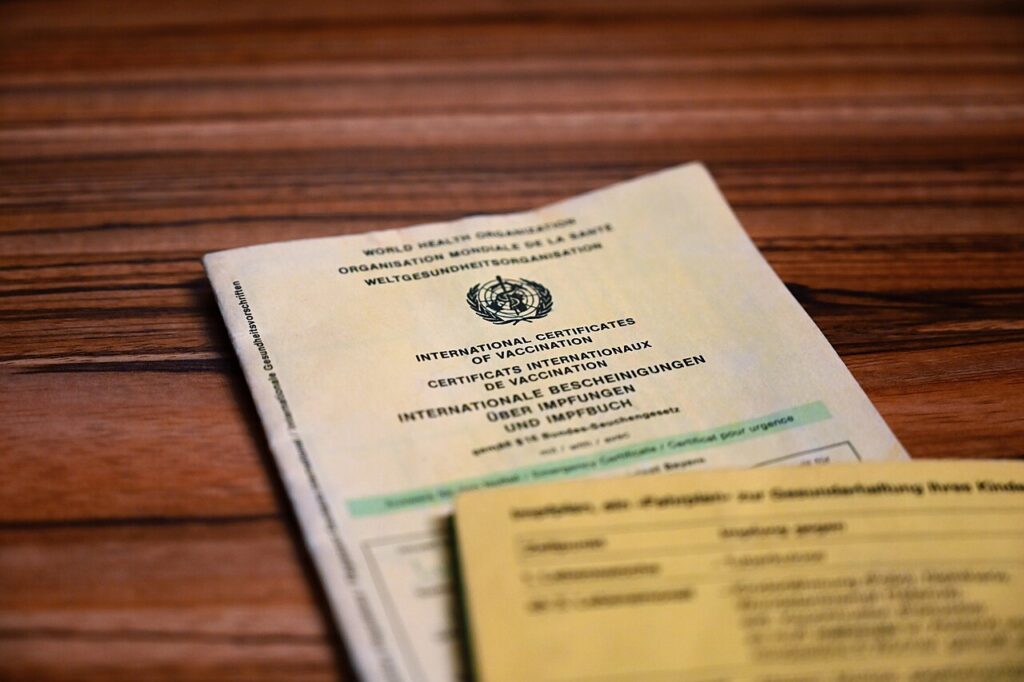
Thailand has no yellow fever, but travellers aged 9 months and over who arrive from a country with yellow fever risk, or who spent more than 12 hours in transit at an airport in one, need an International Certificate of Vaccination. Check this if you are coming from parts of Africa or South America.
Advised for most travellers
- Routine vaccines. Make sure you are up to date with measles, mumps and rubella (MMR), tetanus and diphtheria, polio and flu. The US advice also asks eligible travellers to keep COVID-19 vaccines current.
- Hepatitis A, spread through food and water. Both US and UK advice recommend it for unvaccinated travellers. See food poisoning.
Depends on your stay
- Hepatitis B spreads through blood and sexual contact, including medical or dental treatment, tattoos and accidents. The CDC recommends it for unvaccinated travellers under 60; UK advice stresses long stays and higher risk activities. See tattoos and dentists.
- Typhoid, also from food and water. Here the agencies differ: the CDC says most travellers, the UK says those at higher risk. The vaccine doesn’t give full protection, so food and hand hygiene still matter.
- Rabies. Rabies is present in Thailand, and UK health officials noted seven deaths reported by July 2025, three times the same period of 2024. A course before you travel doesn’t replace treatment after a bite, but it makes that treatment simpler. It is worth discussing for long stays, runners, cyclists and anyone who will be around animals. See stray dogs and rabies for what to do after a bite or scratch.
- Japanese encephalitis is spread by mosquitoes, mainly in rural and farming areas. The CDC doesn’t recommend it for short trips to cities; it is for people living here or spending a month or more in affected areas.
- Dengue. The Qdenga vaccine is sold at private hospitals in Thailand for ages 4 to 60, as two doses three months apart, so it suits people who live here or plan well ahead. Who it suits, prices and side effects are on dengue and mosquitoes.
- Chikungunya is another mosquito borne virus. UK officials reported 1,379 cases in Thailand in 2025, about double 2024, mostly in the north. A vaccine may be considered for long stays.
- Mpox. In July 2026, UK health officials noted 88 confirmed clade Ib cases reported in Thailand. The CDC suggests the vaccine for some adults depending on their sexual health risk; a sexual health clinic can advise. See sexual health and STI testing.
Malaria and mosquitoes
The CDC recommends malaria tablets only for certain areas, mainly provinces on the borders with Myanmar, Cambodia and Malaysia. Pattaya’s province, Chonburi, is not a border province, so most Pattaya visitors don’t need them; ask a travel clinic if you are going on to border areas. There is no vaccine for Zika, and UK officials linked two 2026 cases to travel in Thailand, so pregnant travellers and couples planning a pregnancy should get advice before travel. For everyone, avoiding bites is the main protection. See dengue and mosquitoes.
Getting vaccines in Pattaya
- Bangkok Hospital Pattaya runs adult and pretravel vaccinations at its Health Promotion Center (Building E, 5th floor, open daily 7am to 5pm, +66 3825 9986). It lists yellow fever, typhoid and rabies among its travel vaccines and issues the international vaccination certificate. A travel medicine doctor sees patients in person at weekends, with video consultations on some weekday afternoons.
- Other private hospitals and some clinics give routine and travel vaccines. Call ahead to check stock and price, as hospital vaccine offers often have expiry dates. See hospitals and clinics.
- Bring your vaccination record so they can see what you’ve already had. A first visit is also a good time to register as a patient.
Before you fly
- Start about eight weeks ahead. The UK government advises checking vaccine needs at least eight weeks before travel, as some courses take several doses.
- Pack your regular medicines and check the rules on bringing them in. See pharmacies and medicines.
- Get travel insurance with medical cover. See travel insurance and the first trip checklist.
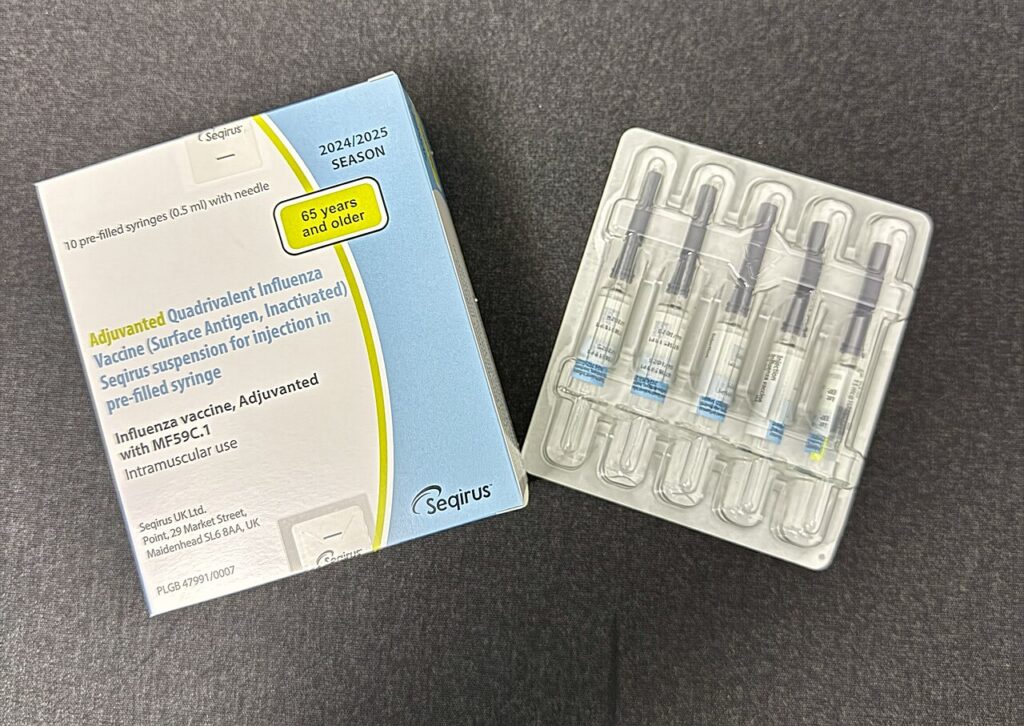
Keep records
- Keep your vaccine card, and a photo of it on your phone. After a bite or an injury, doctors need to know which rabies and tetanus doses you’ve had.
- Advice changes, so check with a travel clinic or doctor before you go.
Common questions
Do I need vaccinations to visit Thailand? None are required to enter, unless you arrive from a country with yellow fever risk. Routine vaccines and hepatitis A are advised for most travellers.
Do I need a rabies vaccine for Pattaya? Not usually for a short holiday. It is worth discussing for stays over a month or if you’ll be around animals. Whether or not you’ve had it, any bite or scratch needs prompt treatment.
Do I need malaria tablets for Pattaya? The CDC recommends them only for certain border provinces, and Chonburi isn’t one of them. Ask a travel clinic if you are travelling on to border areas.
Sources
Checked 13 November 2026: CDC Travelers’ Health, Thailand (page reviewed 8 October 2026); TravelHealthPro (UKHSA), Thailand (vaccine advice and outbreak notices for rabies 2025, chikungunya 2025, Zika and mpox 2026); GOV.UK, Thailand travel advice: health (eight weeks); Bangkok Hospital Pattaya, Health Promotion Center. Dengue vaccine details and their sources are on our dengue page. US and UK advice differ on typhoid and hepatitis B. General information, not medical advice: ask a doctor or travel clinic about your own needs.
Related pages



Ride along with Jonny
Every guide page comes from the nightly rides through Pattaya. Watch them, ask questions in the community, or help keep the camera rolling.
Watch the rides Join the Telegram Leave a tip Support the rides

 ไทย
 中文
 Русский
 한국어
 Deutsch
 Français