

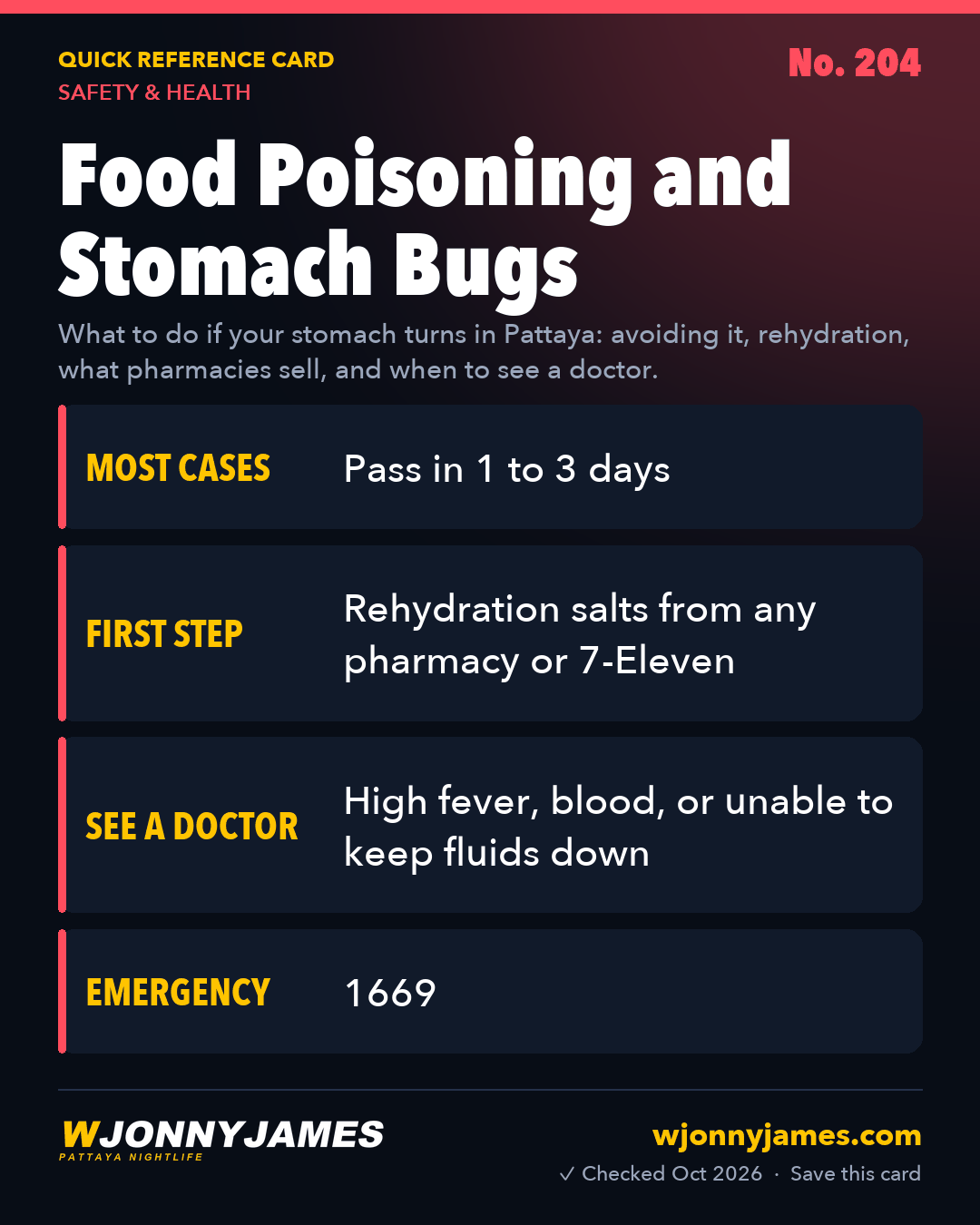
Quick answer: A stomach upset is the most common health problem for travellers, in Thailand as anywhere hot. Most cases are mild and settle within three to four days with rest and fluids. The first thing to do is replace what you lose: sip oral rehydration salts, sold cheaply at every pharmacy, little and often. See a doctor quickly for a fever of 38 °C or more, blood or mucus in your stool, severe stomach pain, confusion, or if you can’t keep fluids down; see one anyway if you are not improving after three days. To lower the risk, follow Thailand’s own advice: eat food cooked hot, use serving spoons, and wash your hands. This page is general information, not medical advice; ask a pharmacist or doctor about your own situation.
At a glance
| Situation | What to do |
|---|---|
| Mild diarrhoea, feeling OK | Keep drinking and eating plain food; rest |
| Lots of diarrhoea or vomiting | Oral rehydration salts, sipped little and often; ask a pharmacist |
| No better after 3 days | See a doctor or clinic |
| Fever 38 °C or more, blood or mucus, severe pain | See a doctor straight away |
| Can’t keep fluids down, dizzy, very little urine | See a doctor now; this is dehydration |
| Confused, fainting or very drowsy | Call 1669 |
How common it is
- The UK’s travel health service, TravelHealthPro, says travellers’ diarrhoea affects more than 1 in 5 people visiting higher risk destinations. It usually lasts three to four days, and fewer than 1% end up in hospital.
- In Thailand itself, the government reported 39,233 food poisoning cases and 274,151 cases of acute diarrhoea from 1 January to 17 March 2026, most of them in children under five.
- The hot season is a risky time. In March 2026 Thai health officials warned that food left out in the heat goes off quickly, and named diarrhoea, food poisoning, typhoid, cholera and hepatitis A as common summer diseases.
Lowering the risk
Thai health officials sum it up as “eat hot, use serving spoons, wash hands”.
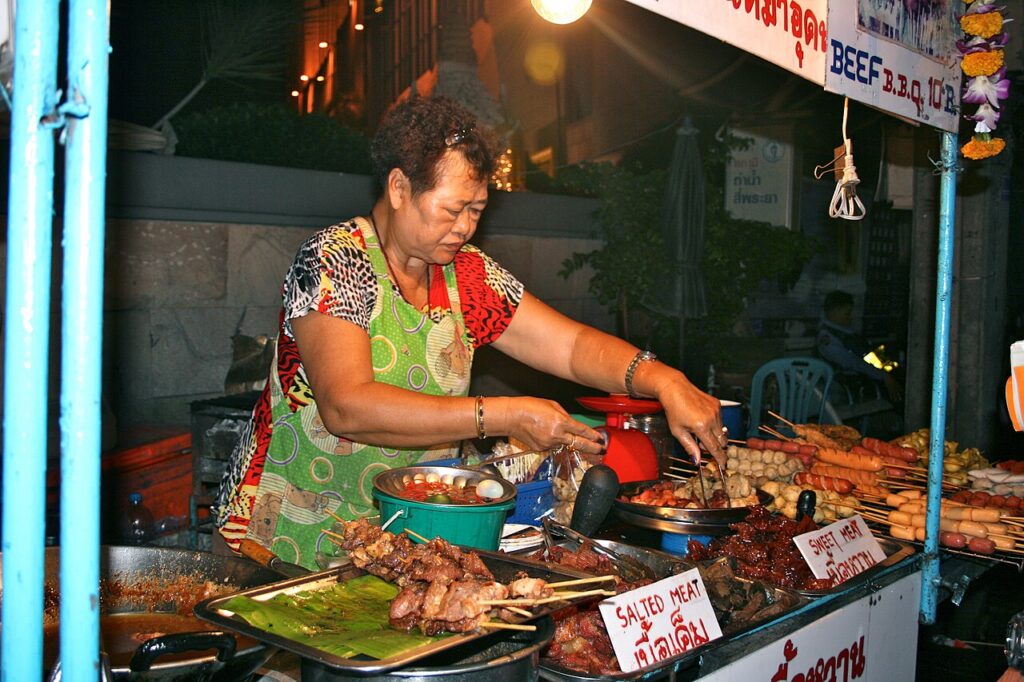
- Choose busy stalls and restaurants where food is cooked fresh in front of you. Hot, freshly cooked food is safest. See street food.
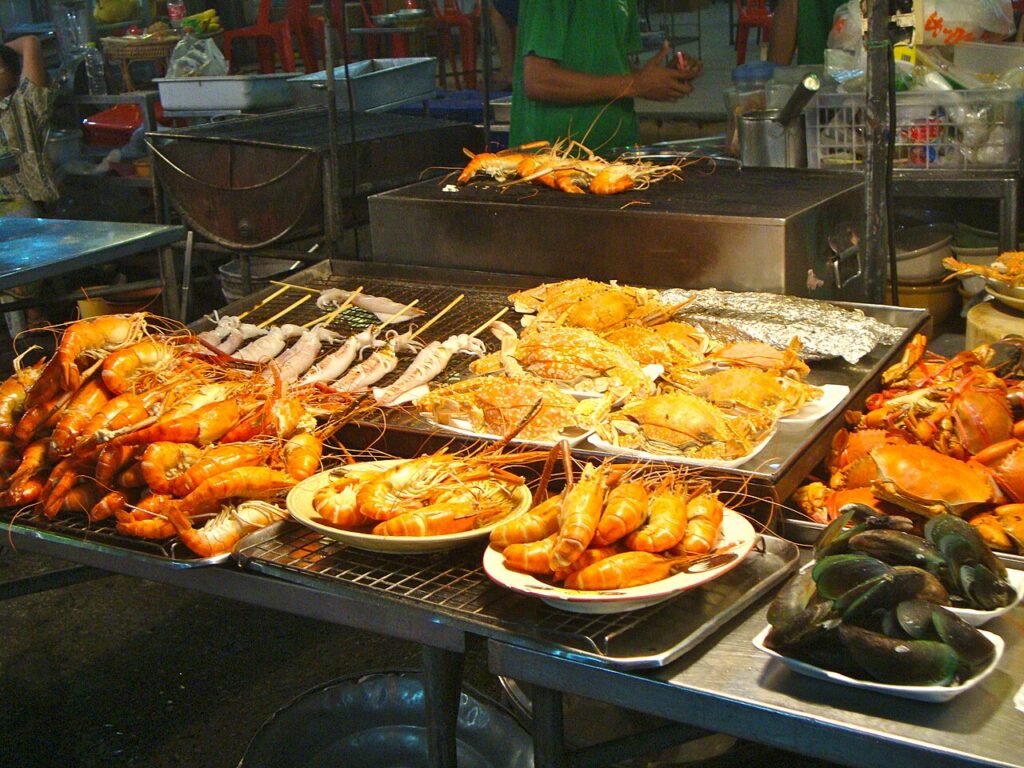
- Take care with raw or undercooked seafood, raw pickled crab or shrimp, and buffets or ready meals that have sat at room temperature for a long time. Thai officials say food left out for more than two hours should be reheated thoroughly.
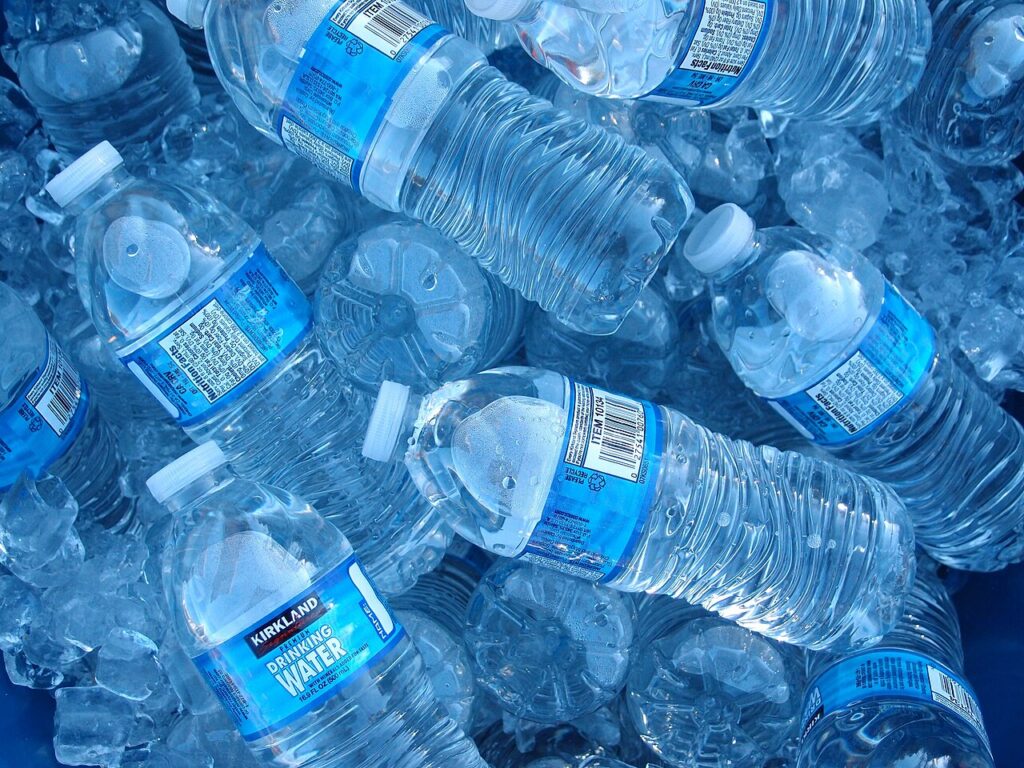
- Drink bottled, refill machine or boiled water, and Thai officials advise buying ice that is clean and labelled for eating. Restaurant factory ice is generally fine. See drinking water.
- Wash your hands with soap before eating and after the toilet. Hand gel helps when there is no sink, but TravelHealthPro notes it is not entirely effective.
- Seafood is a big part of eating in Pattaya. Pick places where it is kept on ice and cooked to order. See seafood restaurants.
- No one can avoid every bug. Careful eaters get ill too, so pack rehydration salts anyway.
If it happens
- Start rehydration early. Oral rehydration salts replace the salts and sugar you lose, which plain water doesn’t. Mix with clean water as the pack says.
- Rest, and stay out of the heat. Heat and diarrhoea together dehydrate you fast. See heat, hangovers and dehydration.
- Eat when you feel ready: plain rice soup (jok or khao tom), toast, bananas and clear soups.
- Avoid alcohol, spicy, oily and dairy food for a day or two.
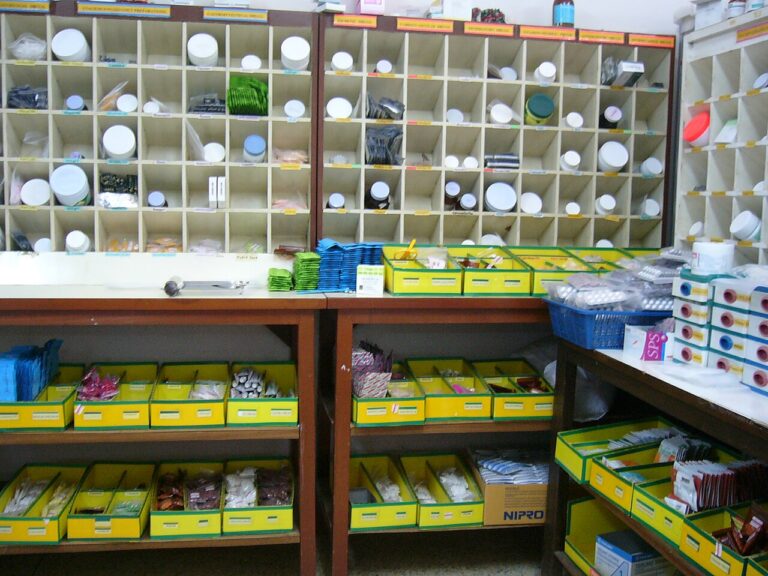
- Tell a pharmacist your symptoms, how long you’ve had them and any medicines you take. Ask before taking anything to stop diarrhoea, especially if you have a fever or blood. See pharmacies and medicines and pharmacy phrases.
- Many antibiotics are sold over the counter in Thai pharmacies, but mild stomach bugs usually get better without them. Let a doctor or pharmacist decide.
- If you are too ill to go out, many pharmacies deliver through LINE, and food apps deliver plain food. See food delivery apps.
When to see a doctor
TravelHealthPro advises getting medical help:
- Straight away for a fever of 38 °C or more, blood or mucus in your stool, severe stomach pain, confusion, yellow skin or eyes, or a rash.
- If you can’t keep fluids down or show signs of dehydration: great thirst, dizziness, very little or dark urine, sunken eyes.
- If you are not getting better within three days.
- Sooner for babies, young children, older people, pregnant women and anyone with a weak immune system, kidney or heart disease, or bowel disease.
A fever with aches in Pattaya can also be dengue rather than food. If you have a high fever, see a doctor and avoid ibuprofen and aspirin until dengue is ruled out. See dengue and mosquitoes.
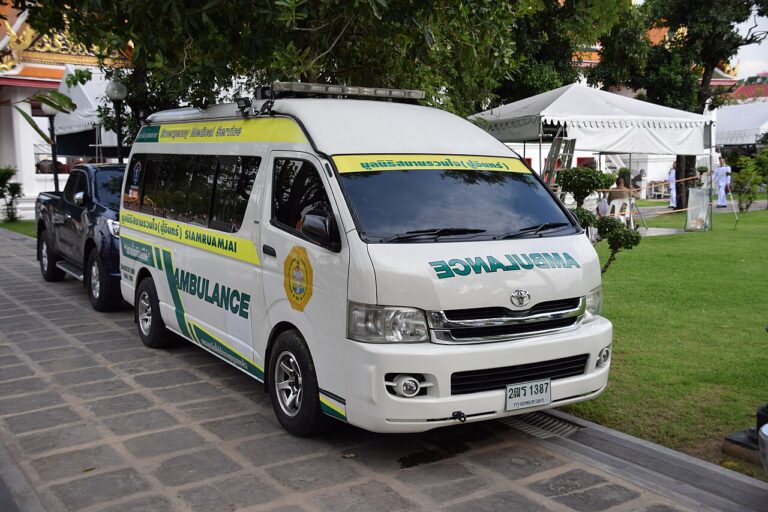
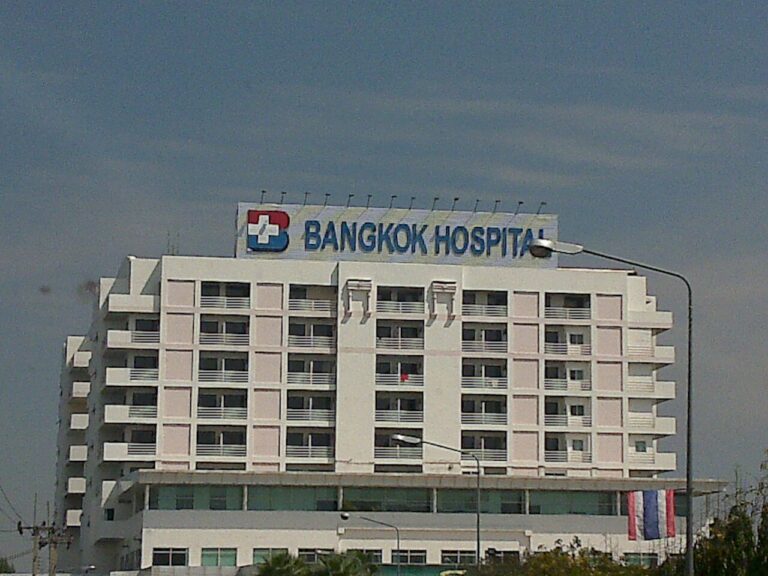
Clinics are cheaper than hospitals for a straightforward visit. See hospitals and clinics and hospital costs. In an emergency call 1669; more numbers are on emergency numbers.
Pro tip: every time I’ve needed healthcare here, it’s been a million times faster and smoother than the West. A hospital trip for stomach issues was a smooth one.
Insurance and receipts
Keep receipts and the doctor’s notes for any treatment, and check whether your travel insurance covers outpatient visits and what the excess is. See travel insurance.
Common questions
How long does food poisoning last in Thailand? Most travellers’ diarrhoea is over within three to four days, and mild cases often sooner. See a doctor if you’re not improving after three days.
Is street food in Pattaya safe? Busy stalls cooking hot food to order are generally a good bet. The bigger risks are raw seafood and food that has sat out in the heat.
Can I drink the ice in Pattaya? Factory ice in restaurants and bars is generally considered fine. Crushed block ice at a street stall is less certain.
Should I take antibiotics for a stomach bug? Often not. Most mild cases get better on their own with fluids. A doctor or pharmacist can tell you if yours needs treatment.
Where do I buy rehydration salts? At any pharmacy, in sachets you mix with clean water. Keep some in your first aid kit.
Sources
Checked 13 November 2026: TravelHealthPro (UK), travellers’ diarrhoea factsheet; Thairath, government figures on food poisoning and diarrhoea, January to March 2026 (29 March 2026); The Nation, DDC warning on five summer diseases (13 March 2026); Pattaya Mail, food poisoning risks in the hot season (13 April 2026). General information, not medical advice.
Related pages
Ride along with Jonny
Every guide page comes from the nightly rides through Pattaya. Watch them, ask questions in the community, or help keep the camera rolling.
Watch the rides Join the Telegram Leave a tip Support the rides

 ไทย
 中文
 Русский
 한국어
 Deutsch
 Français