

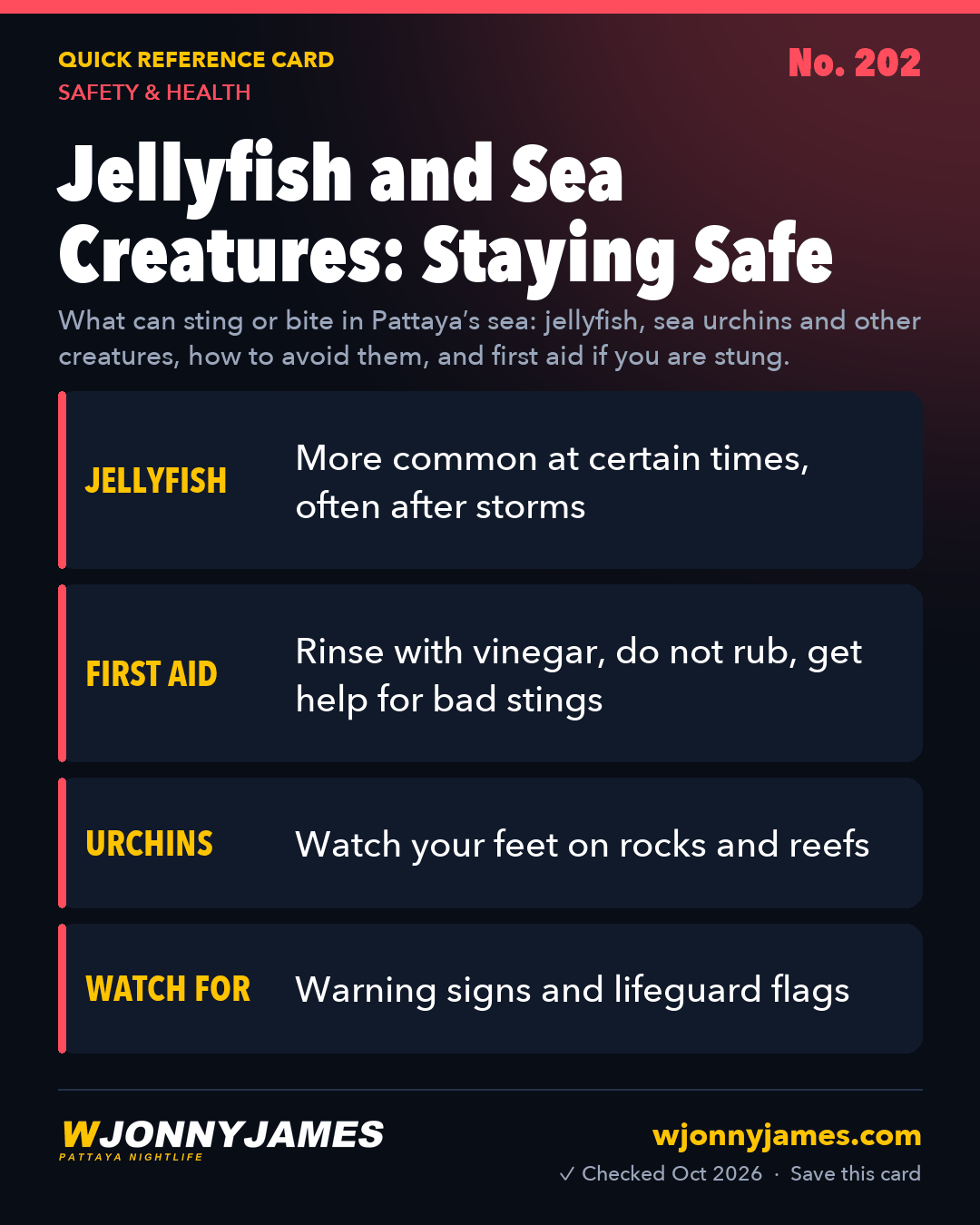
Quick answer: Most swims in Pattaya are trouble free, and serious stings here are rare. The jellyfish most often seen on Pattaya’s beaches are moon jellyfish, which officials say are not deadly but can badly irritate the skin; blooms tend to come in the rainy season and towards its end. The dangerous box jellyfish is mostly reported in southern Thailand and is rarely seen in Pattaya, but it does exist in Thai waters. If you are stung: get out of the water, keep still, pour vinegar on the sting for at least 30 seconds, don’t rub it or rinse it with fresh water, and call 1669 for anything more than mild pain. Wear water shoes on rocks for sea urchins.
At a glance
| Creature | Where | Risk | What to do |
|---|---|---|---|
| Moon jellyfish | Pattaya and Jomtien beaches, in blooms | Painful, itchy skin, not deadly | Vinegar, don’t rub, see a pharmacist if it stays sore |
| Box jellyfish | Mostly the south; rare in Pattaya | Can be life threatening | Vinegar, keep still, call 1669 at once |
| Bluebottle (a man o’ war type) | Occasional, washed in by wind | Very painful | Get help; avoid touching any on the sand |
| Sea urchins | Rocks and reefs, Koh Larn | Spines in feet | Water shoes; see a doctor if spines break off |
| Stonefish and weever fish | Rocky shallows and sandy bottoms | Very painful sting | Hospital straight away |
Jellyfish in Pattaya
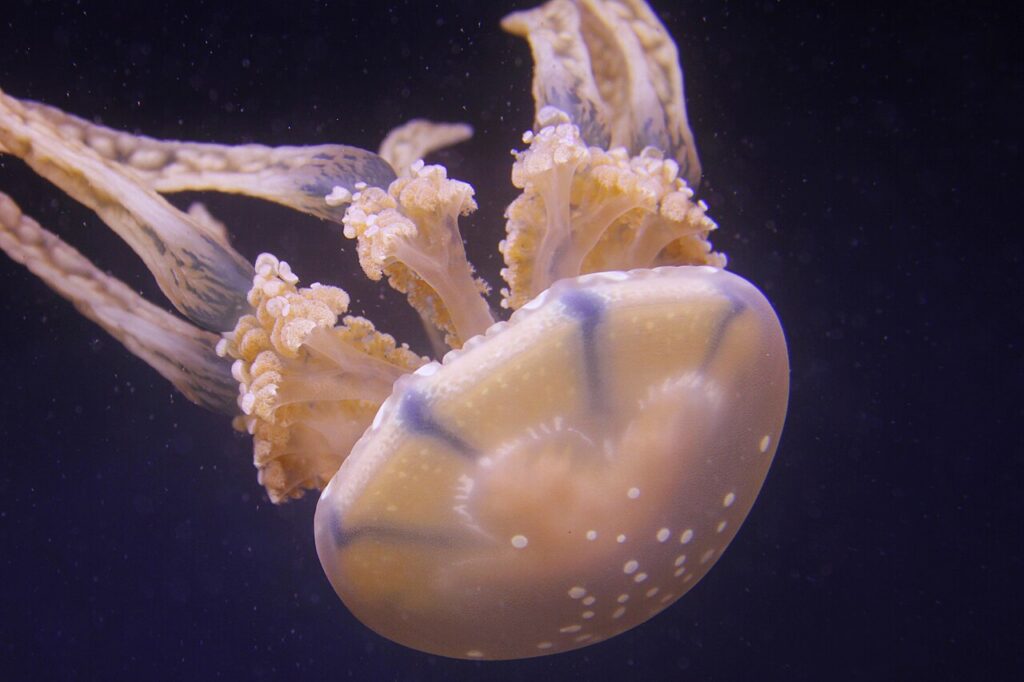
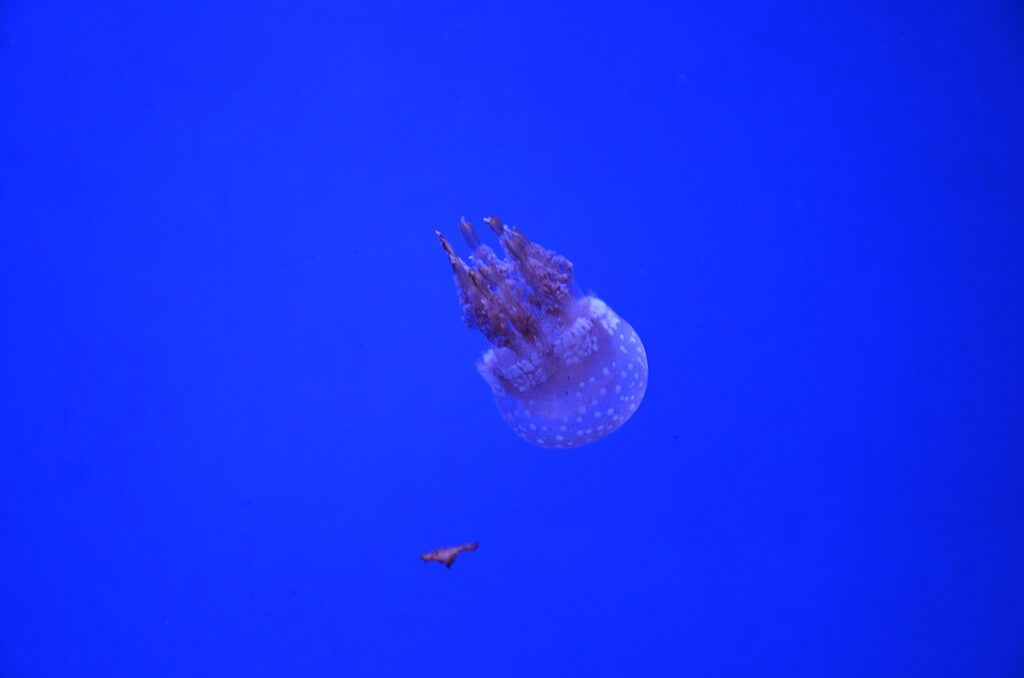
- Pattaya’s recent jellyfish news has mostly been about moon jellyfish. In October 2024 they appeared in numbers off Pattaya Beach, especially the Dongtan end. A marine official said their venom isn’t fatal but can cause severe skin irritation, and that big numbers are common at the end of the rainy season. Lifeguards were told to warn swimmers.
- Small, painful but nonlethal jellyfish have also been reported off Koh Larn in the past, and island medical staff put up warning signs.
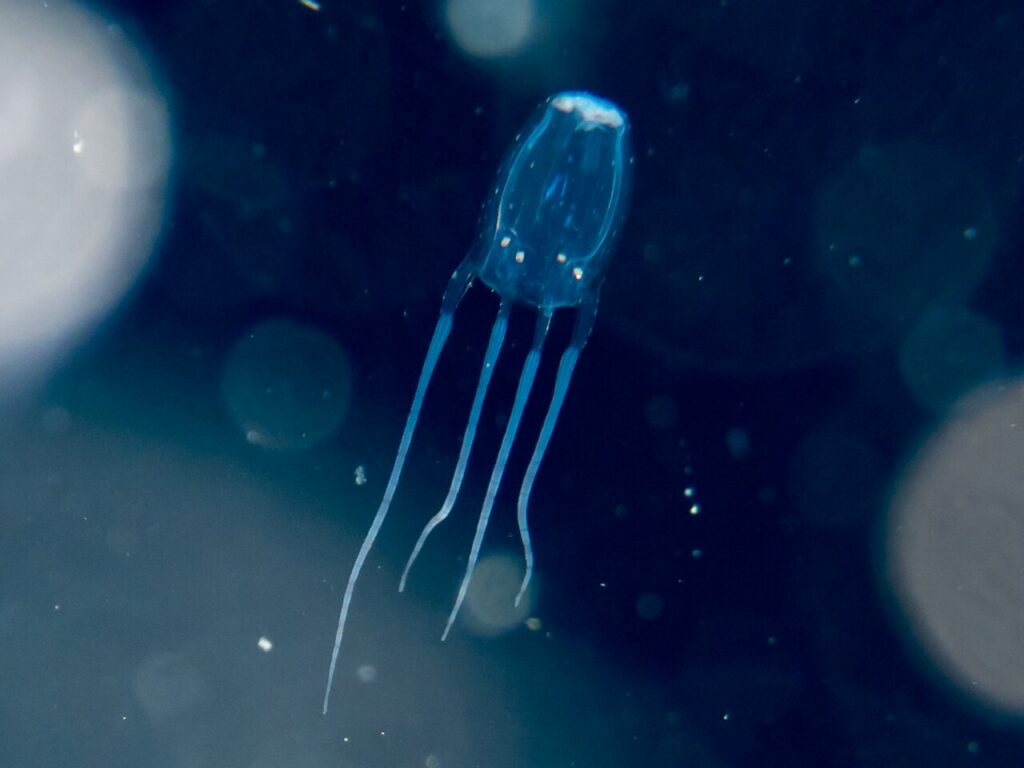
- Box jellyfish are the serious risk in Thailand. Thai tourism and marine officials list caution areas in the south and in Trat, not Pattaya, and a 2025 Pattaya Mail report described them as rarely seen here. In August 2026 a 13 year old boy died after a box jellyfish sting at a beach in Nakhon Si Thammarat, and the Department of Marine and Coastal Resources stepped up warnings and vinegar stations at high risk beaches.
- Jellyfish are more likely in the rainy months, when wind and currents push them towards the shore, and after storms. See rainy season survival.
Avoiding stings
- Swim at beaches with lifeguards and follow their flags and advice. Don’t swim when a red flag is up.
- Don’t swim after heavy rain, at night, or outside the buoy marked swimming areas.
- A rash vest, swim leggings or a long sleeved swim top cuts the skin you expose.
- Don’t touch jellyfish washed up on the sand. They can still sting, so warn children too.
- Check official warnings. The Department of Marine and Coastal Resources posts them at warning.dmcr.go.th and in its Marine Warning app.
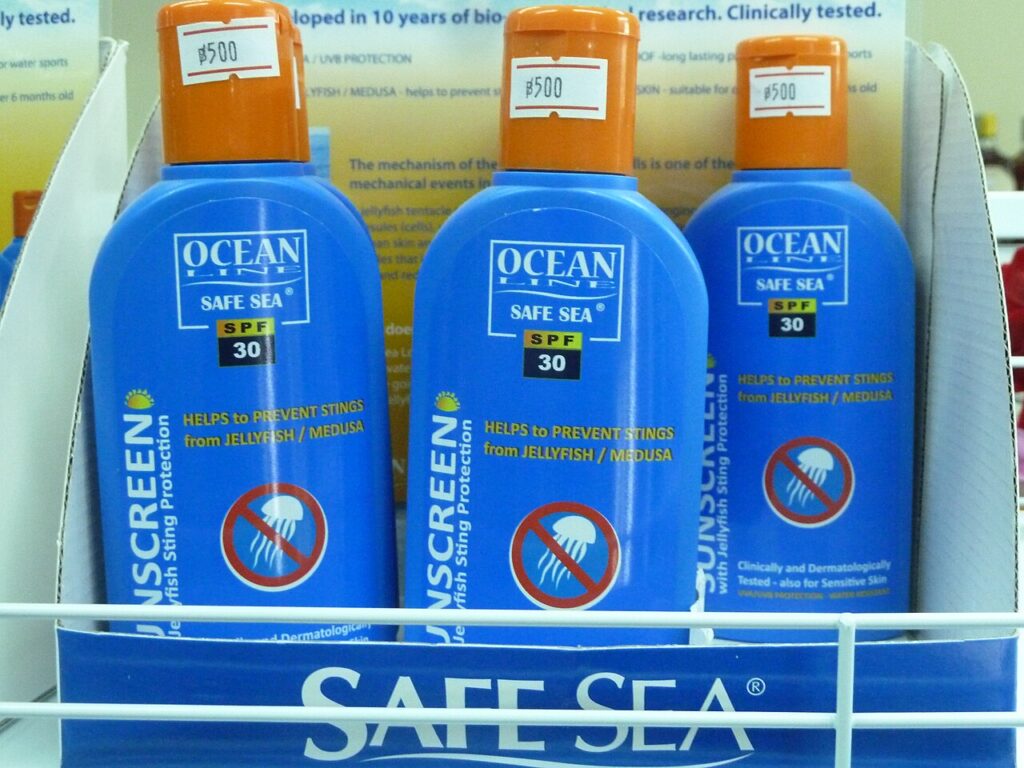
- Carry a small bottle of vinegar if you swim a lot. Hotels, beach restaurants and dive operators are told to keep it on hand, but don’t rely on finding some.
If you are stung
Thai officials’ first aid steps are:
- Get out of the water and keep as still as possible.
- Call the emergency medical line 1669 for anything more than a mild sting.
- Pour vinegar over the sting for at least 30 seconds, then carefully remove any tentacles with gloves or a stick, not bare hands.
- Do not rub it, and do not use fresh water or alcohol. Officials say these can release more venom.
- Get emergency help at once for severe pain, confusion, chest discomfort, breathing difficulty or a change in skin colour. If the person becomes unconscious and isn’t breathing normally, start CPR and keep going until help arrives.
- Vinegar is the official advice for box jellyfish. Some sources say vinegar can make some other jellyfish stings worse, while Pattaya officials advised vinegar for the 2024 moon jellyfish bloom; advice differs, so follow the lifeguard or medical staff on the spot.
- For a mild sting that stays itchy or sore, see a pharmacist or doctor. See pharmacies and medicines.
See emergency numbers and hospitals and clinics.
Sea urchins and rocks
Spiny sea urchins live on rocks and reefs. Wear water shoes when walking on rocks or snorkelling, and see a doctor if spines break off in your skin. Don’t dig at spines with a needle: deep or broken spines can get infected.
Stonefish and other stings
Stonefish hide, well camouflaged, on rocky shallow bottoms, and weever fish bury themselves in sand; both have venomous spines that give a very painful sting. Shuffle your feet in shallow water, wear water shoes, and get to hospital straight away if you are stung. The blue dragon sea slug can also sting if picked up. As a rule, look but don’t touch.
More beach safety
See beach safety and diving and snorkelling.
Common questions
Are there box jellyfish in Pattaya? They are rarely seen here. Most Thai box jellyfish reports come from the south, such as Krabi, Phuket and the Samui islands. They can’t be ruled out, so learn the first aid.
When are jellyfish worst in Pattaya? Usually in the rainy season and towards its end, and after storms, when wind and currents push them inshore.
What should I put on a jellyfish sting? Thai officials say vinegar for at least 30 seconds, no rubbing and no fresh water. Call 1669 for anything serious.
Is it safe to swim at Koh Larn? Usually, yes. Wear water shoes on the rocky parts, and watch for warning signs. See Koh Larn beaches.
Sources
Checked 13 November 2026: TAT News, 25 August 2025 (box jellyfish and other species, season, first aid, 1669, caution areas); Pattaya Mail, 5 August 2026 (Nakhon Si Thammarat death, DMCR vinegar stations, warning.dmcr.go.th and Marine Warning app); Pattaya Mail, 8 September 2025 (stings rare, box jellyfish rarely seen in Pattaya); The Star, 1 October 2024 (moon jellyfish at Pattaya Beach, official advice); Pattaya Mail, Koh Larn jellyfish warnings (older report). This is general information, not medical advice: see a doctor or pharmacist.
When to take extra care
- Jellyfish are more common in some months and after storms. Ask locally and check for warning signs.
- Wear water shoes on rocky shores and around Koh Larn. See Koh Larn beaches.
- Look but do not touch coral and sea life when snorkelling. See diving and snorkelling.
- Pack the basics in a first aid kit.
Related pages



Ride along with Jonny
Every guide page comes from the nightly rides through Pattaya. Watch them, ask questions in the community, or help keep the camera rolling.
Watch the rides Join the Telegram Leave a tip Support the rides

 ไทย
 中文
 Русский
 한국어
 Deutsch
 Français